Japanese Language Mastery Through Studio Ghibli
Japanese Basics
The Building Blocks of Japanese
Japanese uses three main scripts: Hiragana, Katakana, and Kanji. For now, we'll focus on the first two, Hiragana and Katakana. Together, they are called kana. Think of them as the Japanese alphabet. They don't represent individual letters like in English, but entire syllables.
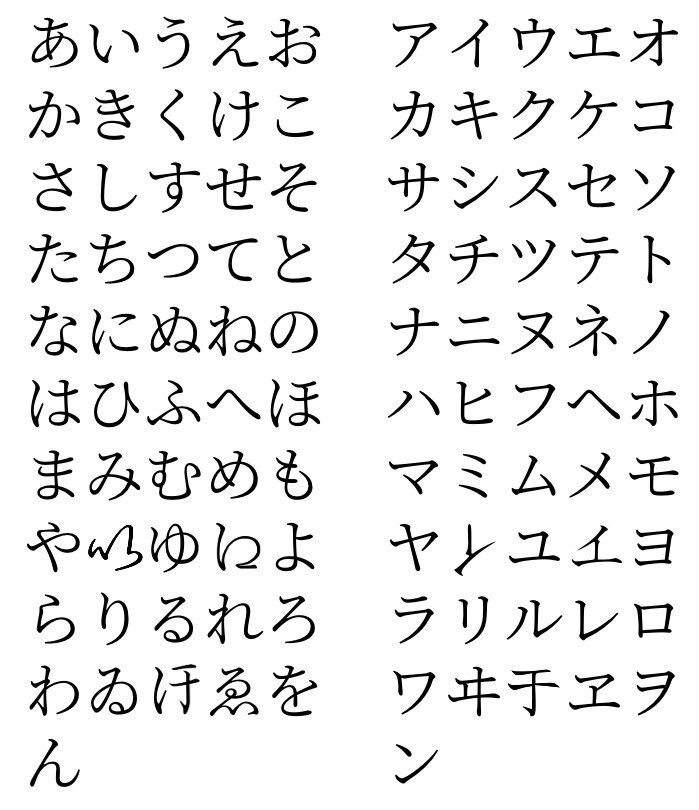
Mastering these two scripts is the first step to reading and writing Japanese. Every sound in the language can be written using them.
Meet Hiragana
Hiragana (ひらがな) is the primary script you'll use. It's characterized by its rounded, flowing characters. You'll see it used for native Japanese words, grammatical particles, and verb endings. Basically, it's the glue that holds sentences together.
All hiragana characters are based on five core vowel sounds.
| Character | Romaji | Pronunciation |
|---|---|---|
| あ | a | 'ah' as in 'father' |
| い | i | 'ee' as in 'see' |
| う | u | 'oo' as in 'moon' |
| え | e | 'eh' as in 'get' |
| お | o | 'oh' as in 'boat' |
Other characters are formed by combining a consonant with one of these vowels. For example, the 'k' sound combines with the vowels to create a new set of syllables.
| Character | Romaji | Pronunciation |
|---|---|---|
| か | ka | kah |
| き | ki | kee |
| く | ku | koo |
| け | ke | keh |
| こ | ko | koh |
And Katakana
Katakana (カタカナ) represents the same sounds as Hiragana, but the characters are sharp and angular. Its main job is to write words borrowed from other languages, like kōhī (コーヒー) for "coffee" or terebi (テレビ) for "television."
You'll also see Katakana used for emphasis, company names, and onomatopoeia, which are words that imitate sounds.
| Character | Romaji | Pronunciation |
|---|---|---|
| ア | a | 'ah' as in 'father' |
| イ | i | 'ee' as in 'see' |
| ウ | u | 'oo' as in 'moon' |
| エ | e | 'eh' as in 'get' |
| オ | o | 'oh' as in 'boat' |
Greetings and Sentences
Now that you've seen the scripts, let's learn a few basic phrases. Japanese pronunciation is very consistent, which makes it easier to learn. The five vowel sounds we covered are the key.
Here are some common greetings.
Good morning
This is a polite way to greet someone in the morning.
Hello / Good afternoon
This is your all-purpose greeting for the afternoon.
Good evening
Now, let's look at a very simple sentence. English sentence structure is typically Subject-Verb-Object (SVO), like "I eat sushi." In Japanese, the order is Subject-Object-Verb (SOV).
わたし は すし を たべます。 Watashi wa sushi o tabemasu. (I eat sushi.)
Let's break that down:
- わたし (watashi) is the subject, "I."
- すし (sushi) is the object, "sushi."
- たべます (tabemasu) is the verb, "eat."
The little characters は (wa) and を (o) are particles. They mark the roles of the words in the sentence. We'll explore them more later, but for now, just notice their position.
Ready to check your understanding?
What is the primary role of the Hiragana script?
The Japanese kana scripts represent entire syllables rather than individual letters.
Getting comfortable with Hiragana and Katakana is the key to unlocking everything else in Japanese. Keep practicing!