Japanese Language Foundations
Hiragana Mastery
The Sound of Japanese
Japanese uses three distinct writing systems: Hiragana, Katakana, and Kanji. Hiragana is a phonetic syllabary, meaning each character represents a syllable, like 'ka' or 'shi'. It's the backbone of the language, used for grammatical particles, verb endings, and native Japanese words not covered by Kanji.
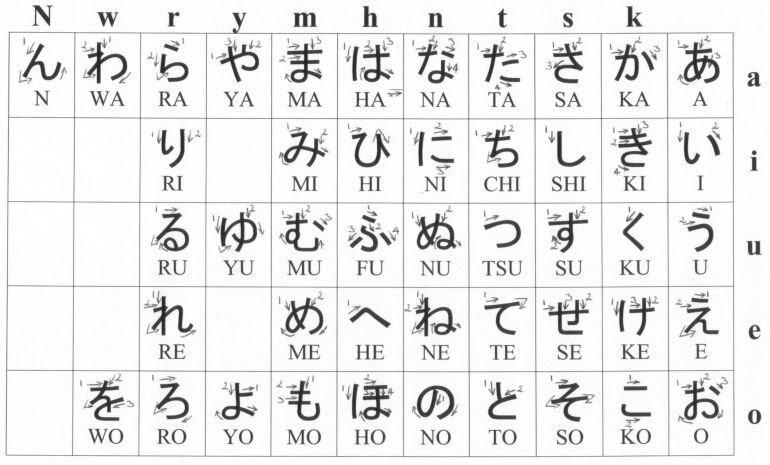
Think of Hiragana as the fundamental alphabet. Before you can read or write anything complex, you need to master these 46 core characters. They unlock the sounds of the language, making everything else possible.
Mastering Hiragana is a critical starting point for anyone looking to master the language as a whole.
The system is incredibly logical. It's built around five core vowel sounds, which are then combined with consonants to form the rest of the syllabary. Let's start with those vowels.
| Hiragana | Romaji | Pronunciation Guide |
|---|---|---|
| あ | a | Like the 'a' in 'father' |
| い | i | Like the 'ee' in 'see' |
| う | u | Like the 'oo' in 'moon' |
| え | e | Like the 'e' in 'get' |
| お | o | Like the 'o' in 'go' |
Once you have these vowels, you can build the consonant rows. For example, the 'k' row combines the 'k' sound with each vowel: か (ka), き (ki), く (ku), け (ke), こ (ko). This pattern repeats for all consonants, creating a predictable grid of sounds. You may have noticed the term '' in the table. This is the standard way of representing Japanese sounds using the Roman alphabet, and it's an essential tool for learners.
Writing the Characters
Knowing the sounds is one thing; writing the characters is another. Every Hiragana character has a specific stroke order. Following this order isn't just about tradition. It ensures the character is balanced, legible, and can be written quickly and efficiently. Rushing and getting the order wrong often results in messy, unrecognisable shapes.
Let's apply this. The word for 'love' is あい (ai). It's two characters and two strokes for the first, one for the second. Simple. The word for 'house' is いえ (ie). Both characters have two strokes. Try writing them out, following the correct order for each.
Combining Sounds
Japanese also has combined sounds, called yōon (拗音). These are formed by taking a consonant from the 'i' column (like き, し, ち) and adding a small version of や, ゆ, or よ. This blends the two sounds into a single syllable.
| Base + Small Kana | Combination | Romaji | Pronounced As |
|---|---|---|---|
| き + ゃ | きゃ | kya | 'ky' sound in 'Tokyo' |
| し + ゅ | しゅ | shu | 'sh' sound in 'shoe' |
| ち + ょ | ちょ | cho | 'ch' sound in 'chocolate' |
Notice how the second character is smaller. This is a crucial visual cue. If you write きや (kiya) with a full-sized や, it's read as two separate syllables: 'ki' and 'ya'. The small ゃ in きゃ (kya) tells you to fuse them into one sound. This distinction is fundamental to correct pronunciation and reading.
Let's read some simple words. Sound them out syllable by syllable.
- うえ (ue) - up/above
- えき (eki) - station
- おかし (okashi) - snack/sweets
- きょう (kyō) - today (Here's a yōon in action!)
As you practice, your brain will stop seeing individual characters and start seeing whole words. This is the first major step towards fluency.
Ready to test your knowledge?
What is the primary function of Hiragana in the Japanese writing system?
The characters き (ki) and や (ya) can be combined to make a single syllable. How would this be written correctly?
Consistent practice is the key to making Hiragana second nature. Keep reviewing the characters, pay close attention to stroke order, and try reading simple words aloud.