Japanese Holiday Crash Course
Greetings
Time-Sensitive Greetings
In Japanese, the time of day dictates your greeting. Using the right one is a simple but important sign of respect and awareness. It’s the first step in sounding natural.
Good morning
This is your standard greeting from when you wake up until around 11 a.m. The “gozaimasu” makes it polite and suitable for most situations. When talking to close friends or family, you can shorten it to just “Ohayō.”
Hello / Good afternoon
Probably the most famous Japanese word, konnichiwa is a general-purpose “hello” used from late morning until early evening, roughly 11 a.m. to 5 p.m. It's versatile and can be used with anyone. Interestingly, the hiragana for the last sound is は (ha), but it's pronounced “wa” when used as a particle, as it is here.
Good evening
Once the sun starts to set, switch to konbanwa. It functions exactly like konnichiwa, but for the evening. Again, note the は (ha) character is pronounced “wa”.
Essential Courtesies
Beyond greetings, a few key phrases are indispensable for polite interaction. These words are used constantly in daily life in Japan.
Thank you
This is the formal way to express thanks. You can't overuse it. Like with “good morning,” you can drop the “gozaimasu” for a more casual “arigatō” among friends. If someone has done something for you in the past, you would say arigatō gozaimashita, using the past tense.
Excuse me / Sorry
Sumimasen is a powerful, multi-purpose word. You can use it to get someone's attention (like a waiter), to apologise for a small mistake (like bumping into someone), or even as a way of saying “thank you” when someone has gone out of their way for you. It carries the nuance of “Sorry for the trouble, thank you.”
Think of sumimasen as your go-to word for navigating public spaces politely. Need to squeeze past someone on the train? Sumimasen. Dropped something and a stranger picked it up? Sumimasen.
Ways to Say Goodbye
Saying farewell in Japanese has more nuance than a simple “goodbye.” The phrase you choose can imply when, or if, you'll see the person again.
Goodbye
While sayōnara is the direct translation of “goodbye,” it carries a strong sense of finality. It implies you won't be seeing the person for a long time, or perhaps ever again. You might hear children say it to their teacher at the end of the school day, but adults rarely use it in everyday conversation.
For more casual situations, phrases like じゃあね (Jaa ne, “See you”) or またあした (Mata ashita, “See you tomorrow”) are much more common among friends and colleagues.
Good night
This phrase is used when parting ways for the night or just before going to bed. It’s a farewell, not a greeting. The casual version, used with close family and friends, is simply oyasumi.
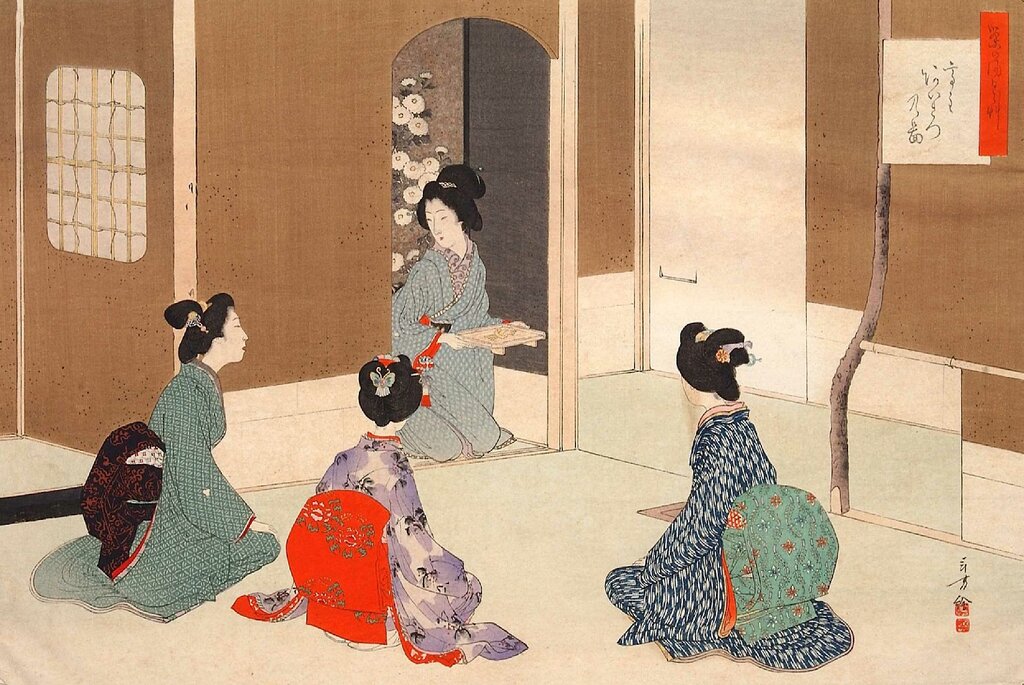
Greetings in Japan go beyond just words and gestures—they are an expression of cultural values like respect, humility, and social harmony.
Now, let's review these essential phrases.
Ready to test your knowledge?
You are meeting a business client at 9:30 a.m. What is the most appropriate greeting?
The word 'sumimasen' can be used to apologise, get someone's attention, or to thank someone for their trouble.
Using these greetings correctly will make your interactions much smoother. They are the foundation of polite conversation in Japan.