Japanese Fluency in Six Months
Japanese Writing Systems
Three Scripts, One Language
Reading a Japanese sentence is like looking at a mosaic. You’ll see three different styles of writing working together in a single line. These are hiragana (ひらがな), katakana (カタカナ), and kanji (漢字).
Unlike English, which uses one alphabet, Japanese weaves these three scripts together. Each one has a specific job. Understanding their roles is the first step to reading and writing Japanese.
The Japanese language is a fascinating blend of simplicity and complexity, anchored by three distinct writing systems: Hiragana, Katakana, and Kanji.
Hiragana: The Foundation
Think of hiragana as the phonetic backbone of the language. Each of its 46 characters represents a specific syllable, like “ka,” “shi,” or “mo.” If you can say it in Japanese, you can write it in hiragana. Visually, the characters are cursive and flowing, with lots of curves.
Hiragana is used for several key things:
- Grammar: It spells out the small but crucial words called particles that connect other words in a sentence.
- Verb and Adjective Endings: While the root of a verb might be a kanji, its ending (which changes based on tense) is written in hiragana.
- Native Words: It's used for Japanese words that don't have a common kanji, or for situations where the writer chooses not to use the kanji.
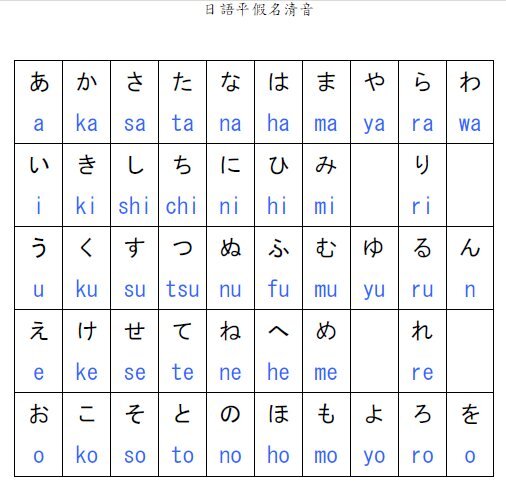
Here are some basic hiragana characters, which are the five vowels of Japanese.
The vowel sound 'a', as in 'father'.
The vowel sound 'i', as in 'see'.
The vowel sound 'u', as in 'flute'.
The vowel sound 'e', as in 'bet'.
The vowel sound 'o', as in 'boat'.
Using these, we can form simple words.
Cat
Katakana: For Emphasis and Imports
Katakana is hiragana’s angular twin. It has the exact same set of 46 sounds, but the characters look different. They are sharp, straight, and geometric.
Katakana is used for special cases:
- Foreign Loanwords: Words borrowed from other languages, like “computer” or “coffee,” are written in katakana.
- Names: Non-Japanese names are also written this way.
- Onomatopoeia: The many sound words in Japanese, like the sizzle of a pan or the croak of a frog.
- Emphasis: Sometimes katakana is used for emphasis, similar to how we use italics in English.
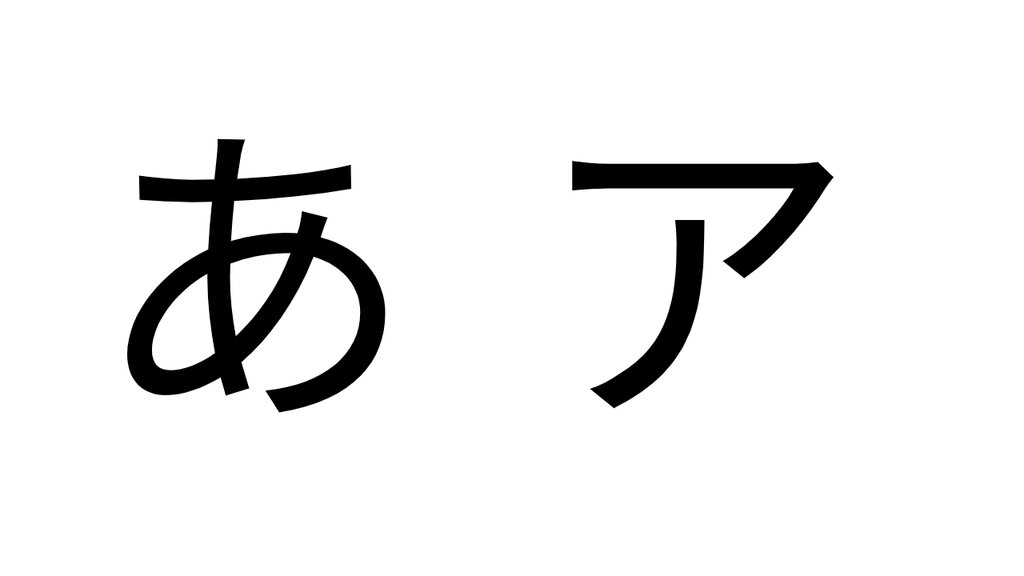
For example, the word for “America” is a loanword from English.
America
And here's how you'd write the word for “taxi.”
Taxi
Kanji: The Characters of Meaning
Kanji are characters that originated in China. Unlike hiragana and katakana, which just represent sounds, kanji represent ideas. A single kanji can mean “water,” “tree,” or “learn.” There are thousands of them, but you only need around 2,000 for daily literacy.
Kanji form the core of the language, used for most nouns, and the stems of verbs and adjectives. They make the language more compact. Instead of spelling out a long word phonetically, you can often use just one or two kanji.
For example, the word for “water” is written with a single character.
Water
In a sentence, kanji provide the main meaning, while hiragana handles the grammar around it. This mix is what allows you to read Japanese without spaces between words. The shift from kanji to hiragana signals the boundary between words.
Let's see them all together. In the sentence 「私 は 猫 が 好き です」 (Watashi wa neko ga suki desu), meaning "I like cats":
- 私 (watashi - I) and 好 (su - like) are kanji.
- は (wa), が (ga), き (ki), and です (desu) are all hiragana.
Notice how the kanji provide the core concepts (I, like) and hiragana provides the grammatical glue.
Writing with Precision
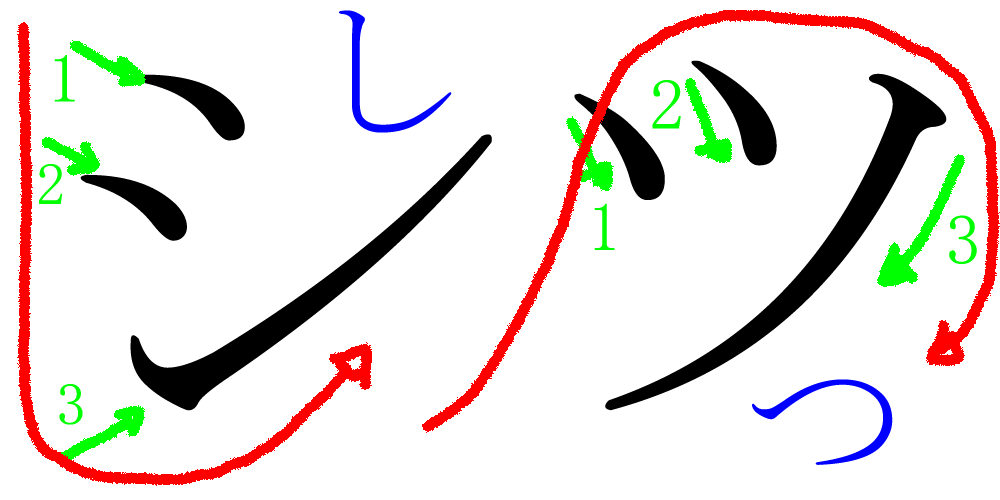
Every character in Japanese, no matter the script, has a specific stroke order. This is the sequence and direction in which you draw the lines that make up the character. Following the correct stroke order is crucial. It helps you write characters that are balanced and legible, and it makes writing faster and more efficient once you get the hang of it.
Generally, you write from top to bottom, and from left to right. Horizontal strokes come before vertical strokes. Learning the patterns of stroke order makes memorizing new characters much easier.
Here's a quick summary of when to use each script.
| Script | Appearance | Primary Use |
|---|---|---|
| Hiragana | Curvy, flowing | Grammar, word endings, native Japanese words |
| Katakana | Sharp, angular | Foreign words, names, onomatopoeia, emphasis |
| Kanji | Complex | Nouns, verb and adjective stems (core meaning) |
Time to test your knowledge of the three writing systems.
Which Japanese writing system is primarily used for grammatical functions, such as verb endings and particles?
If you saw the name "Michael" written in a Japanese text, which script would most likely be used?