Jabir ibn Hayyan The Father of Chemistry
Introduction to Jabir ibn Hayyan
The Father of Chemistry
In the 8th century, while Europe was deep in the Middle Ages, a different story was unfolding in the Middle East. This was the Islamic Golden Age, a period of extraordinary intellectual and cultural growth. At the heart of this scientific revolution was a man named Jabir ibn Hayyan, often called the "father of chemistry."
Born around 721 AD in Tus, Persia (modern-day Iran), Jabir's early life was shaped by his father, a druggist. This likely gave him his first taste of working with different substances. He later moved to Kufa, a bustling city in what is now Iraq, and is said to have studied under the famous scholar Ja'far al-Sadiq. During this time, the Abbasid Caliphate had established Baghdad as its capital, turning it into a global center for science, medicine, and philosophy. Scholars flocked there, translating and building upon works from ancient Greece, India, and Persia.
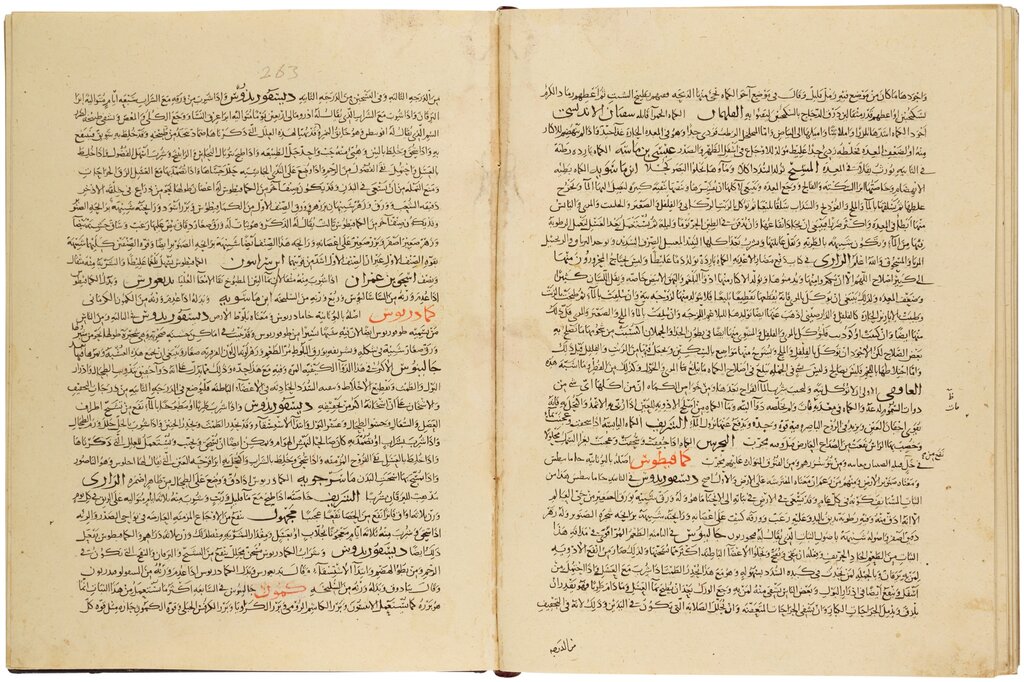
Jabir's genius flourished in this environment. He gained the patronage of powerful figures in the court of Caliph Harun al-Rashid, giving him the resources to set up a laboratory and conduct extensive research. His work was so influential that when it reached Europe centuries later, his name was Latinized to "Geber," and his writings became foundational texts for European alchemists and chemists.
A New Way of Doing Science
What made Jabir so revolutionary? He insisted on experimentation. Before him, the study of matter was often a philosophical exercise, based on thought and argument rather than observation. Jabir argued that knowledge could only be gained through hands-on work.
He developed and perfected many of the basic laboratory processes we still use today. He was a master of distillation, crystallization, filtration, and sublimation. These techniques allowed him to isolate substances and study their properties with unprecedented accuracy. For example, he designed a type of still called an alembic, which made the distillation of liquids much more efficient.
His systematic approach laid the groundwork for the modern scientific method. He emphasized precision, careful measurement, and repeatable experiments. This was a radical departure from the mysticism that often shrouded the work of earlier alchemists.
The first essential in chemistry is that you should perform practical work and conduct experiments, for he who performs not practical work nor makes experiments will never attain the least degree of mastery.
Lasting Contributions
Jabir's laboratory was a place of discovery. He is credited with identifying and synthesizing many important chemical compounds for the first time.
Through his experiments, he was able to prepare acids like nitric acid, hydrochloric acid, and citric acid. He discovered aqua regia, a mixture of nitric and hydrochloric acids famous for its ability to dissolve gold. He also introduced important chemical vocabulary, giving us words like "alkali."
alkali
While much of his work was practical chemistry, Jabir was also an alchemist. He searched for the legendary philosopher's stone, a substance believed to be capable of transmuting base metals into gold. Although this goal was never achieved, the quest itself drove countless experiments that pushed the boundaries of chemical knowledge.
Jabir ibn Hayyan's legacy is immense. By championing a hands-on, experimental approach, he transformed alchemy from a mystical art into a scientific discipline. His methods and discoveries were studied for centuries, shaping the development of chemistry in both the Islamic world and Europe and paving the way for the scientists who would follow.
Time to check your understanding.
What was Jabir ibn Hayyan's most fundamental contribution to the development of modern chemistry?
Jabir ibn Hayyan's work flourished in Baghdad, the capital of which powerful caliphate?
Jabir's systematic and experimental approach to studying matter laid the essential groundwork for modern chemistry.