ITIL v4 Advanced Strategies
Advanced ITIL v4 Practices
The Heart of ITIL: Continual Improvement
Continual improvement isn't just a phase in a project; it's the engine that drives modern IT service management. In ITIL 4, it's a core philosophy that ensures services don't just run, but evolve. The goal is to make small, ongoing enhancements a part of everyone's daily work, moving away from the idea of improvement as a separate, massive undertaking.
Continual improvement remains a central focus in ITIL 4, ensuring that organizations consistently enhance their services.
This approach is about creating a culture where every team member is empowered to ask, "How can we make this better?" It involves regularly assessing and refining processes, not just when something breaks, but proactively. This mindset is what keeps an organization resilient, adaptive, and aligned with changing business needs.
The Continual Improvement Model
To guide this ongoing effort, ITIL provides the Continual Improvement Model. It’s a structured, practical framework that helps organizations turn improvement ideas into reality. Think of it as a recurring loop, not a linear path with a final destination.
Each step poses a critical question:
-
What is the vision? This connects the improvement to the bigger picture. Why are we doing this? The answer should align with the organization's overall goals.
-
Where are we now? Before you can improve, you need a starting point. This step involves creating a baseline by assessing the current situation with solid data.
-
Where do we want to be? This is about setting a clear, measurable target. A vague goal like "improve user satisfaction" becomes a specific target like "reduce ticket resolution time by 15% within three months."
-
How do we get there? Here, you create a concrete plan. This involves defining the specific steps, timelines, and resources needed to reach the target.
-
Take action. The plan is put into motion. Improvements are developed and deployed.
-
Did we get there? After implementation, you measure the results against the baseline you established earlier. Did you hit the target? Why or why not?
-
How do we keep the momentum going? If the improvement was successful, it's standardized and embedded into normal operations. The lessons learned are shared to fuel the next cycle of improvement.
A Powerful Combination
ITIL doesn't exist in a vacuum. The Continual Improvement Model is most powerful when combined with other modern frameworks like Agile, DevOps, and Lean. They share a common DNA focused on feedback, value, and efficiency.
Agile brings an iterative approach. Instead of one massive change, improvements are broken down into small, manageable chunks delivered in short cycles. This allows teams to test ideas, gather feedback, and adjust course quickly, minimizing risk.
DevOps culture emphasizes collaboration and automation, breaking down the traditional silos between development and operations teams. This synergy, often powered by CI/CD (Continuous Integration/Continuous Deployment) pipelines, dramatically speeds up the "Take action" step of the improvement model.
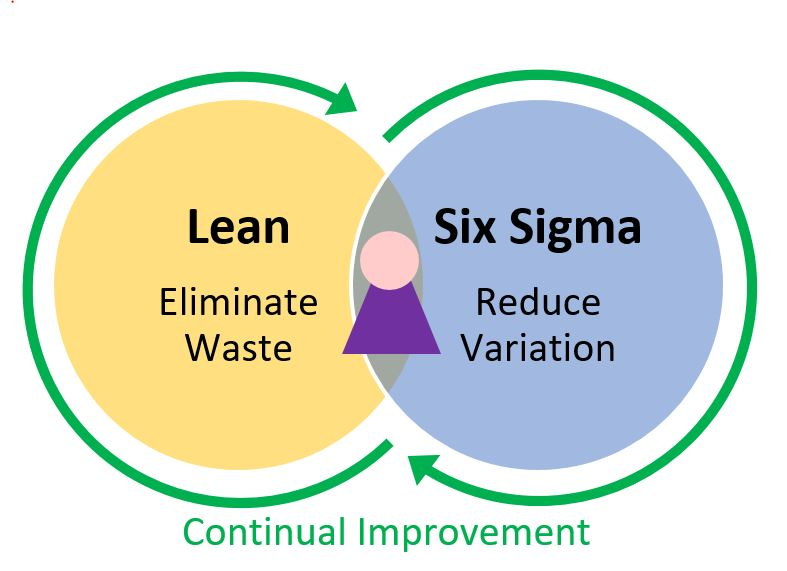
Lean thinking contributes a relentless focus on maximizing value by eliminating waste. It provides a lens for identifying and prioritizing improvement opportunities that deliver the most significant impact.
Making Improvement a Daily Habit
To build a true culture of improvement, the principles must be woven into the fabric of daily operations. It starts with identifying and logging opportunities. These can come from anywhere: a pattern in recent support tickets, feedback from a customer survey, or an idea from a team retrospective.
An improvement register is a simple but powerful tool for capturing these ideas. It’s a living backlog of potential enhancements, ensuring that good ideas aren't lost.
| ID | Improvement Opportunity | Source | Owner | Status |
|---|---|---|---|---|
| 001 | Automate new user onboarding process | Help Desk | J. Smith | In Progress |
| 002 | Simplify password reset interface | User Feedback | A. Lee | Backlog |
| 003 | Reduce server deployment time by 20% | Ops Team | M. Chen | Backlog |
With a backlog of ideas, the next step is prioritization. Not all improvements are created equal. Teams must weigh the effort required against the potential value. This is where you make a business case. For a small fix, this might be a quick conversation. For a larger initiative, it could involve a formal document outlining costs, benefits, and alignment with strategic objectives.
Once an improvement is prioritized and approved, it gets planned and implemented, following the same disciplined process as any other work. Finally, the results are measured and evaluated. This last step is crucial—it closes the loop and proves the value of the entire effort, building momentum for the next cycle.
Fostering this culture requires psychological safety. Team members must feel safe to experiment, suggest unconventional ideas, and even fail without fear of blame. When failure is treated as a learning opportunity, innovation flourishes.
What is the primary goal of the continual improvement practice in ITIL 4?
A service desk team wants to improve user satisfaction. They decide on a specific goal: "reduce ticket resolution time by 15% within the next quarter." This action corresponds to which step of the Continual Improvement Model?
By integrating these practices, continual improvement becomes less of a formal process and more of a natural rhythm for the entire organization.