Iterative Learning with AI
Introduction to AI in Education
AI in the Classroom
Artificial intelligence in education isn't about robot teachers taking over. It's about using smart software to create better learning experiences. Think of it as a powerful assistant for both teachers and students, one that can help make education more personal, engaging, and effective.
The core idea is to use technology to do what great teachers have always done: understand each student's unique needs and adapt the lesson accordingly.
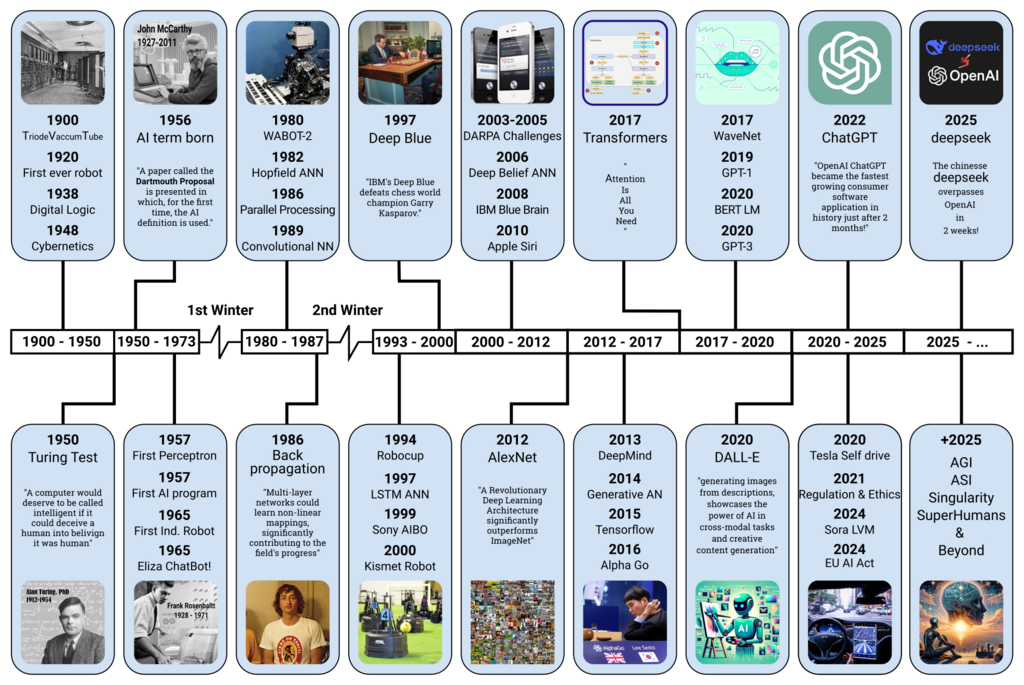
The dream of using machines to teach isn't new. As early as the 1950s, researchers imagined computer-based learning systems. For decades, these were simple programs that presented information and quizzed users. They were helpful, but not very smart. They followed a fixed path, regardless of whether a student was bored or completely lost.
The real shift came with the rise of modern AI. With the ability to analyze vast amounts of data and learn from patterns, computers could finally start to understand the learning process itself. This paved the way for the sophisticated educational tools we see emerging today.
Your Personal Tutor
One of the oldest and most powerful applications of AI in education is the intelligent tutoring system, or ITS. These aren't just fancy flashcard apps. An ITS is designed to mimic the guidance of a human tutor.
Intelligent Tutoring System
noun
A computer system that provides personalized, adaptive instruction and feedback to learners without the intervention of a human teacher.
Imagine you're learning to solve equations. If you get stuck, an ITS doesn't just give you the answer. It might ask a leading question, offer a hint, or provide a simpler problem that targets the specific concept you're struggling with. It watches how you work, identifies misconceptions, and adjusts its strategy in real time. This creates a supportive environment where it's safe to make mistakes and learn at your own pace.
Learning Just for You
The true power of an ITS lies in its ability to enable personalized learning on a massive scale. In a traditional classroom of 30 students, it's impossible for one teacher to provide constant, individualized attention to everyone. Some students get left behind, while others get bored waiting for the class to catch up.
AI helps solve this problem. By analyzing a student's answers, an AI-powered platform can build a detailed model of their knowledge. It knows which topics they've mastered and where their weak spots are. Based on this profile, it can create a unique learning path for that student.
For one student, this might mean more practice with fractions. For another, it could be an advanced reading passage to stretch their skills. Everyone gets the challenge they need to grow.
Agentic AI transforms education by creating intelligent tutoring systems, adaptive learning platforms, and personalized educational experiences that enhance learning effectiveness while reducing educator workload.
This frees up teachers to do what they do best: inspire, mentor, and support students. With AI handling routine tasks like grading and drill practice, teachers have more time for group projects, class discussions, and one-on-one help.
Potential and Pitfalls
The integration of AI into education comes with enormous benefits. It promises a world where every learner has access to high-quality, personalized instruction, regardless of their location or background. It can make learning more engaging and help students build confidence by allowing them to master skills at their own speed.
| Benefits | Challenges |
|---|---|
| Personalized learning paths | Ensuring data privacy and security |
| Immediate feedback for students | Risk of bias in AI algorithms |
| Automation of administrative tasks | High cost of implementation |
| Access to education for remote learners | Need for teacher training and support |
| More engaging learning materials | Overemphasis on standardized metrics |
However, there are also significant challenges to address. We must ensure that AI tools are fair and unbiased, and that student data is protected. There's a risk that an over-reliance on technology could diminish the important social aspects of learning. The goal is to use AI as a tool to enhance human instruction, not replace it.
Successfully bringing AI into the classroom requires careful thought from educators, developers, and policymakers. It’s about building a future where technology serves learning in a responsible and effective way.
What is the primary role of AI in education, as described in the provided text?
According to the text, what distinguishes a modern Intelligent Tutoring System (ITS) from older computer-based learning programs?