Italian to Spanish Language Explorer
Spanish Alphabet and Pronunciation
The Spanish Alphabet
The Spanish alphabet, or abecedario, is your first step into the language. For Italian speakers, the good news is that it will look very familiar. It uses the same Latin letters you're used to, with one unique addition. The modern Spanish alphabet has 27 letters.
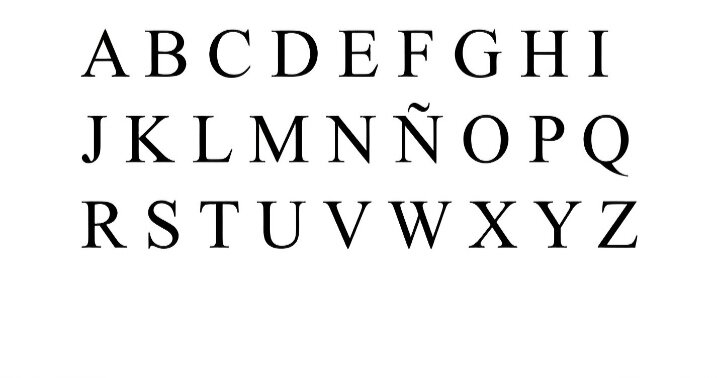
| Letter | Name (in Spanish) | Pronunciation of Name |
|---|---|---|
| A, a | a | ah |
| B, b | be | beh |
| C, c | ce | seh / theh* |
| D, d | de | deh |
| E, e | e | eh |
| F, f | efe | EH-feh |
| G, g | ge | heh / kheh* |
| H, h | hache | AH-cheh |
| I, i | i | ee |
| J, j | jota | HOH-tah / KHOH-tah* |
| K, k | ka | kah |
| L, l | ele | EH-leh |
| M, m | eme | EH-meh |
| N, n | ene | EH-neh |
| Ñ, ñ | eñe | EHN-yeh |
| O, o | o | oh |
| P, p | pe | peh |
| Q, q | cu | koo |
| R, r | ere | EH-reh |
| S, s | ese | EH-seh |
| T, t | te | teh |
| U, u | u | oo |
| V, v | uve | OO-beh |
| W, w | uve doble | OO-beh DOH-bleh |
| X, x | equis | EH-kees |
| Y, y | i griega | ee GRYEH-gah |
| Z, z | zeta | SEH-tah / THEH-tah* |
*The second pronunciation is common in most of Spain.
Pure and Simple Vowels
Here's more good news. Spanish has the same five pure vowel sounds as Italian. Each vowel has one, and only one, sound. This makes Spanish pronunciation very consistent and predictable. Once you know the vowel sounds, you can pronounce a huge number of words correctly.
Spanish pronunciation is straightforward thanks to consistent letter sounds and only five pure vowels; mastering the rolled r, distinguishing b and v, and mimicking native intonation helps you sound authentic.
Let's review them. They should feel just like home.
- A is always ah, like in the Italian casa.
- E is always eh, like in the Italian caffè.
- I is always ee, like in the Italian amici.
- O is always oh, like in the Italian ciao.
- U is always oo, like in the Italian uno.
Consonants with a Twist
While many consonants sound like their Italian counterparts, a few key letters in Spanish have very different pronunciations. Mastering these is crucial for being understood.
Jota
noun
The Spanish name for the letter 'j'. Its sound is one of the most distinct in Spanish.
The letter J has a raspy, throaty sound that doesn't exist in standard Italian. It's like the 'ch' in the Scottish word "loch" or the German "Bach." Think of it as a hard 'h' sound produced from the back of your throat.
ham
Similarly, the letter G sounds like the Spanish J when it comes before an 'e' or 'i'. For example, gente (people) is pronounced HEN-teh. Otherwise, before 'a', 'o', or 'u', it has the hard 'g' sound you know from Italian, as in gato (cat).
Eñe
noun
The Spanish name for the letter 'ñ', a defining character of the alphabet.
Next up is the unique Spanish letter Ñ. This one is easy for Italian speakers. It makes the exact same sound as 'gn' in words like gnocchi or bagno.
boy
Finally, we have the double L, or LL. While no longer officially a separate letter of the alphabet, you'll see it everywhere. Its pronunciation is similar to the 'gli' sound in Italian words like famiglia. In the word llave (key), it sounds like 'yah-veh'.
Note: In some regions, like Argentina, 'll' and 'y' are pronounced with a 'sh' sound. For now, stick to the 'y' sound in 'yes' or the Italian 'gli' sound, as it's most common.
Other Key Differences
A few other letters behave differently than they do in Italian.
C and Z: Before 'e' or 'i', the letter C is pronounced like 'th' in the English word "think" in most of Spain (e.g., cielo, sky). In Latin America, it's a simple 's' sound. The letter Z is always pronounced this way ('th' in Spain, 's' elsewhere), regardless of the vowel that follows. So, zapato (shoe) is tha-PA-to or sa-PA-to.
H: The letter H is always silent. Always. The word hola (hello) is pronounced simply o-la.
B and V: In Spanish, B and V are pronounced identically. Both sound like a soft 'b'. There is no hard 'v' sound like in the Italian word vino.
How many letters are in the modern Spanish alphabet?
In Spanish, the letter 'H' is always silent.
With these rules, you're well on your way to reading Spanish with confidence. The language's phonetic consistency is a huge advantage for learners.