Italian Marketing Essentials
Marketing Fundamentals
The Marketing Mix
At the heart of any marketing strategy are four key ingredients known as the marketing mix, or the 4Ps. Think of them as the fundamental levers you can pull to influence how customers perceive and purchase your offering.
Product: This is what you sell. It can be a physical good, a service, or an experience. The key is that it must satisfy a need or want for a customer. This isn't just about the item itself, but also its features, design, packaging, and quality. Is it a luxury item or a budget-friendly option? Does it solve a complex problem or provide simple entertainment?
Price: This is what the customer pays for the product. Setting a price is a delicate balance. It needs to cover your costs and generate a profit, but it also has to align with what customers believe the product is worth. The price sends a strong signal. A high price might suggest quality and exclusivity, while a low price could attract bargain hunters.
Place: This refers to where and how customers can buy your product. It’s about distribution. Will you sell directly from your own website, in retail stores, through wholesalers, or a combination? The goal is to make it as convenient as possible for your target customers to find and purchase your product.
Promotion: This is how you communicate with your customers. It includes all the activities you undertake to make your target audience aware of your product and persuade them to buy it. This covers advertising, public relations, sales promotions, and personal selling. It's the voice of your brand.
| P | Category | Key Question |
|---|---|---|
| 1 | Product | What customer need does this satisfy? |
| 2 | Price | What is the value to the customer? |
| 3 | Place | Where do buyers look for this? |
| 4 | Promotion | How will we reach our audience? |
Finding Your Audience
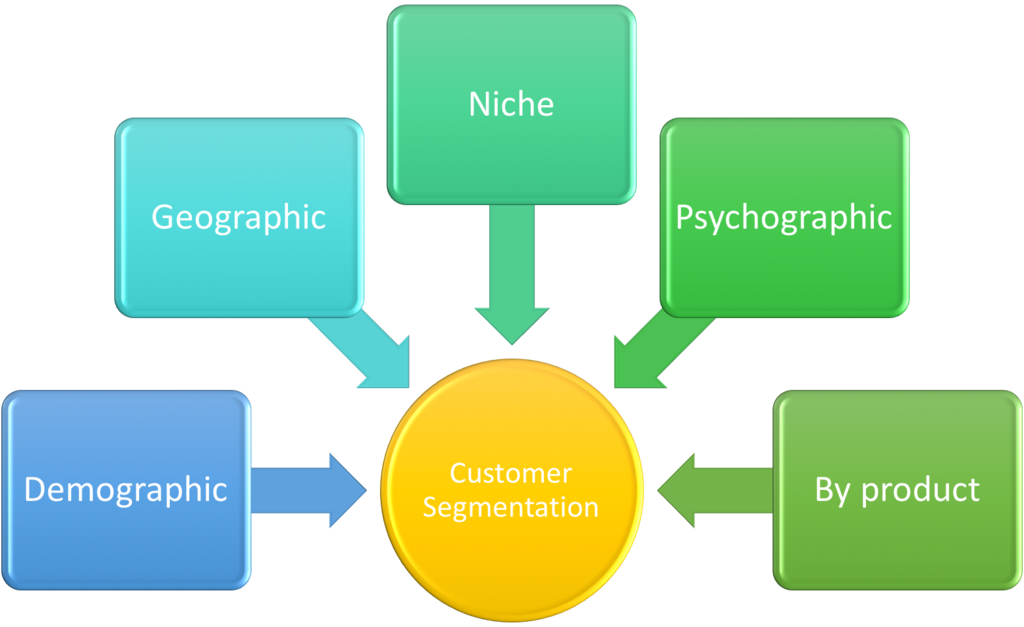
A common mistake is trying to be everything to everyone. Your product won't appeal to every single person, and that's okay. The most successful companies know exactly who they're talking to. The process of finding that group begins with market segmentation.
segmentation
noun
The process of dividing a broad consumer or business market into sub-groups of consumers based on some type of shared characteristics.
Marketers typically use a few common approaches to slice up the market:
- Demographic: Dividing the market based on variables like age, gender, income, occupation, and family size. A toy company, for example, segments by age.
- Geographic: Grouping customers by country, region, city, or even neighborhood. A company selling snow shovels will focus on regions with cold winters.
- Psychographic: Segmenting based on lifestyle, social class, and personality traits. A brand selling adventure gear targets people who value experiences and exploration.
- Behavioral: Dividing the market by consumer knowledge, attitudes, uses, or responses to a product. This could mean targeting frequent buyers or people who have shown interest in a similar product.
Targeting and Positioning
Once you've segmented the market, you can't pursue every group. You have to choose. Targeting is the process of selecting one or more of these segments to enter. Your choice will depend on factors like the segment's size, its growth potential, and how well it aligns with your company's goals and resources. It's about focusing your efforts where they'll have the most impact.
After choosing your target market, you need to decide how you want them to see you. This is positioning. It's the art of creating a clear, unique, and desirable image of your product in the minds of your target consumers. You're essentially answering the question: "Why should this specific group of people choose my product over the competition?"
Positioning is how you differentiate your product or service in the mind of your prospect. Is it the most affordable option? The most luxurious? The easiest to use? The most durable?
Think about car brands. Volvo has positioned itself around safety. BMW has positioned itself around performance and luxury. Both sell cars, but they occupy very different spaces in our minds because of effective positioning.
The Buyer's Journey
So, how does a person go from not knowing your product exists to becoming a loyal customer? They move through a series of stages known as the consumer decision-making process. Understanding this journey helps marketers meet customers where they are.
The journey starts with Problem Recognition, when a consumer realizes they have a need. Maybe their laptop breaks or they feel hungry. Next comes the Information Search, where they look for potential solutions, perhaps by searching online or asking friends for recommendations.
Then they Evaluate Alternatives, comparing different products or brands based on price, features, and quality. After weighing the options, they make a Purchase Decision.
But it doesn't end there. Post-Purchase Behavior is crucial. Was the customer satisfied? Did the product meet their expectations? A positive experience can lead to loyalty and repeat business, while a negative one can result in poor reviews and lost sales.
By understanding these fundamentals—the 4Ps, segmentation, targeting, positioning, and the consumer journey—you can build a marketing strategy that is coherent, focused, and effective.