IT Recruitment Essentials
Introduction to IT Recruitment
The World of IT Recruiting
Recruiting for information technology isn't just about filling seats. It's about building the teams that create the future. Unlike other types of hiring, IT recruitment operates at the speed of innovation. New programming languages, frameworks, and tools emerge constantly, and the skills that are in high demand today might be standard tomorrow.
At its core, IT recruiting is the specialized process of finding, attracting, and hiring professionals with technical skills. This could be anyone from a software developer who writes code for an app to a cybersecurity analyst who protects a company's data. The recruiter acts as a bridge between the company's technical needs and the talented people who can meet them.
Success in this field requires more than just good people skills. It demands a genuine curiosity about technology and a commitment to continuous learning.
Speaking the Language of Tech
Imagine trying to hire a chef for a five-star restaurant. You wouldn't just look for someone who "cooks food." You'd need to know the difference between a saucier, a pastry chef, and a sous chef. Each role requires a distinct set of skills, tools, and experiences. The same is true in technology.
A great IT recruiter understands that "developer" is not a one-size-fits-all title. They know that a Front-End Developer, who builds the user-facing part of a website, has a completely different skill set from a Back-End Developer, who works on the server and database that power it.
This knowledge is crucial. It allows a recruiter to write accurate job descriptions, ask intelligent questions, and recognize strong candidates when they see them. Without it, you risk wasting everyone's time by presenting a database architect for a role that requires building user interfaces.
| Role | What They Primarily Do |
|---|---|
| Front-End Developer | Builds the visual and interactive parts of a website or app. |
| Back-End Developer | Manages the server, database, and application logic. |
| DevOps Engineer | Bridges development and operations to automate and speed up software deployment. |
| Data Scientist | Analyzes complex data to uncover trends and build predictive models. |
| UI/UX Designer | Focuses on how a product feels (UX) and how it's laid out (UI). |
Understanding these distinctions helps you build credibility with both hiring managers and candidates.
Why Is Hiring Tech Talent So Hard?
The demand for skilled tech professionals often outpaces the supply. This creates a highly competitive market where top candidates may have multiple job offers to consider. Companies are all fishing from the same small, highly sought-after pool of talent.
Furthermore, many of the best candidates are passive. They are already employed and not actively searching for a new job. They won't see your job posting on a career site. To reach them, recruiters must be proactive, building relationships and showcasing why their opportunity is worth considering.
Technology also evolves at a blistering pace. A programming language that's popular today might be replaced by a newer, more efficient one in a few years. This means recruiters must constantly stay informed about industry trends to understand which skills are truly valuable.
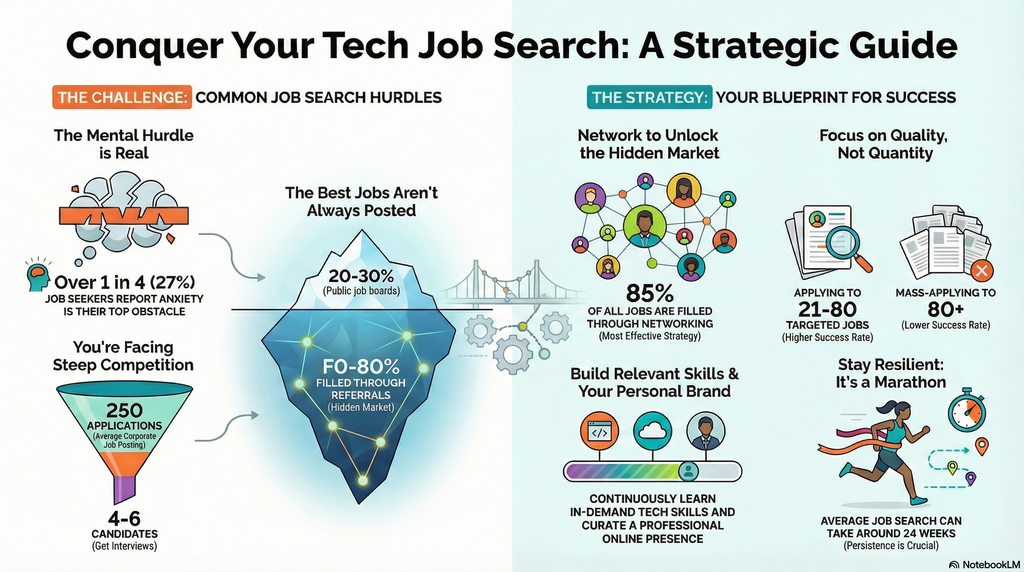
Because of these challenges, attracting top tech talent is about more than just salary. It’s about offering interesting problems to solve, a strong engineering culture, and opportunities for growth.
Connecting Recruiting to Company Goals
Recruitment should never happen in a vacuum. Every hiring decision is a strategic investment in the company's future. The goal isn't just to fill a role, but to bring in someone who will help the organization achieve its larger objectives.
For example, if a company's goal is to launch a new mobile application within the next year, the recruitment team must prioritize hiring skilled mobile developers. If the objective is to improve data security, then sourcing top cybersecurity talent becomes the focus. Recruitment efforts must be directly aligned with the business's roadmap.
This alignment ensures that you're not just hiring for today's needs, but also for the challenges and opportunities of tomorrow. It transforms recruiting from a support function into a strategic driver of business success.
Let's test your understanding of these core concepts.
What is the primary role of an IT recruiter?
Why is it crucial for an IT recruiter to understand the difference between a Front-End Developer and a Back-End Developer?
Understanding these fundamentals is the first step toward building a successful career in IT recruitment and, more importantly, building successful tech teams.