IT Infrastructure Control and Compliance Essentials
Introduction to IT Governance
What Is IT Governance?
Think of a company's information technology (IT) department as a city's power grid. It needs to be reliable, secure, and powerful enough to support everyone's needs, from the smallest homes to the largest factories. IT governance is the system of rules, policies, and processes that manages this grid. It ensures that the IT strategy supports the overall business strategy, much like a city council ensures the power grid can support urban growth and development.
At its core, IT governance is about making sure technology serves the business, not the other way around. It answers critical questions: Are we investing in the right technology? Are our digital assets secure? Is the IT department helping the company achieve its goals? Without a clear governance structure, IT can become a costly, inefficient, and risky part of the organization.
Governance provides the strategic framework for decision-making, accountability, and performance within an organization.
The Pillars of IT Governance
Effective IT governance stands on five key principles, often called pillars. These principles provide a foundation for making sound decisions about technology and ensuring it delivers real value.
1. Strategic Alignment This is the most crucial pillar. It means that IT plans and activities must directly support the company's business goals. If the company wants to expand into a new market, the IT strategy must focus on providing the necessary infrastructure, software, and support for that expansion.
2. Value Delivery Technology costs money. This pillar ensures that every dollar spent on IT provides a clear benefit. This could mean increasing efficiency, boosting sales, or improving customer satisfaction. The goal is to maximize the return on IT investments.
3. Risk Management IT comes with risks, from cybersecurity threats and data breaches to system failures. Risk management involves identifying potential threats, assessing their likelihood and impact, and putting controls in place to minimize them. It’s about protecting the company’s assets and reputation.
4. Resource Management This pillar focuses on using IT resources—people, infrastructure, data, and applications—as effectively as possible. It involves optimizing budgets, managing talent, and ensuring that the technology infrastructure is both robust and efficient.
5. Performance Measurement How do you know if your IT strategy is working? Performance measurement involves tracking and monitoring metrics to ensure that IT is meeting its objectives. This could include things like system uptime, project completion rates, and user satisfaction scores.
Frameworks for Guidance
Putting these principles into practice can be complex. That's where IT governance frameworks come in. These frameworks provide structured guidelines and best practices to help organizations build and maintain an effective governance system. They aren't one-size-fits-all rulebooks, but rather adaptable blueprints.
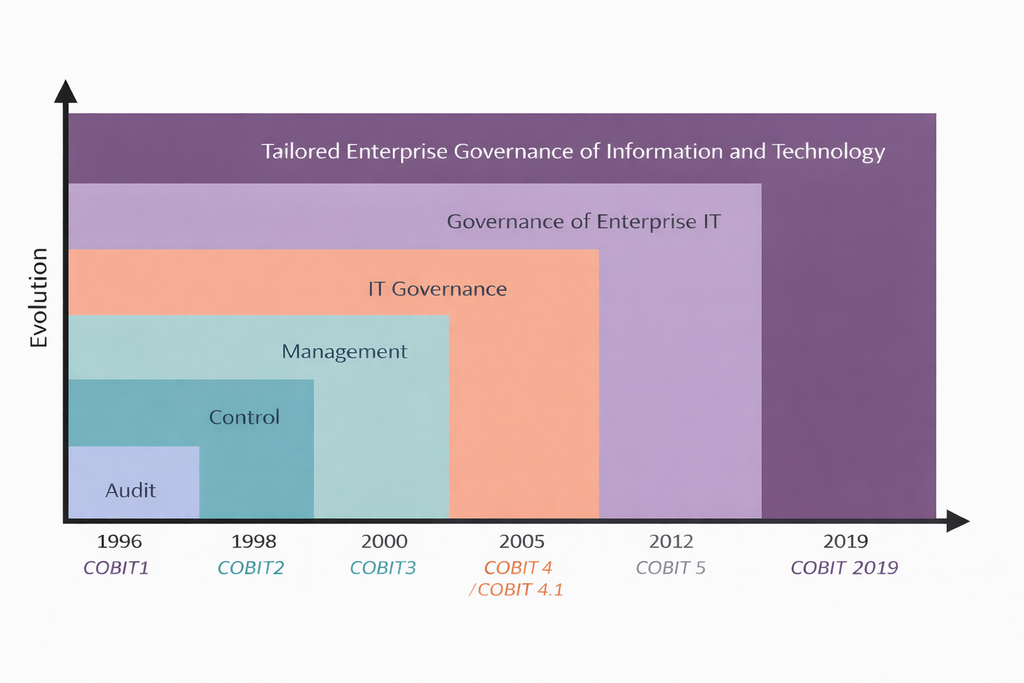
Let's look at three of the most widely recognized frameworks.
| Framework | Primary Focus | Best For... |
|---|---|---|
| COBIT | Governance and management of enterprise IT | Organizations needing a comprehensive, end-to-end framework that links business goals to IT processes and controls. |
| ITIL | IT Service Management (ITSM) | Organizations focused on improving the delivery and support of IT services to users. |
| ISO/IEC 38500 | High-level principles for the board of directors | Guiding top-level leadership (the board) on their responsibilities for the governance of IT. |
COBIT (Control Objectives for Information and Related Technologies) is a comprehensive framework that covers the entire enterprise. It helps organizations govern and manage their information and technology, aligning IT processes with business goals and ensuring risk is managed effectively.
ITIL (Information Technology Infrastructure Library) is focused specifically on IT service management. It provides a set of detailed practices for creating, delivering, and supporting IT services. Think of it as a playbook for running an efficient and customer-focused IT department.
ISO/IEC 38500 is a high-level, international standard. It provides a set of guiding principles for company directors on the effective, efficient, and acceptable use of IT. It's less about detailed processes and more about the oversight responsibilities of top leadership, centered around a model of Evaluate, Direct, and Monitor.
By understanding these principles and frameworks, organizations can transform their IT departments from simple cost centers into strategic partners that drive business success.
According to the provided text's analogy, if a company's IT department is like a city's power grid, what does IT governance represent?
What is the primary goal of IT governance?