Israel Geopolitics Unpacked
Ancient Israel
From Tribes to a Kingdom
The story of ancient Israel begins not with a king or a country, but with a collection of tribes. After settling in the highlands of Canaan around 1200 BCE, these groups formed a loose confederation. They shared a common ancestry, language, and the worship of a single God, Yahweh. This was a radical idea in a world full of polytheistic cultures.
Much of what scholars know about Israel’s ancient history comes from the Hebrew Bible.
For about two centuries, these tribes were led by figures known as judges. These weren't courtroom judges, but rather charismatic military and spiritual leaders who rose to the occasion during times of crisis, uniting the tribes to fight off external threats. This system, however, was decentralized and often proved unstable. As neighboring peoples like the Philistines grew stronger and better organized, the Israelite tribes began to feel the need for a more permanent, unified leader.
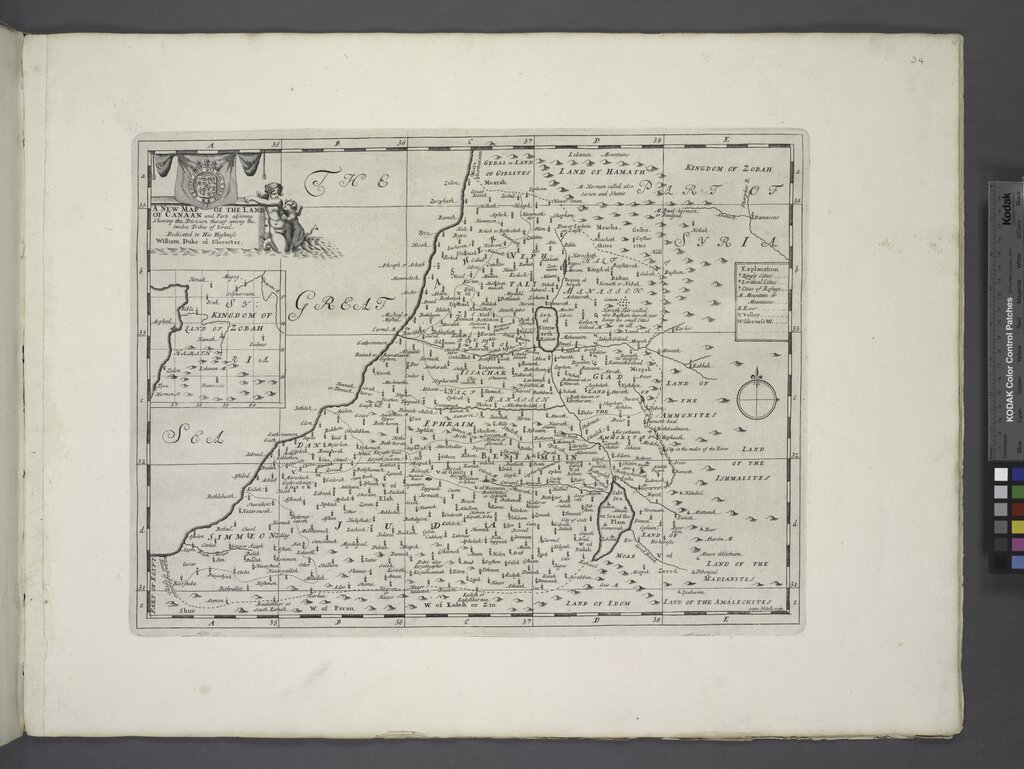
They looked to their neighbors and saw powerful kings. The call for a monarch of their own grew louder. They wanted a king to lead them in battle and govern them with a steady hand, marking a pivotal shift from a tribal league to a centralized state.
The United Monarchy
Around 1020 BCE, the tribes united under their first king, Saul. His reign was marked by constant warfare, but he laid the groundwork for a unified nation. His successor, David, captured the city of Jerusalem from the Jebusites and transformed it into the political and religious capital of the kingdom. He expanded the kingdom's territory and established a dynasty.
David’s son, Solomon, inherited a stable and prosperous empire. His reign is remembered as a golden age of peace and wealth, largely free from major military conflicts. Solomon is most famous for building the First Temple in Jerusalem. This magnificent structure became the center of Israelite religious life, a permanent home for the Ark of the Covenant, and a powerful symbol of the nation's identity and its covenant with God.
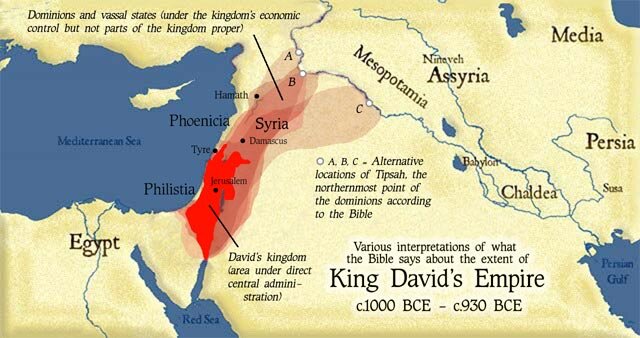
But this golden age came at a cost. Solomon's ambitious building projects, including the Temple and a lavish royal palace, were funded by heavy taxes and forced labor, which caused widespread discontent, especially among the northern tribes.
A Kingdom Divided
When Solomon died around 930 BCE, the simmering tensions boiled over. The ten northern tribes refused to accept his son, Rehoboam, as their king. They broke away and formed their own kingdom, the Kingdom of Israel, with its capital eventually established at Samaria. The remaining two tribes, Judah and Benjamin, stayed loyal to David's dynasty and formed the southern Kingdom of Judah, with Jerusalem as its capital.
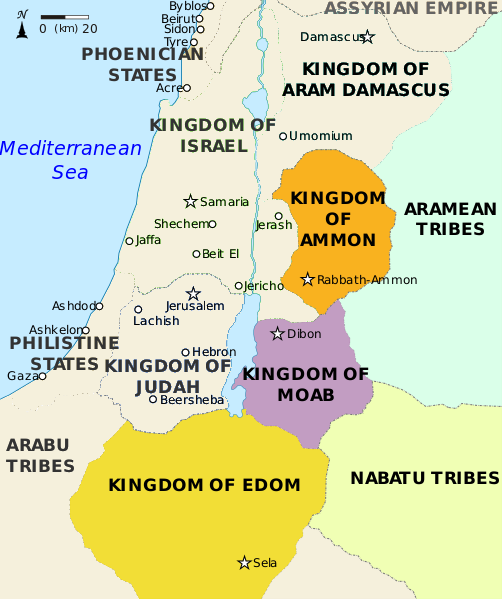
For the next two centuries, these two Hebrew kingdoms existed side-by-side, sometimes as rivals, sometimes as allies. The northern Kingdom of Israel was larger and more prosperous, but it was also politically unstable. In 722 BCE, it was conquered by the mighty Assyrian Empire. The Assyrians deported a large portion of the population, scattering them across their empire. These became known as the "Ten Lost Tribes."
The southern Kingdom of Judah managed to survive for another century, but it too was caught between powerful empires. As Assyria's power waned, the Neo-Babylonian Empire rose to take its place.
Exile in Babylon
In 586 BCE, the Babylonian king Nebuchadnezzar II conquered Judah. He laid siege to Jerusalem, destroyed Solomon’s Temple, and exiled the kingdom's elite—its scribes, priests, and leaders—to Babylon. This event, known as the Babylonian Exile, was a profound trauma. The people of Judah had lost their land, their king, and their holy temple.
The destruction of the Temple and the exile forced a fundamental shift in religious practice. Without a central place of sacrifice, faith had to be expressed in new ways.
Yet, this period of crisis became a time of incredible religious and cultural creativity. Far from their homeland, the exiled Judeans focused on preserving their identity. They gathered to pray and study their sacred texts, laying the groundwork for the synagogue. Scribes and prophets began to write down and edit the oral traditions and laws that would eventually become the Hebrew Bible.
The experience of exile transformed their understanding of God, who they now saw not as a local deity tied to a temple, but as a universal God who could be worshiped anywhere. When the Persian Empire conquered Babylon and allowed the exiles to return to Judah in 538 BCE, they came back with a renewed and refined faith that would become the foundation of modern Judaism.
Let's review what we've learned.
Before the establishment of a monarchy around 1020 BCE, the Israelite tribes were primarily led by charismatic military and spiritual leaders known as:
What was the primary reason the unified kingdom split into the northern Kingdom of Israel and the southern Kingdom of Judah after Solomon's death?
These early periods of tribal life, unified monarchy, division, and exile fundamentally shaped the identity of the Israelite people, creating a resilient cultural and religious heritage that has endured for millennia.