Islam and AI
Introduction to Artificial Intelligence
What Is AI?
Artificial Intelligence is about making computers smart. The goal is to create machines that can think, learn, and solve problems in ways that are similar to human intelligence. Instead of just following a strict set of pre-programmed instructions, an AI system can analyze information, recognize patterns, and make decisions on its own.
Think of it like this: a regular calculator follows instructions perfectly, but it can't learn to do anything new. An AI, on the other hand, can be trained on thousands of cat photos and eventually learn to identify a cat in a new picture it has never seen before.
Artificial Intelligence
noun
A field of computer science dedicated to creating systems that can perform tasks that typically require human intelligence, such as learning, reasoning, problem-solving, perception, and language understanding.
A Brief History
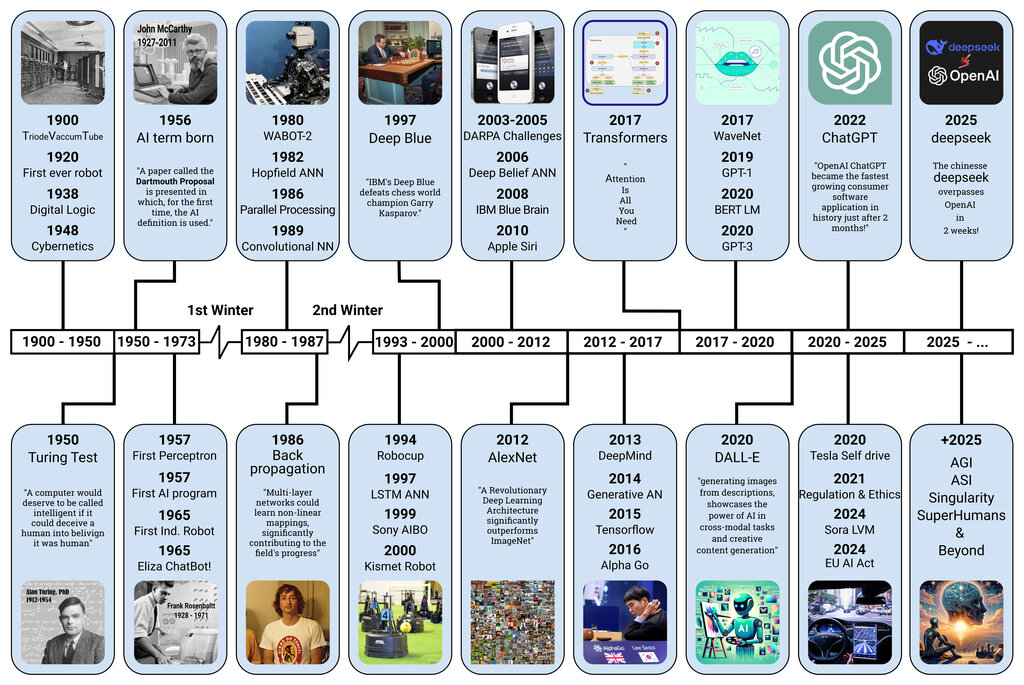
The idea of intelligent machines has been around for centuries, but the modern field of AI officially began in the 1950s. A group of scientists at a workshop at Dartmouth College coined the term "Artificial Intelligence" and set out to build machines that could think.
Early progress was exciting, leading to programs that could solve algebra problems and play checkers. However, creating true intelligence proved much harder than expected. A period known as the "AI winter" followed, where funding and interest dried up due to slow progress.
Everything changed in the last couple of decades. The explosion of the internet generated massive amounts of data, and computer processors became incredibly powerful and affordable. This combination of big data and strong computing power fueled a resurgence in AI, leading to the breakthroughs we see today.
Two Kinds of AI
When people talk about AI, they are usually referring to one of two types: Narrow AI or General AI. Understanding the difference is key to understanding where the technology is today and where it might go in the future.
Artificial Narrow Intelligence (ANI), sometimes called Weak AI, is designed to perform a single, specific task. This is the only type of AI we have successfully built so far. Your navigation app, a spam filter for your email, and a facial recognition system are all examples of ANI. They are incredibly good at their one job, but they can't operate outside of it.
Artificial General Intelligence (AGI), or Strong AI, is the more futuristic idea of a machine with human-level intelligence. An AGI would be able to understand, learn, and apply its intelligence to solve any problem, just like a human being. It could switch from writing a poem to solving a complex physics equation without needing to be redesigned. AGI remains a theoretical concept and a major goal for many AI researchers.
| Feature | Artificial Narrow Intelligence (ANI) | Artificial General Intelligence (AGI) |
|---|---|---|
| Scope | Performs one specific task | Can handle any intellectual task a human can |
| Examples | Siri, Google Translate, self-driving cars | None exist yet (e.g., Data from Star Trek) |
| Current Status | Widely used today | Purely theoretical |
The Building Blocks of AI
AI isn't a single technology; it's a broad field made up of several core components. Let's look at three of the most important ones: machine learning, neural networks, and natural language processing.
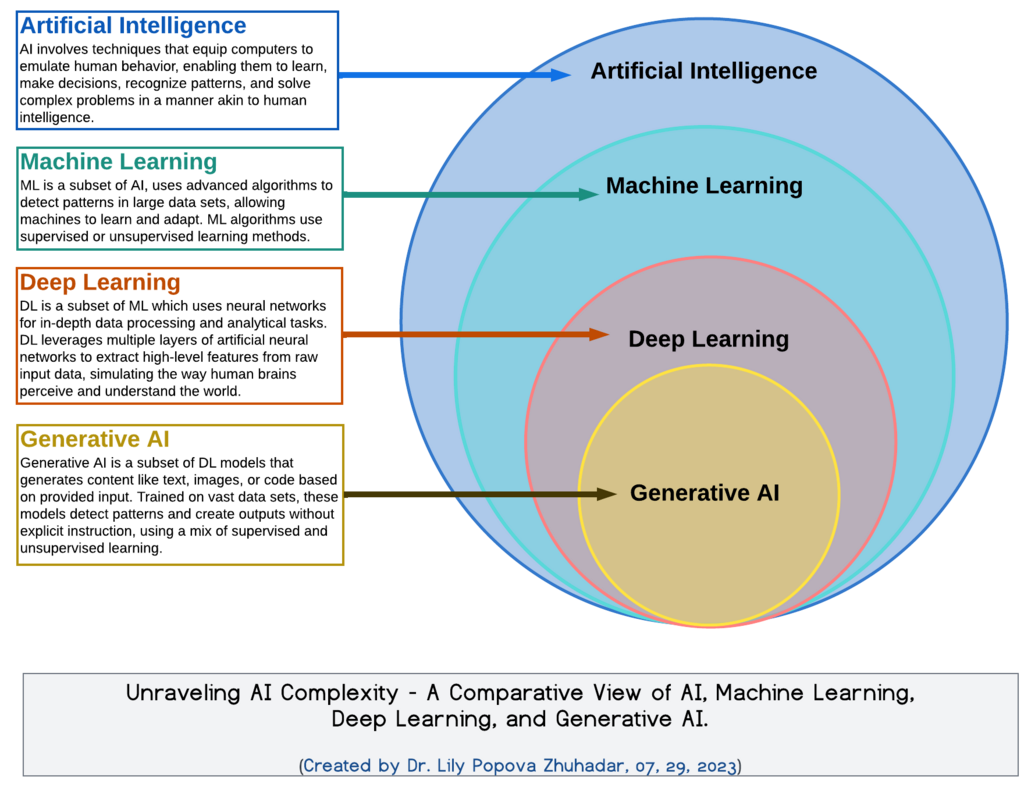
Machine Learning (ML) is a subset of AI where systems learn from data. Instead of being programmed with rules, a machine learning model is trained on a large dataset. It identifies patterns in the data and uses those patterns to make predictions about new, unseen data. For example, a bank might use ML to analyze past transaction data to learn how to spot fraudulent activity.
Neural Networks are a type of machine learning model inspired by the structure of the human brain. They are made up of layers of interconnected "neurons" that process information. When a neural network is very complex with many layers, it's called a deep learning model. Deep learning is the powerhouse behind many recent AI advancements, from image recognition to sophisticated language models.
Natural Language Processing (NLP) is the technology that allows computers to understand, interpret, and generate human language. Whenever you talk to a voice assistant, use a translation app, or see a chatbot pop up on a website, you're interacting with NLP. It's the bridge that connects human communication with computer understanding.
AI in the Real World
AI is already a part of our daily lives, often in ways we don't even notice. Here are just a few examples of how it's being used across different sectors:
Healthcare: AI helps doctors analyze medical images like X-rays and MRIs to detect diseases earlier and more accurately. It can also predict which patients are at higher risk for certain conditions.
Finance: Banks use AI to detect fraud, assess credit risk, and automate trading. AI-powered robo-advisors provide personalized investment advice.
Entertainment: Streaming services like Netflix and Spotify use AI to analyze your viewing and listening habits to recommend movies, shows, and music you might like.
Transportation: AI is the brain behind self-driving cars, helping them perceive their environment and make driving decisions. It also optimizes traffic flow in cities and powers navigation apps.
From science and manufacturing to retail and agriculture, AI is transforming industries by making processes more efficient, insightful, and automated.
Ready to check your understanding? Let's see what you've learned about the fundamentals of AI.
What is the primary goal of Artificial Intelligence?
Which of the following is an example of Artificial Narrow Intelligence (ANI)?
This foundation gives us a shared language for understanding what AI is, where it came from, and how it works. With these basics covered, we can explore more complex topics.