ISC2 SSCP Certification Mastery for IT Professionals
Security Operations Administration
From Operator to Guardian
As a mainframe operator, you mastered the art of keeping critical systems running. You know the hardware, the software, and the processes that power an organization. Now, you're shifting from keeping things running to keeping them safe. This is the core of security administration: applying a security-first mindset to the systems you already understand.
Your guide in this new role is the ISC2 Code of Ethics This isn't just a list of rules to memorize for a test. It’s a practical framework for making tough decisions when no one is looking. The code is built on four canons, but let's focus on how two of them directly impact your daily work:
- Protect society, the common good, necessary public trust and confidence, and the infrastructure. This means your job is bigger than just one company. You are a steward of the systems that people rely on. When you meticulously configure a firewall or patch a server, you're upholding this trust.
- Act honorably, honestly, justly, responsibly, and legally. This is about integrity. It means reporting a security weakness you discover, even if it creates more work. It means being fair and impartial when assigning access rights to different users.
Think of the Code of Ethics as your professional compass. It points you toward the right decision, especially when the path isn't clear.
Putting Policy into Practice
Ethics tell you why to act; security policies tell you how. A security policy isn't just a document that sits on a shelf. It's a blueprint for building a secure environment. As an administrator, your job is to be the lead engineer, turning those plans into reality.
A foundational concept in nearly every security policy is the Principle of Least Privilege.
Principle of Least Privilege
noun
A security concept in which a user is given the minimum levels of access – or permissions – needed to perform their job functions.
This principle is simple: people and systems should only have the access they absolutely need to do their jobs, and nothing more. If a user in accounting only needs read-only access to a sales database to generate reports, they shouldn't have permission to change or delete records.
Implementing this means getting hands-on. You'll be configuring user roles in applications, setting file and folder permissions on servers, and managing access control lists (ACLs) on network devices. Every setting is a chance to enforce the policy.
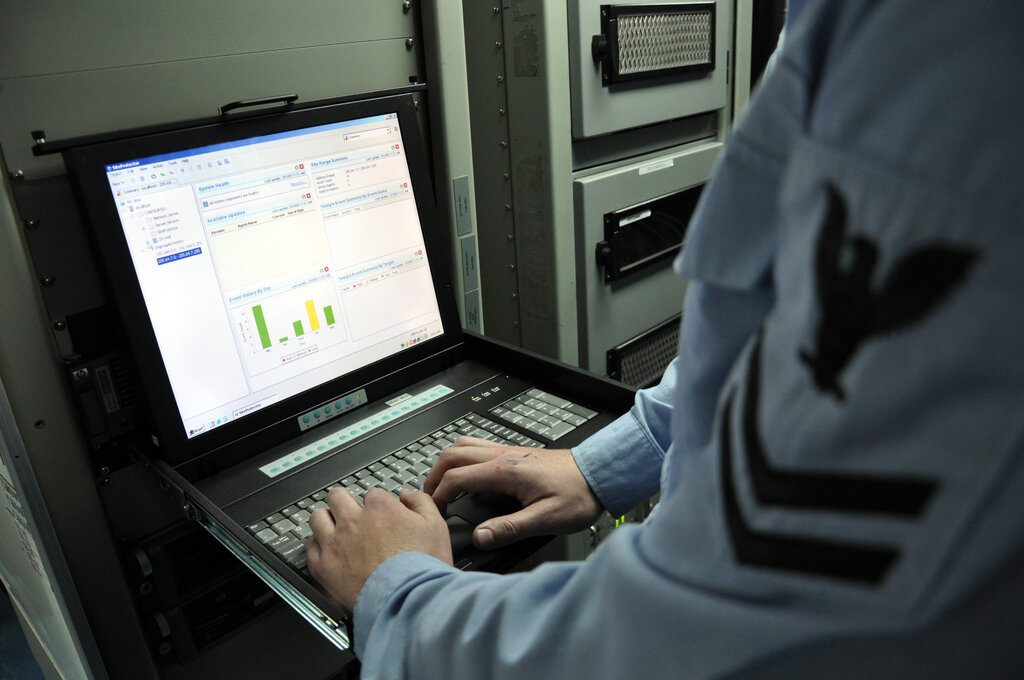
Another core part of policy implementation is knowing what you're protecting. This brings us to asset management As a mainframe operator, you knew your machines inside and out. Now, you’ll expand that to a formal inventory of all hardware and software. You need to know every server, laptop, router, and application on your network.
But security asset management goes deeper than just a list. For each asset, you need to track its owner, its location, its software version, its patch level, and its importance to the business. You can't protect what you don't know you have.
Managing the Full Lifecycle
Assets aren't the only thing with a lifecycle; data is born, lives, and eventually is retired. Data lifecycle management is the process of securing data at every stage.
This framework helps you ask the right security questions at the right time. Your job is to implement the controls that protect data throughout its journey.
Once you have policies, assets, and data lifecycles managed, you need to prove it. This is where compliance documentation comes in. Documents like a System Security Plan (SSP) detail how security controls are implemented. A Plan of Action and Milestones (POA&M) tracks the progress of fixing identified security weaknesses.
Think of it as the logbook for your security program. It shows auditors, management, and partners that you are diligent and accountable.
Now let's test what you've learned about the administrative side of security operations.
A security administrator discovers a significant but non-publicized vulnerability in a critical system. Reporting it will likely delay a major project and create extra work for their team. According to the (ISC)² Code of Ethics, what is the most appropriate first step?
A new employee in the finance department needs to run monthly reports from a sales database. Which of the following access configurations best implements the Principle of Least Privilege?
Mastering these administrative duties is how you translate high-level security goals into real, tangible protections for an organization's most valuable assets.