ISC2 CCSP Certification Essentials
Cloud Concepts
What Is the Cloud?
At its core, cloud computing is the on-demand delivery of IT resources over the internet with pay-as-you-go pricing. Instead of buying, owning, and maintaining your own physical servers and data centers, you can access technology services, such as computing power, storage, and databases, from a cloud provider like Amazon Web Services (AWS), Google Cloud, or Microsoft Azure.
Cloud computing is the delivery of computing services—servers, storage, databases, networking, software, analytics, and intelligence—over the internet (“the cloud”).
This model isn't just about hosting files online. True cloud computing has a few key characteristics that set it apart from traditional hosting.
- On-Demand Self-Service: You can provision computing resources like server time or network storage as needed, automatically, without requiring human interaction with the service provider.
- Broad Network Access: Capabilities are available over the network and accessed through standard mechanisms by phones, laptops, and workstations.
- Resource Pooling: The provider's computing resources are pooled to serve multiple customers using a multi-tenant model. You generally don't know or care about the exact physical location of the resources.
- Rapid Elasticity: Resources can be elastically provisioned and released, in some cases automatically, to scale rapidly outward and inward with demand. To the customer, the capabilities available for provisioning often appear to be unlimited.
- Measured Service: Cloud systems automatically control and optimize resource use by leveraging a metering capability. Resource usage can be monitored, controlled, and reported, providing transparency for both the provider and consumer.
The Cloud's Menu of Services
Cloud computing isn't a single thing; it's a collection of services. These services are typically grouped into three main categories, each offering a different level of control and management. Think of it like building a house.
Infrastructure as a Service (IaaS) is like leasing a plot of land with utilities ready to go. The provider gives you the fundamental computing infrastructure: virtual machines, storage, and networking. You're responsible for building everything on top of that, including the operating system, middleware, and your applications.
Platform as a Service (PaaS) is similar to renting an unfurnished apartment. The provider manages the building, plumbing, and electricity (the hardware and operating systems). You just move in your furniture (your code and data) and manage your own application. This lets you focus on development without worrying about the underlying infrastructure.
Software as a Service (SaaS) is like staying in a fully-furnished hotel. Everything is managed for you. You just show up and use the software. The provider handles the infrastructure, platform, and application. Common examples include Gmail, Salesforce, and Dropbox.
| Service Model | What You Manage | What Provider Manages | Example Analogy |
|---|---|---|---|
| IaaS | Applications, Data, Runtime, Middleware, OS | Virtualization, Servers, Storage, Networking | Leasing empty land with utilities |
| PaaS | Applications, Data | Runtime, Middleware, OS, Virtualization, Servers, Storage, Networking | Renting an unfurnished apartment |
| SaaS | Nothing | Everything: from the physical servers to the application itself | Staying in a fully-furnished hotel |
Where Does the Cloud Live?
Just as there are different service models, there are also different ways to deploy cloud resources. These deployment models define who has access and where the infrastructure resides.
-
Public Cloud: The cloud infrastructure is owned and operated by a third-party cloud service provider, and resources are delivered over the public internet. This is the most common deployment model. AWS, Google Cloud, and Microsoft Azure are public clouds. It's like living in a large apartment complex shared with many other tenants.
-
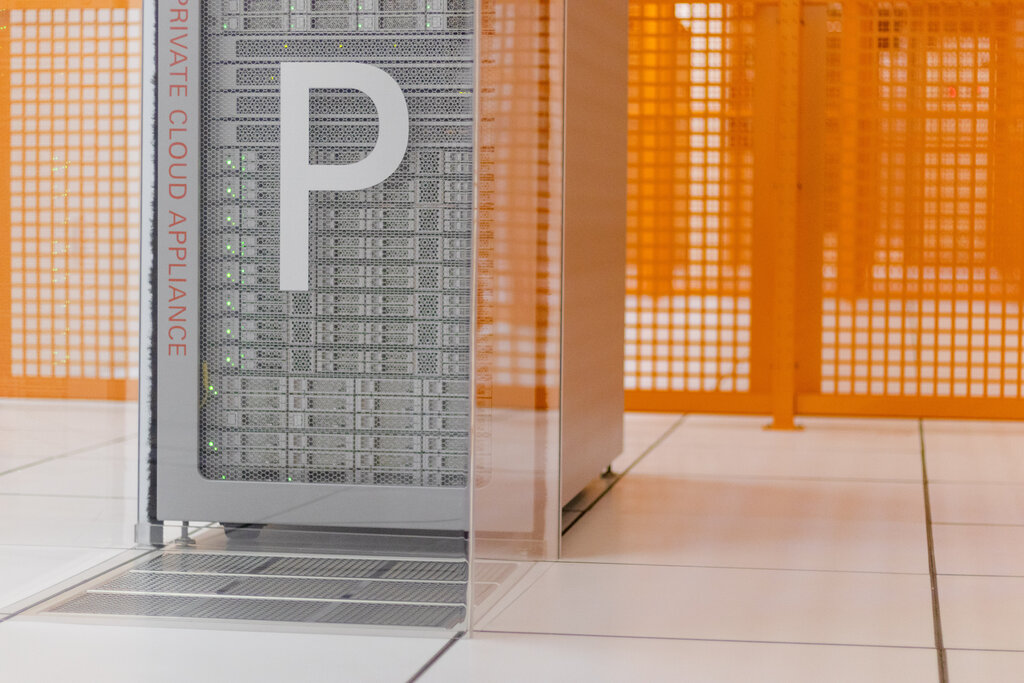
Private Cloud: The cloud infrastructure is operated solely for a single organization. It can be managed internally or by a third party and can exist on-premises or off-premises. This provides more control and privacy, like owning a private, single-family home.
-
Hybrid Cloud: This model combines a private cloud with one or more public cloud services, allowing data and applications to be shared between them. This offers greater flexibility. For example, you could use the public cloud for high-volume, lower-security needs like web servers, and the private cloud for sensitive, business-critical operations.
-
Community Cloud: A less common model where cloud infrastructure is shared by several organizations with common concerns (e.g., security requirements, compliance). It's like a condominium complex where residents share costs and access to common facilities.
Benefits and Challenges
Adopting the cloud offers significant advantages, but it's not without its challenges.
The benefits are compelling. Cost savings are a primary driver; you trade capital expenses (like buying servers) for variable expenses (paying only for what you use). Scalability is another huge plus. You can scale your resources up or down almost instantly to meet demand. This agility allows businesses to innovate and deploy applications faster than with on-premises infrastructure.
Key Benefits: Cost, global scale, performance, security, speed, and reliability.
However, there are challenges to consider. While cloud providers offer robust security, the responsibility is shared. Misconfigurations on the customer's side are a common source of data breaches. Another potential issue is vendor lock-in, where it becomes difficult and costly to move your applications and data from one cloud provider to another. Finally, managing cloud spending can become complex, and without proper governance, costs can quickly spiral out of control.
Now, let's test your understanding of these core cloud concepts.
Which of the following best describes the core pricing model of cloud computing?
A company wants to develop a new application. They want to focus only on writing code and managing their data, without worrying about the underlying operating system, servers, or hardware. Which cloud service model is the best fit?
Understanding these foundational concepts is the first step in navigating the world of cloud computing. By grasping the what, how, and where of the cloud, you're better prepared to understand its security implications.