Irrigation and Hydro-politics in Central Asia
Soviet Infrastructure Legacy
The Soviet Hydraulic Mission
During the mid-20th century, the Soviet Union embarked on a massive engineering project to transform Central Asia. The goal was to create a sprawling 'cotton belt' to fuel the Soviet textile industry. This state-led 'hydraulic mission,' primarily from the 1950s to the 1980s, aimed to conquer nature by diverting two of the region's major rivers, the Amu Darya and Syr Darya.
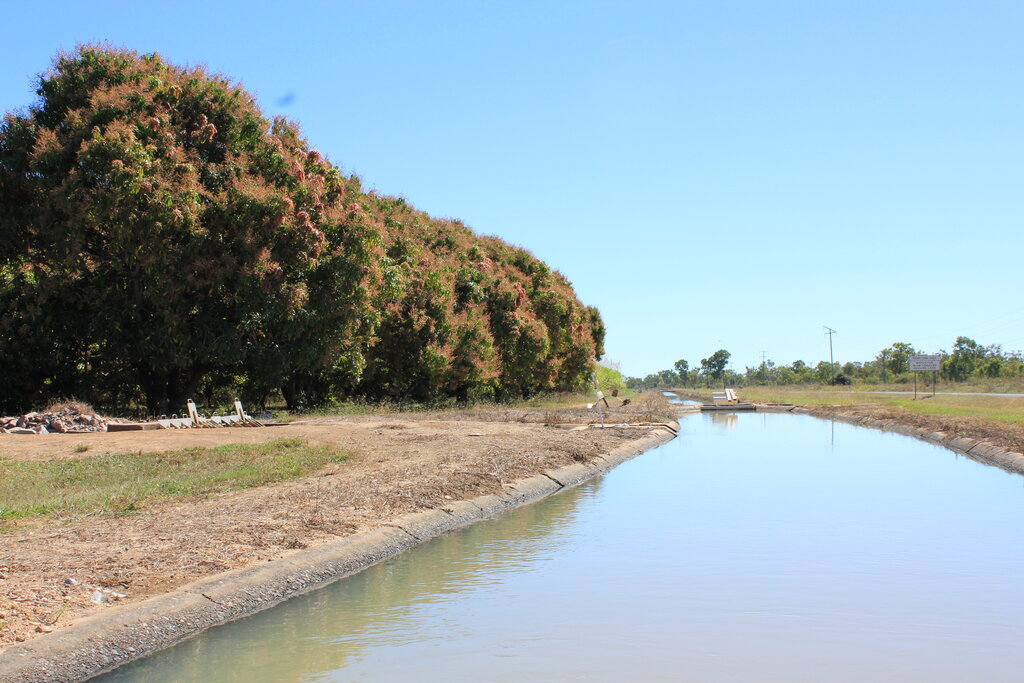
This era saw the construction of colossal dams, reservoirs, and thousands of kilometers of canals. The Karakum Canal, for instance, stretches over 1,300 kilometers, carrying water from the Amu Darya across the desert. Upstream, in the mountains of what are now Kyrgyzstan and Tajikistan, massive dams like the Naryn cascade were built to store water and generate hydropower.
The entire system was designed from a central planning perspective in Moscow. It treated Central Asia as a single economic unit, a producer of cotton and energy. The network of canals and power lines crisscrossed the region, completely disregarding the distinct geographical and ethnic lines of the five Soviet republics.
A System Divided
When the Soviet Union dissolved in 1991, this unified, centrally managed system fractured. Suddenly, international borders appeared where there were once only administrative lines. The water and power grid, designed to be interconnected, was now split among five sovereign nations.
This created an immediate and complex problem. The upstream countries, Kyrgyzstan and Tajikistan, controlled the sources of the water. The downstream countries, Uzbekistan, Turkmenistan, and Kazakhstan, relied on that water for their agriculture, which was the backbone of their economies. The infrastructure was built for one country, but now had to be managed by five.
To prevent immediate chaos, the newly independent states signed the Almaty Agreement in 1992. This agreement established the Interstate Coordination Water Commission (ICWC) to manage the Amu Darya and Syr Darya basins. The commission’s initial goal was to maintain the status quo by continuing to use the water-sharing quotas established during the Soviet era.
However, these quotas were designed to maximize cotton production for a single state, not to serve the diverse national interests of five separate countries. The downstream nations needed water for irrigation in the summer, while the upstream nations wanted to release water through their dams in the winter to generate electricity. This fundamental conflict of interest was embedded in the very design of the Soviet system.
Crumbling Inheritance
Compounding the political challenges is the physical state of the infrastructure itself. Much of the vast network of canals, pumps, and dams is now over half a century old and suffering from significant decay. Soviet construction often prioritized speed and scale over long-term efficiency and durability.
On average, an estimated 40% of the water diverted into the canal systems is lost to leakage and evaporation before it ever reaches the fields. In some areas, this figure climbs as high as 60%.
This massive filtration loss means that far more water must be drawn from the rivers than is necessary, placing additional strain on an already over-allocated resource. The aging, inefficient infrastructure is a costly legacy, demanding constant repair and significant investment that the young nations have struggled to finance.
The hydro-political tensions seen in Central Asia today are a direct result of this inheritance: a water management system built for a bygone era, physically crumbling, and poorly suited to the political geography of the modern day.
Let's test your understanding of the key concepts from this section.
What was the primary economic goal of the massive Soviet water engineering projects in Central Asia during the mid-20th century?
The dissolution of the Soviet Union in 1991 transformed administrative lines into international borders, splitting a unified water management system among five newly sovereign nations.
Understanding this Soviet legacy is the first step in analyzing the complex water politics of Central Asia today.