Irish Woodturning in the 1980s
Introduction to Woodturning
What Is Woodturning?
Woodturning is a type of woodworking where an artist or craftsperson shapes wood while it spins. The main tool for this is the lathe, a machine that rotates a piece of wood on an axis. By holding a stationary cutting tool against the spinning wood, the turner can create all sorts of round or cylindrical objects, from simple bowls and pens to intricate table legs and decorative spindles.
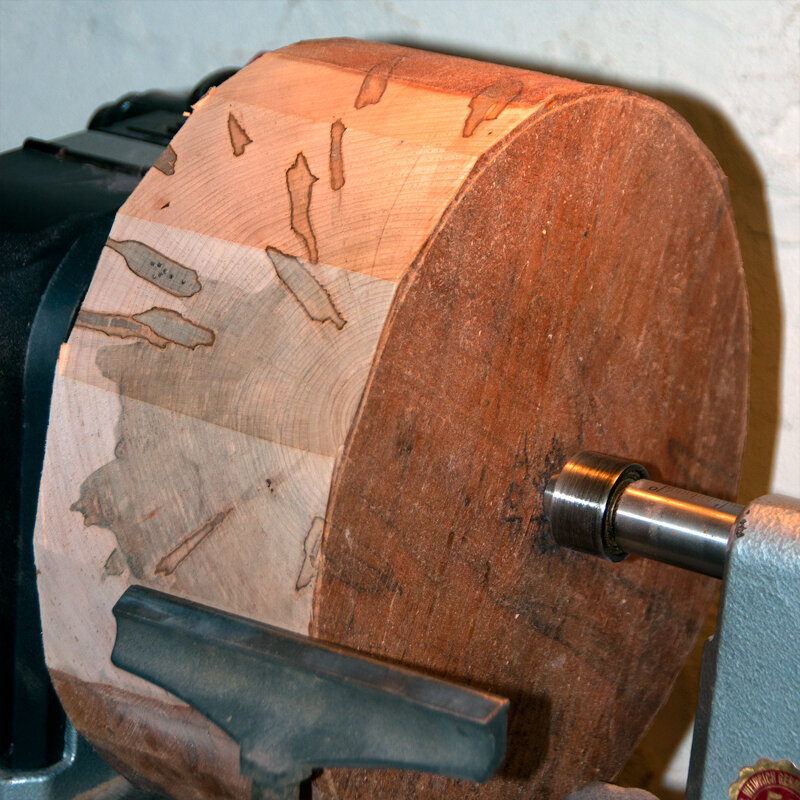
The practice isn't new. Evidence of turning dates back to ancient Egypt, around 1300 B.C. Early lathes were human-powered, often requiring two people: one to turn the wood with a rope and another to cut it. The invention of the treadle lathe in the Middle Ages allowed a single person to power the machine with their foot, freeing up both hands for carving. Today, most lathes are powered by electric motors, offering consistent speed and power that early woodturners could only dream of.
lathe
noun
A machine tool that rotates a workpiece about an axis of rotation to perform various operations such as cutting, sanding, knurling, drilling, or turning.
Tools of the Trade
Besides the lathe itself, a woodturner needs a set of specialized hand tools to shape the wood. These aren't your typical woodworking chisels. They are longer, heavier, and designed to handle the forces of a rapidly spinning workpiece. While there are dozens of tool types, most work falls to a few key players.
| Tool | Primary Use |
|---|---|
| Gouge | A curved chisel for scooping out wood. Used for shaping bowls (bowl gouge) or creating coves on spindles (spindle gouge). |
| Skew Chisel | A flat chisel with an angled tip. Excellent for creating smooth, clean surfaces and sharp details. |
| Parting Tool | A thin, pointed tool used for separating a finished piece from waste wood or for cutting precise grooves. |
| Scraper | A tool with a flat or curved edge used for smoothing surfaces, especially inside bowls where other tools can't reach. |
The lathe has several key parts that work together to hold and spin the wood securely.
Safety First
Woodturning is fun, but it can be dangerous. A chunk of wood spinning at thousands of rotations per minute demands respect. Following safety rules isn't optional; it's essential.
Always wear a face shield or safety glasses. Wood chips and dust fly everywhere, and a full face shield protects you from unexpected pieces breaking off the workpiece.
Other critical rules include:
- No loose clothing or jewelry. Anything that can get caught in the spinning lathe is a major hazard. Roll up your sleeves and tie back long hair.
- Check your wood. Before mounting a piece of wood, inspect it for cracks or weaknesses that could cause it to fly apart on the lathe.
- Start at a low speed. Begin with a slower RPM and increase it only after you've confirmed the wood is balanced and secure.
- Keep your tools sharp. A dull tool is more likely to catch on the wood, which can damage the piece or even pull the tool from your hands.
Basic Techniques
All woodturning is based on a few fundamental cuts. Mastering these allows you to create almost any shape. The two main types of turning are spindle turning and faceplate turning.
Spindle Turning: The wood is mounted between the headstock and tailstock, with the grain running parallel to the lathe bed. This is how items like chair legs, baseball bats, and pens are made.
The first step in spindle turning is usually creating a cylinder from a square or rough piece of stock. This is called "rounding" or "roughing out." Using a roughing gouge, you take light passes to knock the corners off until the piece is round. From there, other tools can refine the shape.
Faceplate Turning: The wood is attached to a faceplate, which screws directly onto the headstock. The grain runs perpendicular to the lathe bed. This method is used for making bowls, plates, and other wide, flat objects.
Whether turning a spindle or a bowl, tool control is everything. The technique involves anchoring the tool on the tool rest and gently bringing the cutting edge into contact with the spinning wood. The goal is to peel away shavings, not to scrape or force the tool. It's a process of finesse, not brute force.
The workshop starts from the absolute basics and gradually builds up to more advanced topics, interleaving theory with practice.
Let's review some key terms.
Ready to test your knowledge?
What is the primary machine used to spin a piece of wood for shaping in woodturning?
Early, human-powered lathes often required two people. What invention allowed a single person to power the lathe and use both hands for carving?
From ancient Egypt to modern workshops, the lathe has allowed craftspeople to transform simple blocks of wood into functional and beautiful objects. Understanding these fundamentals is the first step on that journey.