Irish Dance TCRG Part 1 Mastery
Introduction to Irish Dance
A Dance Through Time
Irish dance is much more than just quick, precise footwork. It's a living tradition with roots stretching back centuries, intertwined with the history and spirit of Ireland itself. Early forms were social, performed at gatherings and celebrations known as céilís. These dances brought communities together, passed down from one generation to the next without written instructions.
During the 18th century, travelling "dancing masters" journeyed from town to town, teaching steps to families in exchange for room and board. They formalized many of the steps and established regional styles. In periods when Irish culture was suppressed, dance became a quiet act of preservation, keeping a vital part of the heritage alive. Today, it has grown into a global phenomenon, celebrated for its energy, athleticism, and intricate rhythms.
The Core Rhythms
In Irish dance, the music is the heartbeat. The rhythm of the tune dictates the type of dance and the steps performed. While there are many variations, most dances fall into one of three primary categories, each with its own unique musical timing and feel.
| Dance Form | Time Signature | Feel |
|---|---|---|
| Reel | 4/4 | Fast, flowing, and smooth |
| Jig | 6/8 or 9/8 | Bouncy, lively, and skipping |
| Hornpipe | 4/4 | Stately, slower, and rhythmic |
Reels are the most common rhythm in Irish dance music. Think of a constant, driving pulse. Jigs have a characteristic bouncy feel, often described with the rhythm "ONE-two-three, FOUR-five-six." Hornpipes are played more slowly and deliberately than reels, often with a heavier, more syncopated rhythm that emphasizes the first and third beats.
Finding Your Feet
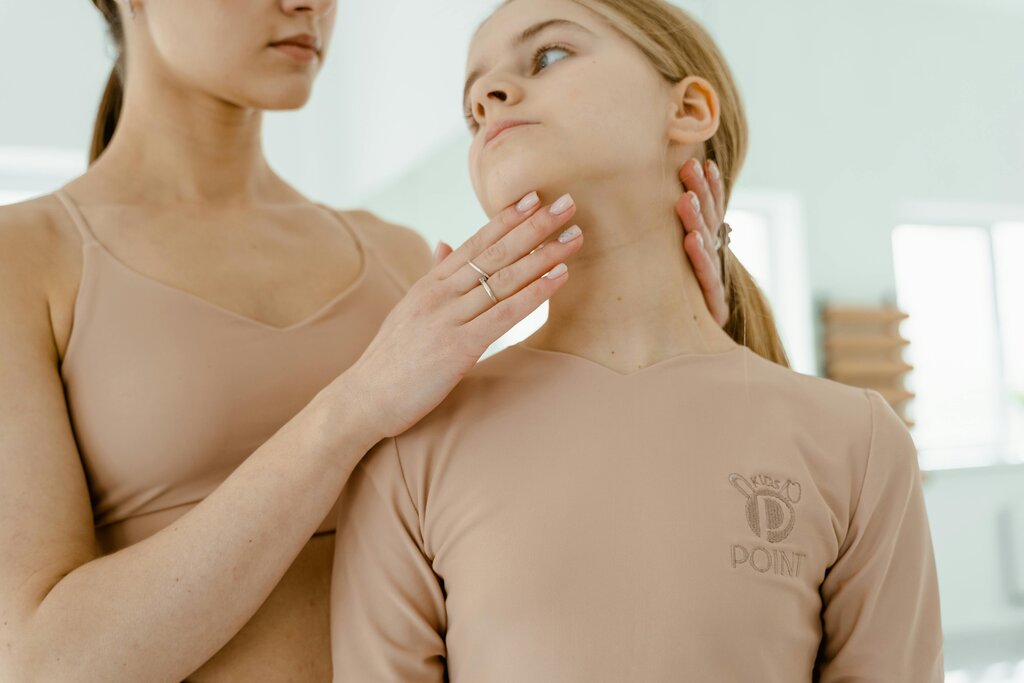
Before you can dance, you need to know how to stand. Proper posture is the foundation of Irish dance technique. It provides the stability and control needed for complex footwork while creating a graceful and confident appearance.
Your upper body should remain still and straight, with arms held firmly at your sides. The goal is to create a calm, controlled frame that allows the feet to do all the talking.
Just as important is the position of your feet. Irish dance uses a "turned-out" stance, where the legs and feet are rotated outwards from the hips. This is essential for executing steps correctly and moving across the floor. The five basic positions are the building blocks for all other movements.
Mastering these positions takes practice and helps develop strength and flexibility in the hips and ankles. Don't worry about achieving a perfect turnout right away; focus on maintaining good posture and control.
First Steps
With the basic posture and foot positions in mind, we can introduce a few simple movements. Irish dance steps are typically constructed in eight-bar phrases, mirroring the structure of the music.
One of the most fundamental movements is a simple skip or hop 2, 3. It's a light, travelling step that forms the basis of many dances. You start on one foot, hop, and then land on the other foot in a one-two-three rhythm that matches the jig music. Another basic is the seven, which involves a sequence of seven light steps on the toes followed by a final hop or stamp on the eighth count of the music.
These initial movements are about learning to connect with the rhythm and developing the coordination between your feet and the music. Every complex and dazzling step you see in performance is built from these simple, foundational pieces.
Now, let's test what you've learned about the fundamentals of Irish dance.
What was the primary role of the travelling "dancing masters" in the 18th century?
Which Irish dance rhythm is characterized by a bouncy, "ONE-two-three, FOUR-five-six" feel?
Understanding these core elements, from the cultural history to the basic rhythms and postures, provides the essential foundation for any aspiring dancer or teacher.