Iranian Political and Cultural History
Imperial Statecraft
Governing the First Superpower
How do you rule an empire stretching from the Balkans to the Indus Valley? The Achaemenid Persians (c. 550–330 BCE) faced this challenge by developing a brilliant system of provincial governance. Instead of imposing a single culture, they created a decentralized model that allowed them to manage a vast, diverse population effectively.
The empire was divided into administrative provinces, each called a and ruled by a governor, or satrap. These satraps were responsible for collecting taxes, administering justice, and raising soldiers for the royal army. To prevent any single governor from becoming too powerful, the king appointed a separate military commander and a state secretary for each province. These officials reported directly back to the central court, creating a system of checks and balances. This structure allowed local customs and religions to continue, so long as tribute was paid and order was maintained.
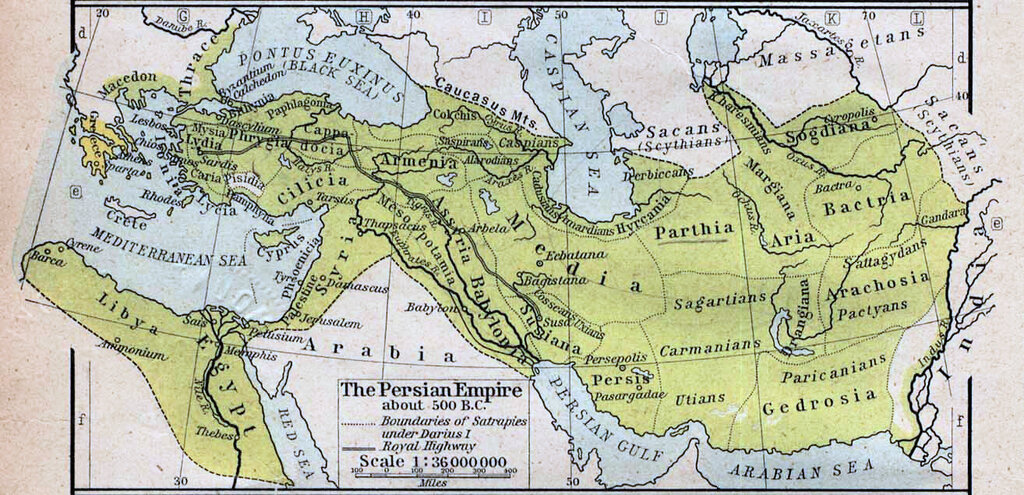
This administrative genius created a sense of imperial unity without erasing local identity. The famous Apadana reliefs at Persepolis visually represent this idea, showing delegations from across the empire, from Ethiopians to Indians, bringing tribute to the king in their native attire. They were distinct peoples, but all subjects of one empire.
This decentralized administrative model allowed the Persian Empire to control its vast territories, making it possible to manage local affairs while still maintaining overall imperial unity.
The Divine Right to Rule
Across the Persian dynasties, a ruler’s legitimacy wasn't just based on military might. It came from a divine mandate known as Farr (Khvarenah in Avestan), a concept of God-given glory and fortune. A legitimate king was one who possessed this radiant aura, which symbolized his divine favor and right to rule. If a king was defeated or overthrown, it was seen as a sign that he had lost his Farr.
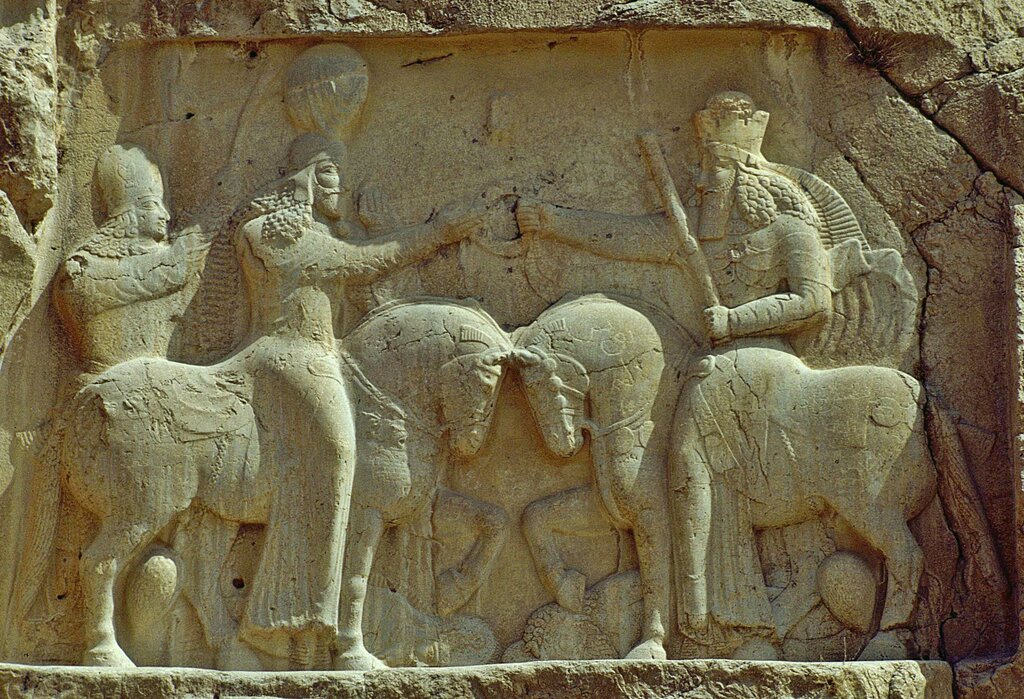
This belief profoundly shaped Iranian kingship. The ruler wasn't just a head of state; he was a sacred figure. This elevated status was reflected in the title used by many Persian monarchs: Shāhanshāh, or . This wasn't just a boastful claim. It was a political statement that the Persian emperor was the sovereign over many lesser kings and rulers who governed the various lands within the empire. It acknowledged the multi-ethnic, multi-state reality of their domain while asserting ultimate authority.
Centralization and State Religion
After the Parthian period, the Sasanian Empire (224–651 CE) ushered in a new era of governance. While the Achaemenids favored a more decentralized model, the Sasanians sought to centralize power and forge a unified Iranian identity. They established a rigid social hierarchy and a highly sophisticated bureaucracy to manage the state.
A key element of this centralization was the integration of Zoroastrianism as the state religion. While the Achaemenids were tolerant, the Sasanians actively promoted Zoroastrianism, creating a state-sponsored church with a hierarchy of priests (magi). This fusion of religious and political authority created a powerful ideological glue that helped unify the empire. Legal and social customs were increasingly aligned with Zoroastrian principles, establishing a blueprint for Iranian statecraft that would influence the region for centuries.
The Sasanian state built a powerful, centralized bureaucracy and integrated a state religion to create a cohesive 'Iranian' identity, a model that contrasted with the Achaemenid's decentralized approach.
These pre-Islamic empires established a remarkable legacy of governance. From the flexible satrapy system to the divine concept of kingship and the Sasanian model of a centralized, bureaucratic state, they created an enduring blueprint for sovereignty and administrative identity in Iran that persisted long after their fall.
How did the Achaemenid Empire's system of checks and balances work within a satrapy?
What did the title "Shāhanshāh," used by many Persian monarchs, mean?