IP Addresses Explained
Introduction to IP Addresses
What Is an IP Address?
Every device connected to a computer network, including the internet, needs a unique identifier. This is how other devices know where to send and receive information. This identifier is called an Internet Protocol (IP) address.
Think of it like a mailing address for your house. If someone wants to send you a letter, they need your specific street, city, and postal code. Without it, the postal service wouldn't know where to deliver the mail. An IP address serves the same function for your computer, phone, or any other networked device.
IP Address
noun
A unique numerical label assigned to each device connected to a computer network that uses the Internet Protocol for communication.
An IP address has two main jobs: it identifies the device and its location on the network. This allows data to be routed correctly from a source to a destination. When you visit a website, your computer sends a request to the website's IP address, and the website's server uses your IP address to send the webpage back to you.
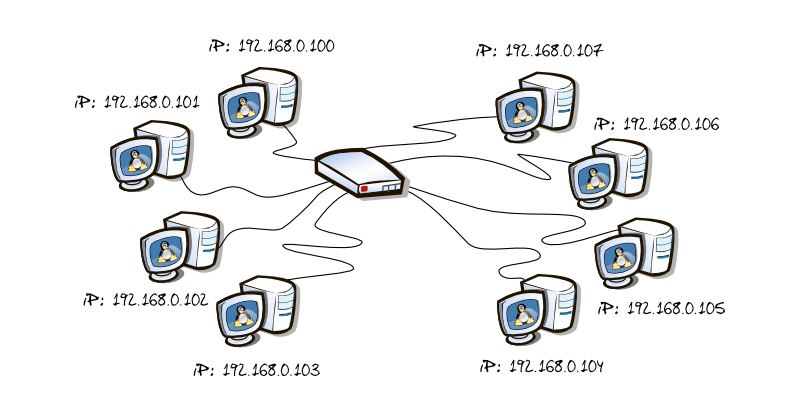
Anatomy of an Address
The most common version of an IP address, known as IPv4, consists of four numbers separated by periods. Each number in the sequence can range from 0 to 255. For example, a common IP address might look like this: 192.168.1.101.
This format is called dotted-decimal notation. Each of the four numbers represents an 8-bit number, or an "octet." Together, the four octets make up a 32-bit address. This structure allows for a massive number of unique combinations, though, as we'll see, not quite enough for the modern world.
Public vs. Private Addresses
Not all IP addresses are visible on the public internet. There's a crucial distinction between public and private IP addresses.
A public IP address is the main address your home or office network uses to communicate with the rest of the internet. It's unique across the entire world and is assigned by your Internet Service Provider (ISP).
A private IP address is used for devices within your local network, like your laptop, smartphone, and smart TV all connected to your Wi-Fi router. These addresses are not routable on the internet and are only unique within your own private network. This is why your laptop can have the same private IP address as your neighbor's laptop, and there's no conflict.
Simply put, a public IP address is one which anyone on the Internet can see while a private IP address is only accessible to users who are connected to the same network (either home or corporate).
Your router acts as the gateway. It has a public IP address to talk to the internet and manages all the private IP addresses for the devices inside your home. When you visit a website, your computer (with its private IP) sends the request to the router, which then forwards it to the internet using its public IP.
| Class | Private IP Address Range |
|---|---|
| Class A | 10.0.0.0 to 10.255.255.255 |
| Class B | 172.16.0.0 to 172.31.255.255 |
| Class C | 192.168.0.0 to 192.168.255.255 |
The Next Generation IPv6
The 32-bit structure of IPv4 allows for roughly 4.3 billion unique addresses. While that sounds like a lot, the explosion of internet-connected devices meant we were running out. To solve this, a new version was created: IPv6.
IPv6 addresses are 128-bit, which provides a virtually inexhaustible number of addresses. They look very different from IPv4 addresses, using hexadecimal digits (0-9 and a-f) and colons for separation.
An example of an IPv6 address is: 2001:0db8:85a3:0000:0000:8a2e:0370:7334.
For now, both IPv4 and IPv6 are used simultaneously, but the internet is gradually transitioning to IPv6 to accommodate future growth.
Now, let's test your understanding of these core concepts.
What is the primary function of an IP address?
Which of the following is a correctly formatted IPv4 address?
Understanding IP addresses is the first step to understanding how the internet and computer networks function. They are the fundamental addresses that make digital communication possible.