IP Address Fundamentals
Introduction to IP Addresses
What Is an IP Address?
Think of an IP address as a mailing address for your computer, phone, or any other device on a network. Just like your home needs a unique address for mail to arrive, every device needs a unique Internet Protocol (IP) address to send and receive data online. It’s the fundamental identifier that allows devices to find and talk to each other across the vastness of the internet or even just on your home Wi-Fi network.
Without IP addresses, data sent from your device would have no idea where to go, and data meant for you would never find its way back.
These addresses are a series of numbers that look complex at first, but they follow a clear, logical structure. The most common format you'll see is called IPv4.
Internet Protocol
noun
A set of rules for routing and addressing packets of data so that they can travel across networks and arrive at the correct destination.
An IPv4 address is a 32-bit number, which means it's made of 32 ones and zeros. To make it easier for humans to read, it’s broken down into four blocks of numbers, each separated by a dot. Each block is called an octet because it represents 8 bits of the address.
192.168.1.1
Each of these four numbers can range from 0 to 255. The combination of these four numbers creates a unique address on a network. For decades, this system worked perfectly. But the internet grew much faster than anyone anticipated. With billions of devices coming online, from laptops and smart speakers to watches and refrigerators, the world began to run out of available IPv4 addresses.
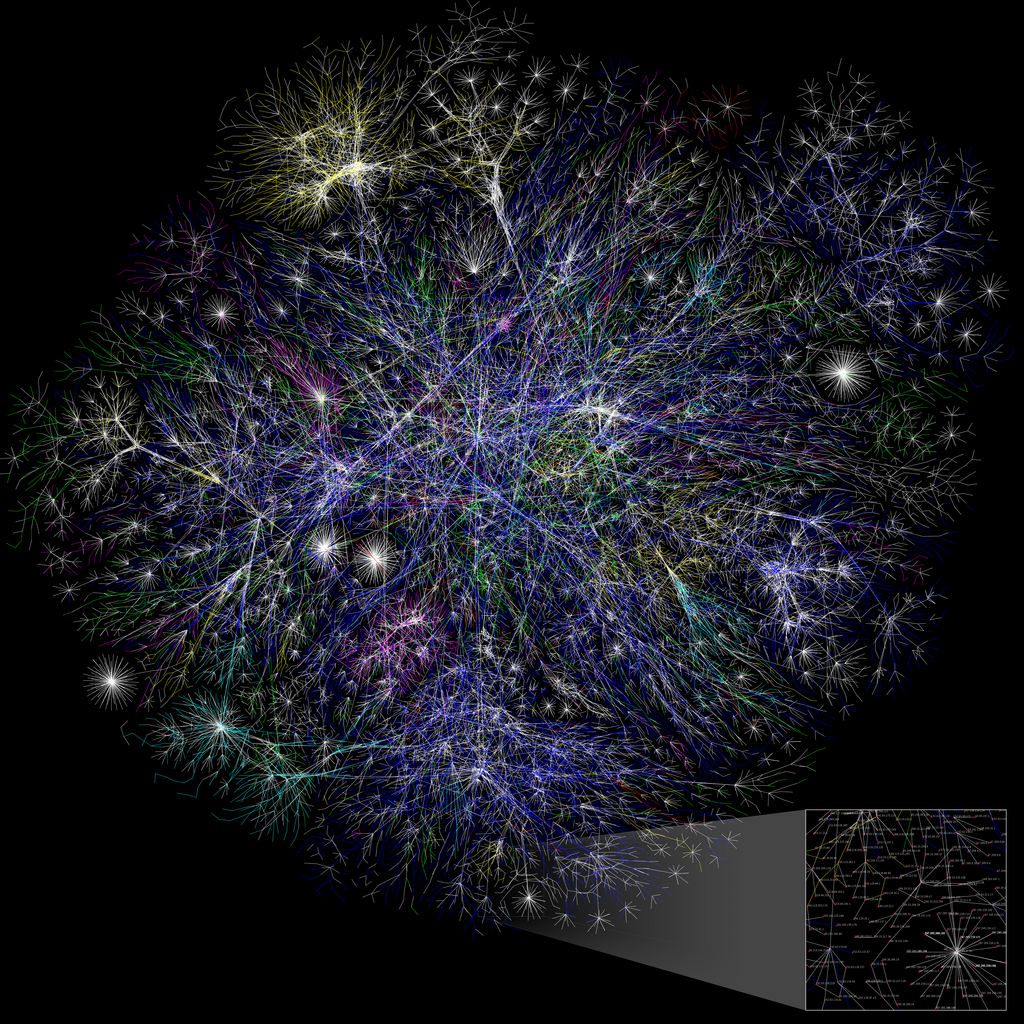
The Next Generation: IPv6
To solve the problem of running out of addresses, a new version was created: IPv6. It serves the same purpose as IPv4—providing a unique address for a device—but it uses a much longer, 128-bit number. This change expands the pool of available IP addresses to an almost unimaginable number.
How many addresses is that? If every single IPv4 address were a grain of sand, you could hold them all in one truck. If every IPv6 address were a grain of sand, it would be enough to fill the entire Earth.
IPv6 addresses look different from IPv4. They are written as eight groups of four hexadecimal characters (numbers 0-9 and letters a-f), with each group separated by a colon.
2001:0db8:85a3:0000:0000:8a2e:0370:7334
You'll often see these addresses shortened. For example, consecutive groups of zeros can be replaced with a double colon (::). The transition from IPv4 to IPv6 is slow, so both systems currently operate side-by-side on the internet.
| Feature | IPv4 | IPv6 |
|---|---|---|
| Address Size | 32-bit | 128-bit |
| Address Format | Dotted-decimal notation (e.g., 172.16.254.1) | Hexadecimal notation (e.g., 2001:db8::1) |
| Number of Addresses | Approx. 4.3 billion | Approx. 340 undecillion |
| Separator | Dot (.) | Colon (:) |
How IP Addresses Work
So how do these numbers actually guide traffic? When you send an email or visit a website, your data is broken down into small pieces called packets. Each packet is like an envelope, and the IP address of the destination is written on the outside. Your device sends this packet to your local router, which then forwards it to other routers on the internet.
Each router in the chain reads the destination IP address and figures out the next best hop to get the packet closer to its final destination. It's like a package being passed through different mail sorting facilities until it reaches the correct city and street address. The source IP address (your device's address) is also included so the receiving device knows where to send its response.
This system of addressing and routing is the backbone of the internet, ensuring that data gets where it needs to go reliably and efficiently.
Ready to check your understanding?
What is the best analogy for the function of an IP address on a network?
What was the primary reason for the development of IPv6?
IP addresses are a core concept in networking. Whether it's the older IPv4 or the newer IPv6, these unique identifiers make sure our digital conversations can travel across the globe and arrive at the right screen.