iOS On-Device ML Mastery
iOS Hardware Overview
The Brains Behind the Screen
Your iPhone isn't just powered by a single, all-powerful brain. Instead, it uses a team of specialized processors working together. This approach, known as a System on a Chip (SoC), integrates different components onto a single piece of silicon. This is key to balancing powerful performance with the battery life we expect from a mobile device.
At the heart of this team is the CPU, or Central Processing Unit. Think of it as the general manager. It runs the operating system, launches your apps, and handles the everyday tasks that make your phone work. It's a versatile jack-of-all-trades, designed to handle a wide range of instructions quickly and sequentially.
Alongside the CPU is the GPU, or Graphics Processing Unit. As its name suggests, it was originally designed to render the complex graphics for games and user interfaces. To do this, it became an expert at performing the same simple calculation on a huge amount of data simultaneously. This parallel processing power turned out to be incredibly useful for more than just pixels.
Meet the Neural Engine
The newest member of the team is the Apple Neural Engine, or ANE. This is a processor designed for one specific job: running machine learning models efficiently. If the CPU is a versatile chef's knife, the ANE is an apple corer. It's not meant for chopping onions, but it's unbeatable at its one task.
Machine learning tasks, like recognizing your face for Face ID, understanding your voice for Siri, or sorting your photos by content, all rely on a type of math called matrix multiplication. These tasks involve billions of relatively simple calculations. The ANE is built with a specific architecture that plows through these calculations at incredible speeds while using very little power.
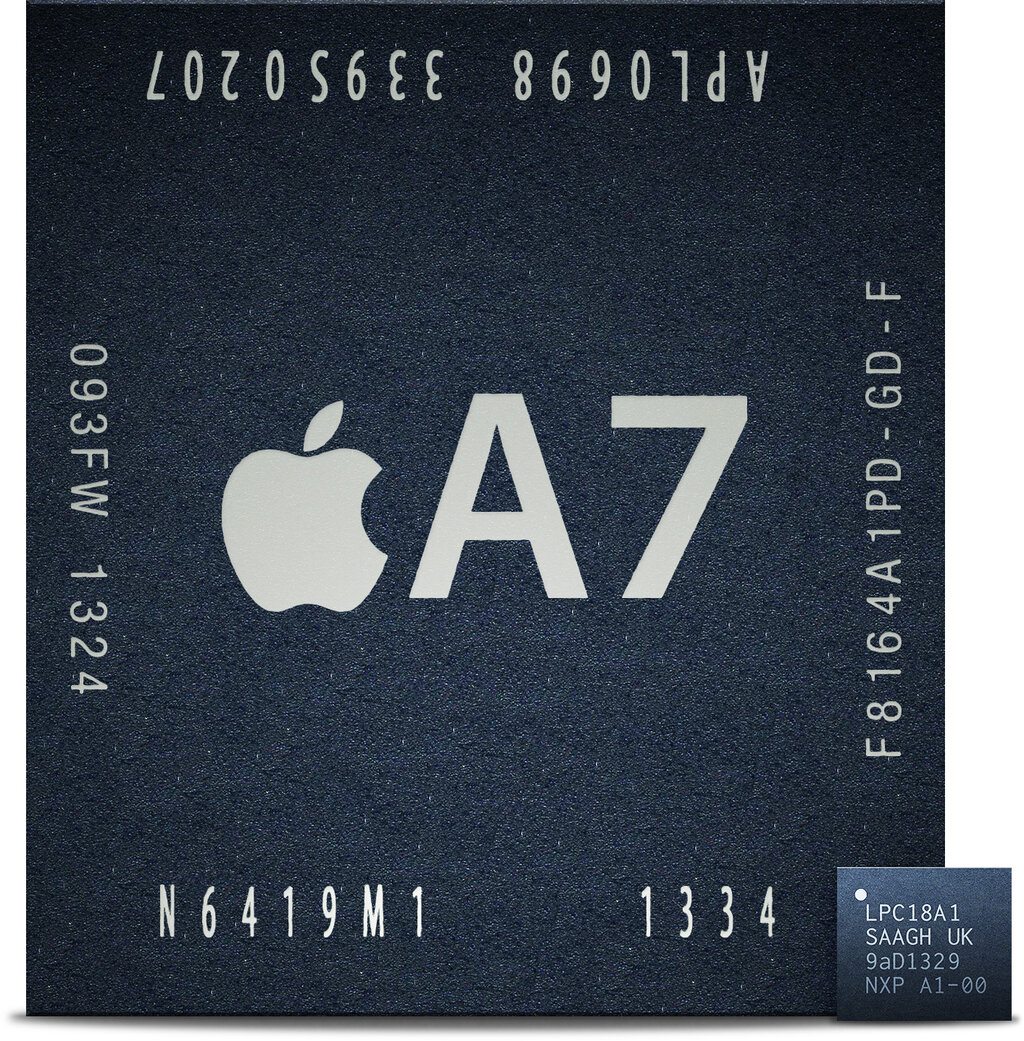
By offloading these specific jobs to the ANE, the CPU and GPU are freed up to do what they do best. This prevents the phone from slowing down and, crucially, saves a lot of battery.
A Team Effort
The real magic happens in how these three processors collaborate. An iOS device doesn't just use one or the other; it intelligently delegates tasks to the best processor for the job. This decision-making is managed by the system to maximize performance and efficiency.
For example, a task that requires a few complex decisions might be sent to the CPU. A task involving thousands of parallel operations could be split between the GPU and the ANE.
This integration is fundamental to on-device machine learning. Running an ML model to, say, suggest the next word you want to type requires a constant stream of predictions. Sending that data to the cloud would be slow and use a lot of power. By using the ANE, these predictions can happen instantly and locally, without draining your battery.
Ultimately, this tight integration of CPU, GPU, and the specialized Neural Engine allows developers to build powerful AI features that feel seamless and instantaneous, all while respecting the device's limited battery life. It's a sophisticated balancing act that makes modern on-device intelligence possible.
Time to check your understanding of Apple's hardware.
What is the primary advantage of the System on a Chip (SoC) approach used in iPhones?
The provided text uses an analogy of a "versatile chef's knife" to describe which processor?
Understanding this hardware teamwork is the first step in creating efficient machine learning applications for iOS.