Investment Banking Explained
Introduction to Investment Banking
What is an Investment Bank?
At its core, an investment bank is a financial institution that acts as a bridge. It connects large organizations that need money—like corporations or governments—with investors who have money and want to put it to work. Think of them as high-finance matchmakers.
While a regular commercial bank serves the general public with services like checking accounts and mortgages, an investment bank operates in a different world. Its clients are typically large companies looking to expand, governments funding public projects, or institutional investors managing vast pools of capital. Their primary job is to help these entities raise capital and provide strategic financial advice.
Investment banks are the financial architects for corporations and governments, helping them build, grow, and restructure through complex financial transactions.
The Core Functions
Investment banking isn't just one activity; it's a collection of specialized services. Here are the five main pillars of what an investment bank does.
1. Underwriting When a company wants to raise money by selling stocks or bonds for the first time, it's called an initial public offering (IPO) or a debt issuance. Investment banks underwrite these deals. They agree to buy the new securities from the company and then sell them to the public and institutional investors. By doing this, the bank takes on the risk that the securities might not sell, guaranteeing the company gets its capital.
2. Mergers & Acquisitions (M&A) Advisory Companies often grow by buying other companies or merging with them. This is a complex process filled with financial analysis, valuation, and negotiation. Investment banks act as advisors. They help identify potential takeover targets or buyers, figure out a fair price, and structure the deal to benefit their client.
3. Sales & Trading This is the side of the bank that buys and sells financial instruments like stocks, bonds, and derivatives. The "sales" team works with institutional clients like mutual funds and hedge funds to offer ideas and execute trades. The "trading" team manages the bank's own capital, buying and selling securities to make a profit.
4. Equity Research To support the sales and trading teams and to inform investors, investment banks employ research analysts. These experts dive deep into specific industries and companies. They write detailed reports recommending whether to buy, sell, or hold a company's stock, providing the financial justification for their views.
5. Asset Management The bank also manages money for others. This division takes large pools of capital from clients—like pension funds, endowments, or very wealthy individuals—and invests it across a variety of assets. The goal is simple: to grow the client's wealth over time.
Investment vs. Commercial Banking
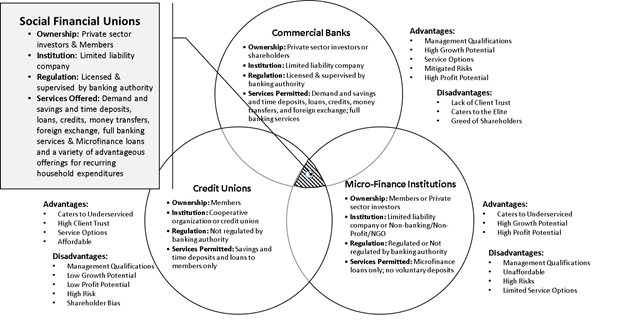
It's easy to confuse these two, but their day-to-day business is very different. Think of it this way: a commercial bank deals with the public's money, while an investment bank deals with the capital markets.
| Feature | Commercial Bank | Investment Bank |
|---|---|---|
| Primary Clients | General public, small to medium businesses | Corporations, governments, institutions |
| Core Business | Taking deposits and making loans | Raising capital, M&A advisory, trading |
| Source of Funds | Customer deposits | Capital markets, investors |
| Main Regulation | Focus on protecting depositors | Focus on market integrity and fairness |
| Example | Your local bank branch | Goldman Sachs, Morgan Stanley |
A commercial bank makes money on the interest spread—the difference between the interest it pays on deposits and the interest it earns on loans. An investment bank, on the other hand, earns most of its revenue from fees for advisory services and from profits on its trading activities. While some large financial institutions do both, they are distinct functions.
Next, let's test your knowledge on these core concepts.
What is the primary function of an investment bank?
When a company goes public through an Initial Public Offering (IPO), the investment bank guarantees the company its capital by buying the new shares and selling them to investors. This process is known as:
Understanding these functions is the first step in seeing how investment banks play a crucial role in the global economy, directing the flow of capital to where it can be used to fund growth, innovation, and infrastructure.