Investing Money in Australia
Investment Basics
Building Your Investment Foundation
Investing is about putting your money to work so it can grow over time. But not all investments are created equal. They behave differently and serve distinct purposes in a financial plan. Understanding these core differences is the first step toward making smart decisions that match your personal goals.
The Two Main Flavors of Assets
Think of investments, or assets, as tools in a toolbox. You wouldn't use a hammer to saw a piece of wood. Similarly, you choose different assets for different financial jobs. Investments generally fall into two broad categories: growth assets and defensive assets.
Growth assets are primarily focused on increasing the value of your initial investment, a concept known as capital appreciation. Stocks, which represent ownership in a company, are a classic example. Their value can rise significantly, but they can also be volatile.
Defensive assets aim to protect your initial investment and provide a steady stream of income. Bonds and cash are common examples. When you buy a bond, you're essentially lending money to a government or company in exchange for regular interest payments. They are generally more stable than growth assets.
| Feature | Growth Assets | Defensive Assets |
|---|---|---|
| Primary Goal | Increase in value | Generate income, preserve capital |
| Potential Return | High | Low |
| Risk Level | High | Low |
| Examples | Stocks, Property | Bonds, Cash |
Most investment strategies use a mix of both. The right blend depends on your personal circumstances, which brings us to the most important principle in finance.
Risk and Return Go Hand in Hand
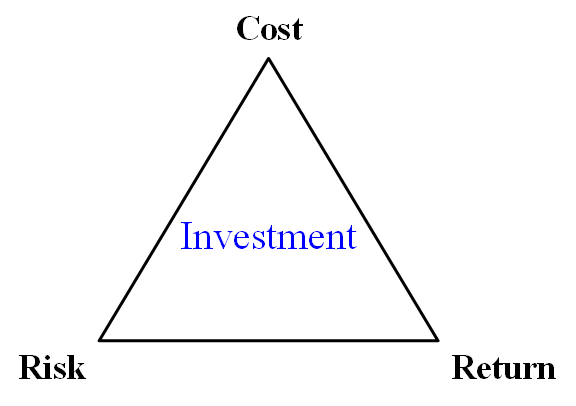
There's a fundamental trade-off in investing: to get a higher potential return, you must accept a higher level of risk. Risk is the chance that you could lose some or all of the money you invested. There's no such thing as a high-return, no-risk investment. If someone offers you one, run.
Developing an asset allocation is mainly about striking an appropriate balance between potential risk and potential return.
This relationship helps explain why different asset types behave the way they do. Cash is very low risk, but its potential for growth is also very low, often not even keeping up with inflation. Stocks, on the other hand, offer much higher potential returns to compensate investors for taking on more risk.
Match Your Investments to Your Goals
So, how do you decide how much risk to take? It all comes down to your personal financial goals and your investment timeframe, or how long you plan to invest before you need the money.
A long-term goal, like retirement in 30 years, gives your investments plenty of time to recover from market downturns. This allows you to take on more risk with growth assets for higher potential returns.
On the other hand, if you're saving for a short-term goal, like a down payment on a house in two years, you can't afford to risk losing your principal. In this case, defensive assets are more appropriate. You need to know the money will be there when you need it.
Your personal comfort with risk also plays a big role. Some people are comfortable with the ups and downs of the stock market, while others prefer a smoother, more predictable journey. Being honest about your risk tolerance is key to sticking with your investment plan.
Let's check your understanding of these core concepts.
What is the primary goal of defensive assets like bonds and cash?
According to the fundamental principle of investing, what must an investor accept in order to have the potential for a higher return?
Understanding these foundational ideas—growth vs. defensive assets, the risk-return trade-off, and aligning your strategy with your goals—prepares you to build a portfolio that's right for you.