Investing in the AI Revolution
Introduction to Artificial Intelligence
What Is Artificial Intelligence?
Artificial intelligence, or AI, is the science of making machines that can think or act intelligently. The goal is to create systems that can perform tasks that normally require human intelligence. This could be anything from understanding language and recognizing images to solving complex problems and making decisions.
Think of it like teaching a computer to learn. Instead of giving it a rigid set of instructions for every single possibility, you give it a framework to understand patterns and make its own connections. Just as a child learns to identify a cat by seeing many different examples, an AI learns by processing vast amounts of data.
Artificial intelligence (AI) is a broad field of computer science and engineering that focuses on developing computers capable of performing activities that normally require human intelligence, such as learning, problem-solving, decision-making, and natural language processing.
A Brief History
The dream of intelligent machines is ancient, but the scientific field of AI is relatively new. It officially began in the summer of 1956 at a workshop at Dartmouth College, where the term "artificial intelligence" was coined. Early researchers were incredibly optimistic, believing that a machine as intelligent as a human being was just a few decades away.
However, progress was slower than expected. The complexity of creating intelligence was far greater than anticipated. This led to periods known as "AI winters," when funding dried up and interest waned due to the lack of major breakthroughs. But the field always bounced back, driven by advances in computing power and the availability of massive datasets, which are the lifeblood of modern AI.

Two Kinds of AI
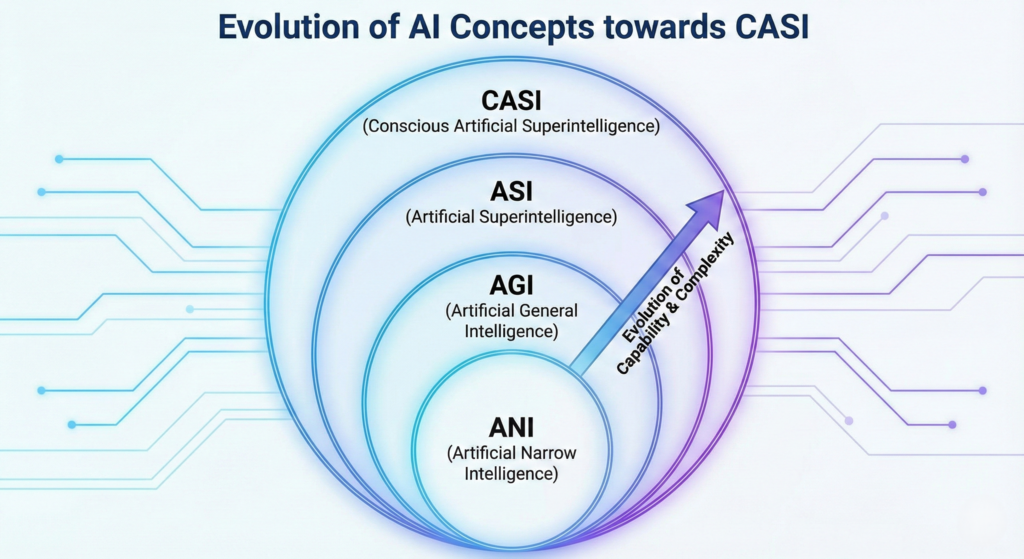
When people talk about AI, they are usually referring to one of two broad categories: Narrow AI or General AI.
Artificial Narrow Intelligence
noun
Also known as Weak AI, this is the only type of AI we have successfully created so far. It's designed and trained for one specific task.
You interact with Narrow AI every day. The recommendation engine that suggests what you should watch next, the voice assistant on your phone, and the software that filters spam from your email are all examples of Narrow AI. They are extremely good at their specific jobs but cannot operate beyond them. Your spam filter can't start recommending movies to you.
Artificial General Intelligence (AGI), or Strong AI, is different. This is the type of AI you see in movies—a machine with the ability to understand, learn, and apply its intelligence to solve any problem, just like a human. AGI does not exist yet and remains a theoretical goal for researchers.
The key difference is scope. Narrow AI is a master of one task. General AI would be a master of any task.
How AI Works
Modern AI is powered by a few core concepts that work together. The relationship between them is often shown as a set of nested dolls: AI is the largest doll, and inside it are machine learning, neural networks, and deep learning.
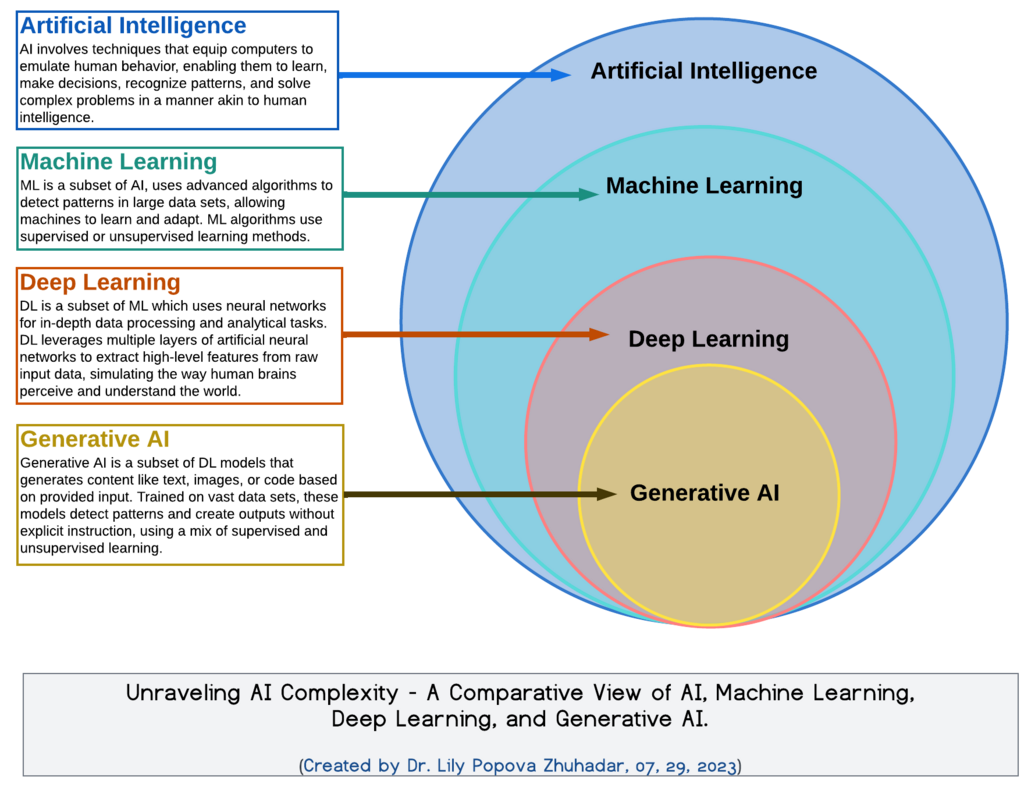
Machine Learning (ML) is a subset of AI. It's an approach where you give a machine access to a lot of data and let it learn for itself. For example, a machine learning model for detecting fraudulent credit card transactions would be trained on millions of past transactions, learning to spot the patterns that indicate fraud.
Neural Networks are a key component of many ML models. Inspired by the structure of the human brain, they are made of layers of interconnected nodes, or "neurons." Each neuron receives input, processes it, and passes its output to other neurons. By working together, these layers can recognize complex patterns in data, like the features of a face in an image.
Deep Learning is a type of machine learning that uses many layers of neural networks—hence the name "deep." These deep networks are especially powerful for handling very complex data like images, sound, and natural language. The breakthroughs that allow you to talk to your phone or translate text instantly are largely thanks to deep learning.
Ethical Questions
As AI becomes more powerful, it raises important questions for society. These aren't just technical challenges; they're human ones.
One major concern is bias. An AI system is only as good as the data it's trained on. If that data reflects existing societal biases, the AI will learn and even amplify them. For instance, if a hiring tool is trained on historical data where men were hired more often for certain roles, it might unfairly penalize female applicants.
Privacy is another issue. Many AI systems require vast amounts of personal data to function, from our location and purchase history to our online conversations. This raises concerns about how that data is collected, used, and protected.
Finally, there's the societal impact. AI is already changing the job market, automating some tasks while creating new roles that require different skills. Navigating this transition requires careful thought about education, policy, and how we support people through change.
Building responsible AI isn't just about writing code. It's about considering the real-world impact on people and society from the very beginning.
Time to review the key terms we've covered.
Let's check your understanding of these foundational concepts.
What is the primary goal of artificial intelligence?
The term 'artificial intelligence' was officially coined at a 1956 workshop held at which institution?
Understanding these core ideas—what AI is, where it came from, and how it works—is the first step to grasping its potential and its challenges.