Investing in Stocks and Cryptocurrencies
Investment Basics
The Push and Pull of Risk and Return
Every investment involves a fundamental trade-off. To get a higher potential return, you generally have to accept a higher level of risk. Think of it as a balancing act. Investments with low risk, like government bonds, tend to offer modest returns. On the other hand, assets with the potential for big gains, like stocks, also carry a greater chance of loss.
Risk isn't just about the possibility of losing your initial investment. It's also about volatility, which is the degree to which an investment's price fluctuates over time. A volatile investment can see dramatic swings in value, both up and down. Understanding your own comfort level with these swings, known as your risk tolerance, is the first step in building an investment strategy that works for you.
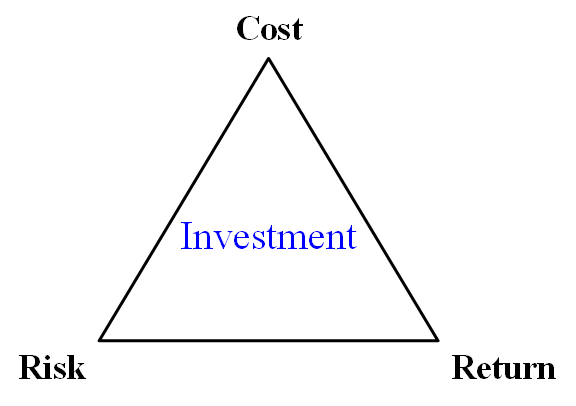
This relationship is the foundation of investing. There's no such thing as a high-return, no-risk investment. Your goal is to find a balance that aligns with your financial goals and how much uncertainty you're willing to handle.
Don't Put All Eggs in One Basket
You’ve probably heard the saying, "Don't put all your eggs in one basket." This is the core idea behind diversification. It’s a strategy for managing risk by spreading your investments across various assets. The goal is simple: if one investment performs poorly, the others might do well, helping to offset the losses.
Diversification is a cornerstone of investment risk management, embodying the timeless wisdom of “don’t put all your eggs in one basket”.
Imagine you only invest in a single company that makes sunglasses. If they have a fantastic year, you do great. But if a rainy summer hits and sales plummet, your entire investment suffers. Now, imagine you also invested in an umbrella company. During that rainy summer, your umbrella stock might perform well, cushioning the blow from your struggling sunglass stock.
Diversification can happen on multiple levels. You can invest in different companies, different industries (like technology, healthcare, and energy), and even different countries. Spreading your money around helps smooth out the ups and downs, making your investment journey less bumpy.
Your Investment Blueprint
Asset allocation is how you put diversification into practice. It's the process of deciding what percentage of your portfolio to put into different investment categories, or asset classes.
asset class
noun
A group of investments that have similar characteristics and behave similarly in the marketplace.
The main asset classes are stocks (which represent ownership in a company), bonds (which are essentially loans to a company or government), and cash or cash equivalents (like money market funds). Each has a different risk and return profile.
Your personal asset allocation depends on your financial goals, your time horizon (how long you have to invest), and your risk tolerance. A young investor saving for retirement decades away might have a more aggressive allocation, with a higher percentage in stocks. Someone nearing retirement would likely choose a more conservative mix, with more bonds and cash to protect their capital.
| Investor Profile | Stocks | Bonds | Cash |
|---|---|---|---|
| Aggressive | 80% | 15% | 5% |
| Moderate | 60% | 35% | 5% |
| Conservative | 30% | 55% | 15% |
These are just examples. The right mix for you is personal. By carefully allocating your assets, you create a blueprint for your portfolio that balances your desire for growth with your need for safety.
Ready to test your knowledge? Let's see what you've learned about the fundamentals of investing.
What is the fundamental trade-off in investing?
The degree to which an investment's price fluctuates over time is known as __________.
Understanding these core principles—risk and return, diversification, and asset allocation—is the key to making informed investment decisions, whether you're interested in the stock market or new digital assets.