Investing in Robotics Futures
Introduction to Robotics Industry
Where Robots Began
The idea of automated machines isn't new. For centuries, humans have imagined creating artificial helpers. But the modern concept of a robot started to take shape in the 20th century. The word "robot" itself comes from the Czech word robota, meaning "forced labor," and was first used in a 1920 play called R.U.R. (Rossum's Universal Robots).
For a long time, robots were just science fiction. That changed in the mid-1950s when George Devol patented a robotic arm named "Unimate." In 1961, this arm went to work on a General Motors assembly line, lifting and stacking hot pieces of metal. This was the birth of the industrial robot, a machine designed to do a single, repetitive task with precision and strength.
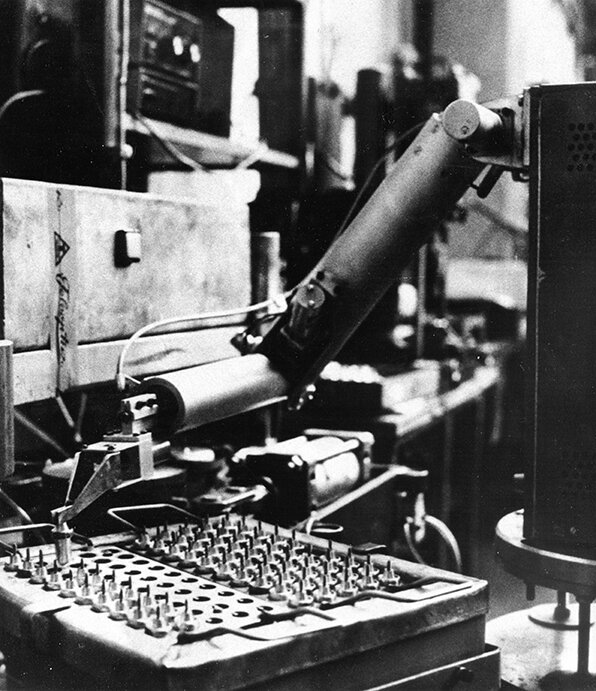
These early robots were simple by today's standards. They followed programmed instructions and couldn't "see" or "feel" their environment. Still, they kicked off a revolution in manufacturing by automating dangerous, dull, and dirty jobs.
The Modern Robotics Landscape
Today, the robotics industry is a massive global market, valued in the tens of billions of dollars and growing rapidly. Advances in artificial intelligence, sensors, and computing power have allowed robots to move beyond simple, repetitive tasks. They are now more adaptable, mobile, and intelligent.
The industry is broadly divided into two main categories: industrial robots and service robots.
Industrial robots are the workhorses of factories, typically used for manufacturing, assembly, and packaging. Service robots are designed to assist humans directly, performing tasks in fields like logistics, healthcare, and even in our homes.
Robots at Work
Robots are changing nearly every industry, but their impact is especially clear in a few key areas.
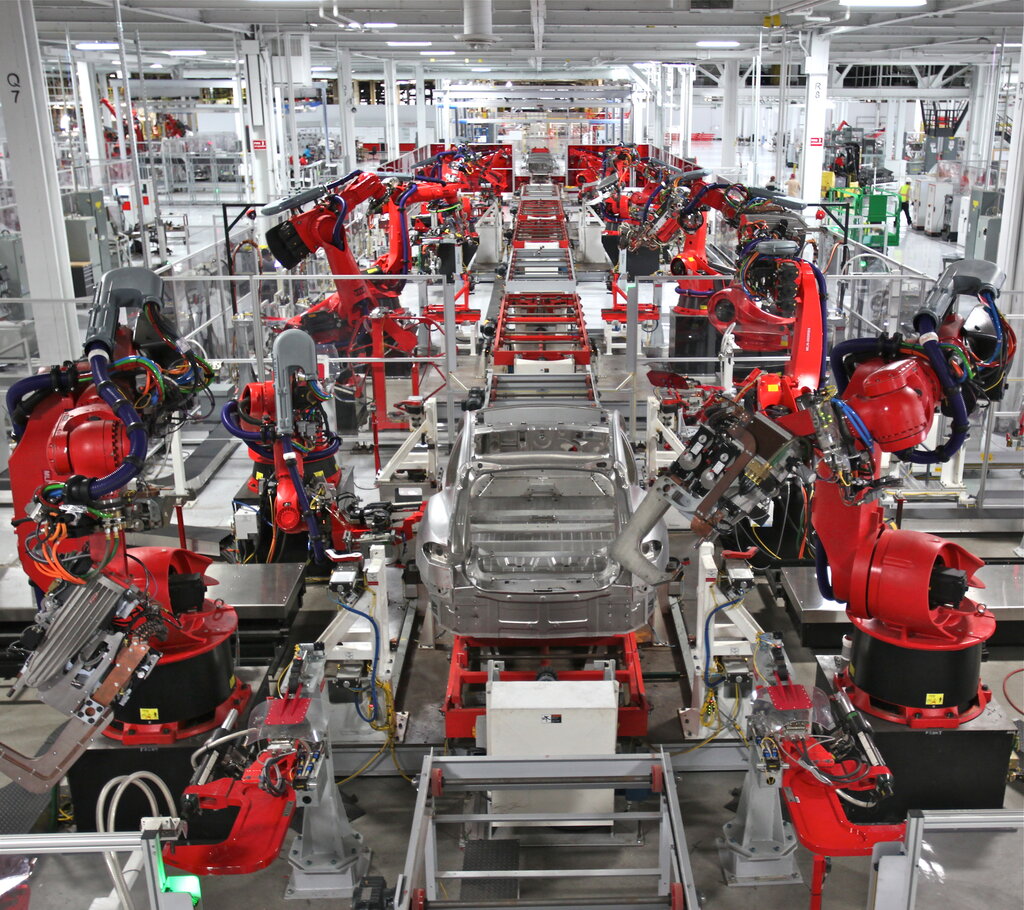
In manufacturing, robots are essential. Car factories, like the one pictured above, rely on massive robotic arms to weld car bodies, paint panels, and install heavy components like windshields and engines. This automation leads to higher quality, faster production, and improved safety for human workers.
Healthcare is another rapidly growing field for robotics. Surgical robots, controlled by a human surgeon, can perform complex procedures with tiny incisions. This means less pain, smaller scars, and quicker recovery times for patients. Other robots help by disinfecting hospital rooms, delivering supplies, or assisting patients with physical therapy.
Surgical robots can make movements that are steadier and more precise than a human hand, enabling new and less invasive surgical techniques.
Even agriculture is being transformed. Autonomous tractors can plow fields and plant seeds using GPS for perfect accuracy. Drones fly over crops to monitor their health, checking for disease or dehydration. There are even robots that can identify and pick ripe fruit, a task that has traditionally required a delicate human touch.
These advancements help farmers increase crop yields, use water and fertilizer more efficiently, and address labor shortages.
From the factory floor to the operating room, robots are no longer just a futuristic idea. They are a vital part of our modern economy, helping us build, heal, and grow things more effectively than ever before.
Let's test what you've learned.
The word "robot" was first introduced to the public in what context?
What was the primary function of Unimate, the first industrial robot used in a factory setting?