Investing in Future Growth Sectors
Introduction to Emerging Technologies
What Makes a Technology Emerge?
The term "emerging technology" gets thrown around a lot. It doesn't just mean a new gadget or a clever piece of software. It refers to a technology that is just beginning to surface but holds the potential to create entirely new industries or radically transform existing ones. Think of it less as a finished product and more as a powerful new ingredient that innovators are just starting to figure out how to use.
Emerging Technology
noun
A new technology with the potential to create or significantly alter industries. It is characterized by rapid growth, high uncertainty, and the ability to cause major economic or social change.
These technologies share a few key traits. They are novel and growing fast, moving from niche academic circles to broader public awareness. They also have staying power. Unlike a passing fad, an emerging technology shows signs of becoming a coherent, established field. Most importantly, they promise significant impact, capable of ripple effects across the entire economy. But with this great potential comes great uncertainty. No one knows exactly how these technologies will develop or which companies will master them.
Engines of Growth
Emerging technologies are a primary driver of economic growth. They create new value by enabling us to do things that were previously impossible or impractical. This innovation leads to new products, services, and business models, which in turn create new jobs and increase overall productivity.
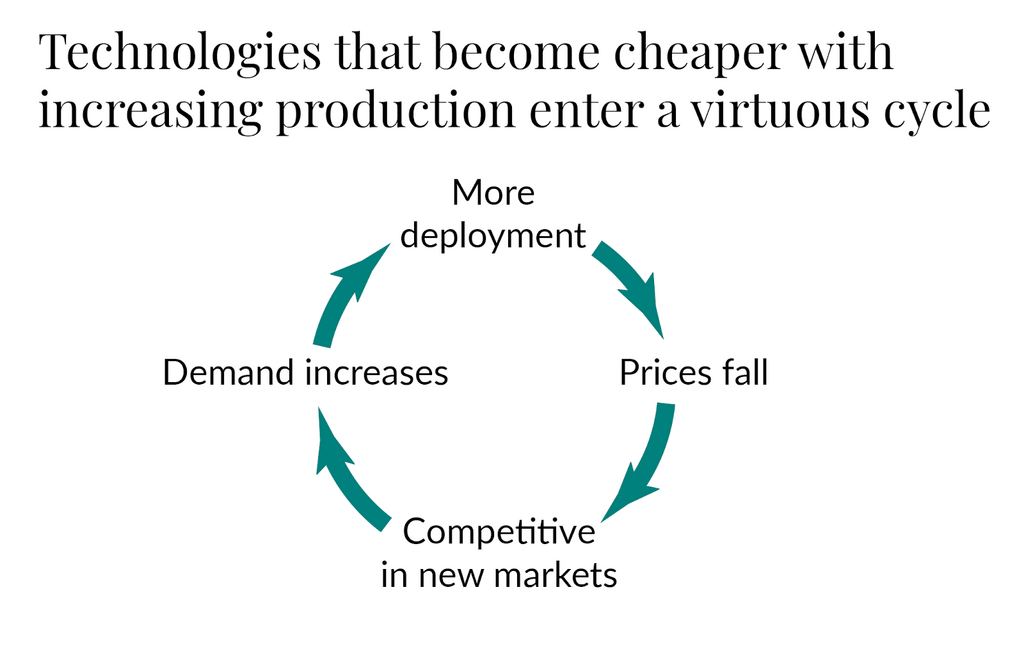
When a technology becomes cheaper and more accessible, it can kick off a virtuous cycle. As more people adopt it, production scales up, driving costs down even further. This falling price makes the technology competitive in new markets, which boosts demand and leads to even wider deployment. This cycle fuels exponential growth and widespread economic benefits.
This process doesn't just add to the economy; it reshapes it. As new technologies gain traction, they begin to compete with established ways of doing business, leading to a phenomenon known as market disruption.
Shaking Things Up
Market disruption occurs when a new technology creates a new market and value network, eventually displacing established market leaders and alliances. It's a story that has played out time and again. Digital cameras made film photography a niche hobby. Streaming services upended the video rental industry. In each case, the new technology offered a different set of benefits that an underserved part of the market valued, often starting as a simpler, cheaper, or more convenient alternative.
Disruptive innovation describes the process by which a product or service takes hold at the bottom of a market and eventually displaces established competitors, products, firms, or alliances.
This process of creative destruction is what keeps an economy dynamic. While it can be challenging for established companies, it creates massive opportunities for new ventures. By identifying and harnessing emerging technologies, entrepreneurs can meet unmet needs, create new solutions, and build the defining companies of the future.
For investors, this constant churn is a source of opportunity. The decline of one industry often signals the rise of another. Understanding the patterns of technological change allows you to spot the early signs of disruption and identify the areas where new value is being created. It's about looking past the hype to see the fundamental shifts that are reshaping our world.
What is a key characteristic that defines an 'emerging technology'?
Which of the following is NOT considered a key trait of an emerging technology according to the text?