Investing in AI Stocks
Introduction to AI
What Is Artificial Intelligence?
Artificial intelligence is the science of making machines that can think, learn, and solve problems like humans. At its core, AI aims to simulate human intelligence in machines, allowing them to perform tasks that typically require our cognitive abilities, like understanding language, recognizing patterns, and making decisions.
Artificial Intelligence
noun
The theory and development of computer systems able to perform tasks that normally require human intelligence, such as visual perception, speech recognition, decision-making, and translation between languages.
Think about how you learn to ride a bike. At first, you're wobbly and need guidance. You fall, adjust your balance, and try again. With practice, your brain learns from these experiences, and eventually, riding becomes second nature. AI systems learn in a conceptually similar way, but instead of scraped knees, they learn from vast amounts of data.
From Theory to Reality
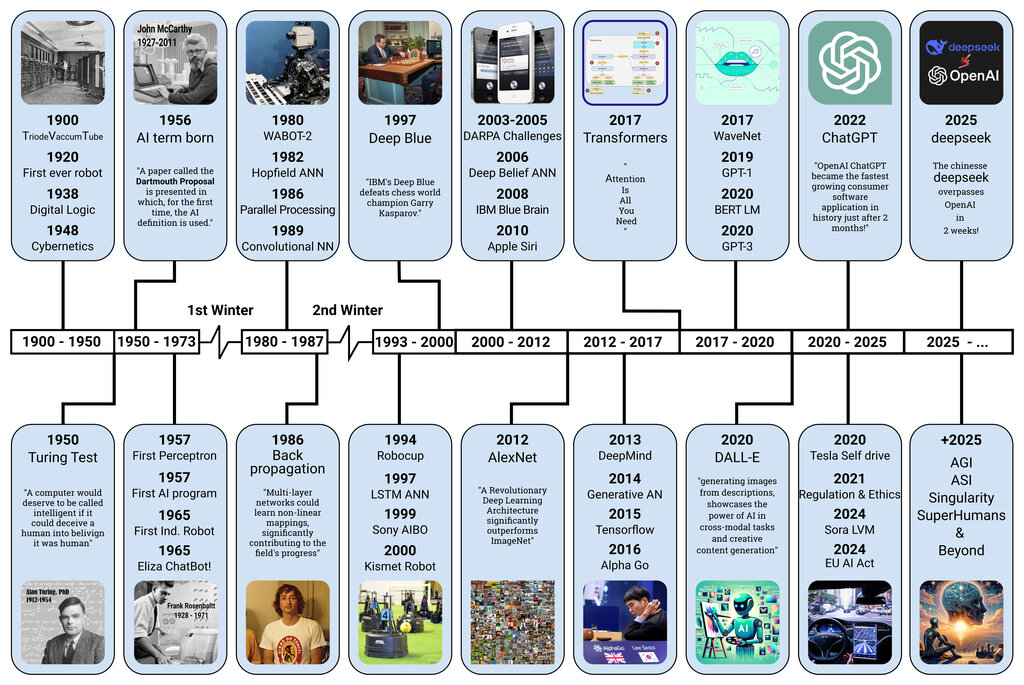
The idea of intelligent machines has been around for centuries, but the modern field of AI officially began in the summer of 1956 at a workshop at Dartmouth College. A small group of researchers gathered, confident they could make significant progress in creating thinking machines if they worked on it for a summer. Their optimism was infectious, leading to a boom in AI research.
This initial excitement was followed by periods of disillusionment known as "AI winters," when funding dried up because progress was slower than promised. However, these quiet periods were crucial for developing new ideas.
The cycle of hype and reality continued for decades. Breakthroughs were often followed by limitations that seemed insurmountable. But with the recent explosion in computing power and the availability of massive datasets, AI has moved from the realm of science fiction into our daily lives. This progress is not just one big leap but the result of decades of steady, persistent work.
The Building Blocks of AI
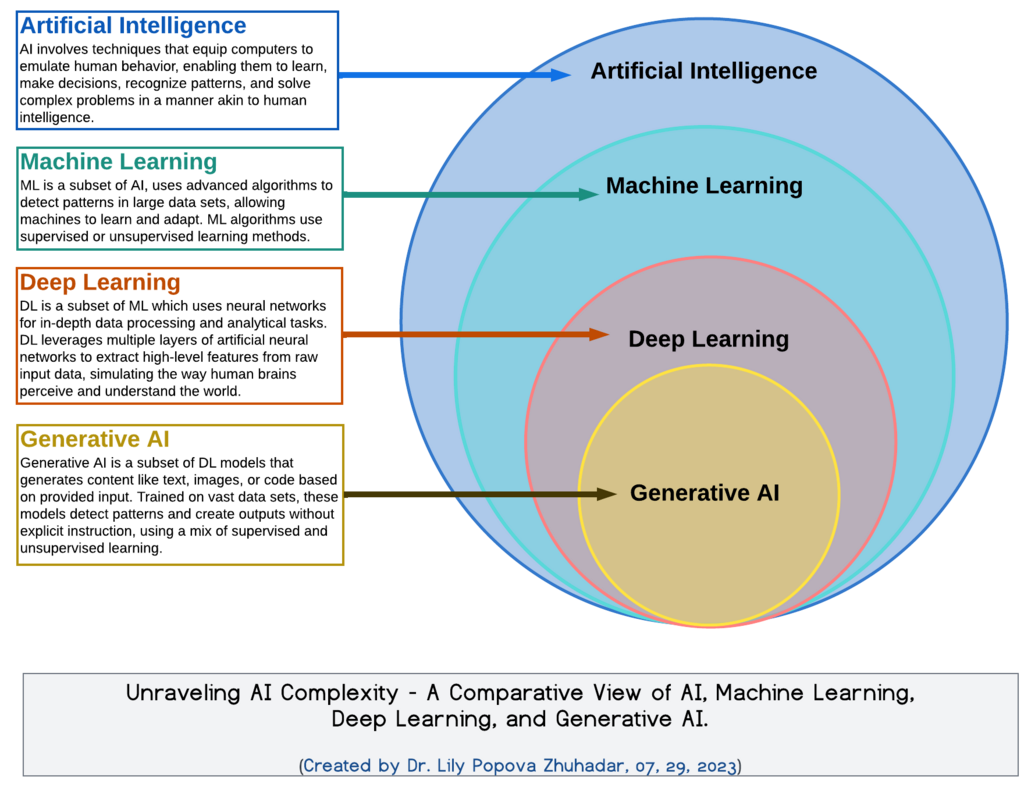
Artificial Intelligence is a broad field with many sub-disciplines. To understand how it works, it helps to see how the main concepts fit together. The most important terms you'll hear are Machine Learning and Deep Learning, which are both subsets of the larger AI field.
Let’s break these down.
Machine Learning
noun
A subset of AI where algorithms are trained on data to find patterns and make predictions without being explicitly programmed for the task.
Machine Learning (ML) is the engine that powers most modern AI. Instead of writing rules for a computer to follow, ML developers feed it data and let it learn the rules itself. For example, to build an ML model that identifies cats, you would show it thousands of cat pictures. The model learns the features that define a cat—whiskers, pointy ears, fur—on its own.
Deep Learning is a specialized type of machine learning that uses structures inspired by the human brain, called neural networks. These networks have many layers, allowing them to learn very complex patterns from enormous amounts of data. Deep learning is behind some of the most impressive AI advancements, like realistic language translation and image recognition.
AI All Around Us
AI isn't just a futuristic concept; it's already integrated into many products and services we use every day. It's working behind the scenes to make technology smarter, more efficient, and more personalized. From entertainment to healthcare, AI is reshaping industries.
| Industry | Common AI Application |
|---|---|
| E-commerce | Personalized product recommendations |
| Finance | Fraud detection and algorithmic trading |
| Healthcare | Analyzing medical images to detect diseases |
| Transportation | Route optimization in navigation apps |
| Entertainment | Curating playlists and movie suggestions |
| Manufacturing | Predictive maintenance for machinery |
The economic impact of this widespread adoption is profound. By automating repetitive tasks, AI allows people to focus on more creative and strategic work, boosting productivity. It analyzes data at a scale impossible for humans, uncovering insights that can lead to new business models, more efficient supply chains, and groundbreaking scientific discoveries. This shift is creating new roles and demanding new skills, fundamentally altering the modern economy.