Investing Fundamentals
Introduction to Investing
What Is Investing?
Investing is the process of using your money to buy assets that you expect to increase in value over time. Think of it as putting your money to work. Instead of just sitting in a savings account, your money can grow, helping you build wealth for the future.
Investing
verb
The act of allocating money with the expectation of generating a future income or profit.
The goal isn't just to have more money; it's about what that money can do for you. That's where financial goals come in. They give your investments a purpose.
Start with Your Goals
Before you invest a single dollar, it helps to know what you're investing for. Are you saving for retirement in 30 years? A down payment on a house in five years? Your child's college education? Having clear, specific goals helps you choose the right path.
A long-term goal like retirement gives your money plenty of time to grow, which means you might be comfortable with investments that have higher growth potential. A short-term goal, like saving for a vacation next year, requires a safer approach. Your goals are the map for your financial journey.
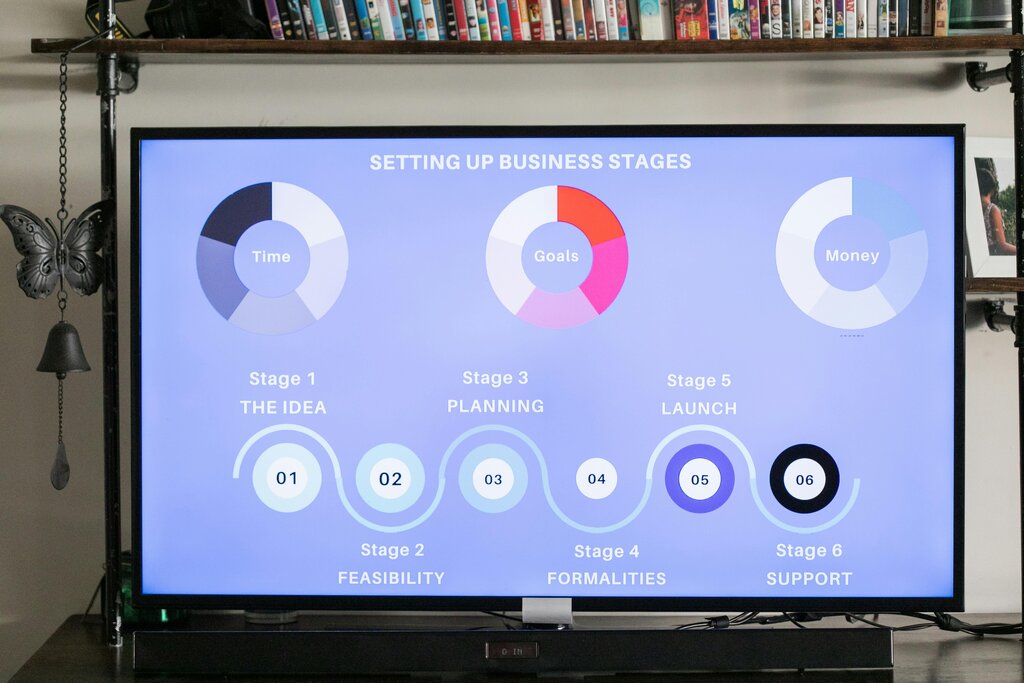
Knowing your destination makes it easier to choose the right vehicle to get there.
The Silent Threat to Savings
If investing is putting your money to work, keeping it all in cash is like leaving it on the sidelines. The problem is, money on the sidelines loses its power over time. This is due to inflation.
Inflation is the rate at which the general level of prices for goods and services is rising, and subsequently, the purchasing power of currency is falling. A dollar today doesn't buy as much as it did ten years ago. If your savings aren't growing at a rate that's at least equal to inflation, you're actually losing money in terms of what you can buy.
Imagine a coffee that costs 💲3 today. If inflation is 3% per year, that same coffee will cost about 💲4 in ten years. Your money needs to grow just to keep up.
This is a key reason people invest. A well-structured investment portfolio has the potential to grow faster than inflation, increasing your real wealth over the long run.
The Building Blocks of Investing
So, what can you invest in? There are many options, but most fall into a few basic categories. Let's look at three fundamental types of investments.
Stock
noun
A security that represents ownership in a corporation. Holders of stock are entitled to a portion of the company's assets and profits.
When you buy a stock, you're buying a small piece, or share, of a company. If that company does well and its value increases, the value of your share increases too. Stocks offer the potential for high growth, but they also come with higher risk, as a company's value can also go down.
Bond
noun
A fixed-income instrument that represents a loan made by an investor to a borrower, typically a corporation or government.
Buying a bond is like lending money. The issuer of the bond—a company or a government—promises to pay you back your initial investment on a specific date, and in the meantime, it pays you periodic interest. Bonds are generally considered less risky than stocks and provide a more predictable stream of income.
Cash Equivalent
noun
Highly liquid, short-term investments that are easily convertible into a known amount of cash.
Cash equivalents are the safest of the three. This category includes things like high-yield savings accounts and money market funds. They are very low-risk and you can access your money easily. The trade-off is that they offer very low returns, often not even enough to keep pace with inflation over the long term. They are best suited for emergency funds or very short-term goals.
| Investment Type | Potential Return | Risk Level | Best For |
|---|---|---|---|
| Stocks | High | High | Long-term growth |
| Bonds | Moderate | Low to Moderate | Steady income, stability |
| Cash Equivalents | Low | Very Low | Short-term savings, safety |
Understanding these basic building blocks is the first step toward building an investment strategy that aligns with your personal financial goals. Now, let's review what we've covered.
What is the primary goal of investing?
If your savings are not growing at a rate at least equal to inflation, your money's purchasing power is effectively __________.
These concepts form the foundation of a solid financial future. By setting goals, understanding the impact of inflation, and knowing the basic investment types, you're on your way to making your money work for you.