Inventory Optimization for Cost and Freshness
Introduction to Inventory Management
What is Inventory Management?
At its heart, inventory management is the process of ordering, storing, and using a company's inventory. This includes everything from the raw materials used to build a product to the finished goods ready for sale. Think of a local coffee shop. Its inventory isn't just coffee beans; it's also milk, sugar, paper cups, and pastries. Managing all of it well is the difference between a smooth, profitable day and a frustrating one.
Inventory
noun
The raw materials, work-in-process goods, and completely finished goods that are considered to be the portion of a business's assets that are ready or will be ready for sale.
Why is this so important? Without a good system, the coffee shop might run out of espresso beans during the morning rush, leading to lost sales and unhappy customers. Or, it might over-order milk that expires before it can be used, wasting money. Good inventory management is a balancing act. The goal is to have enough product to meet customer demand without tying up too much money in stock that isn't selling.
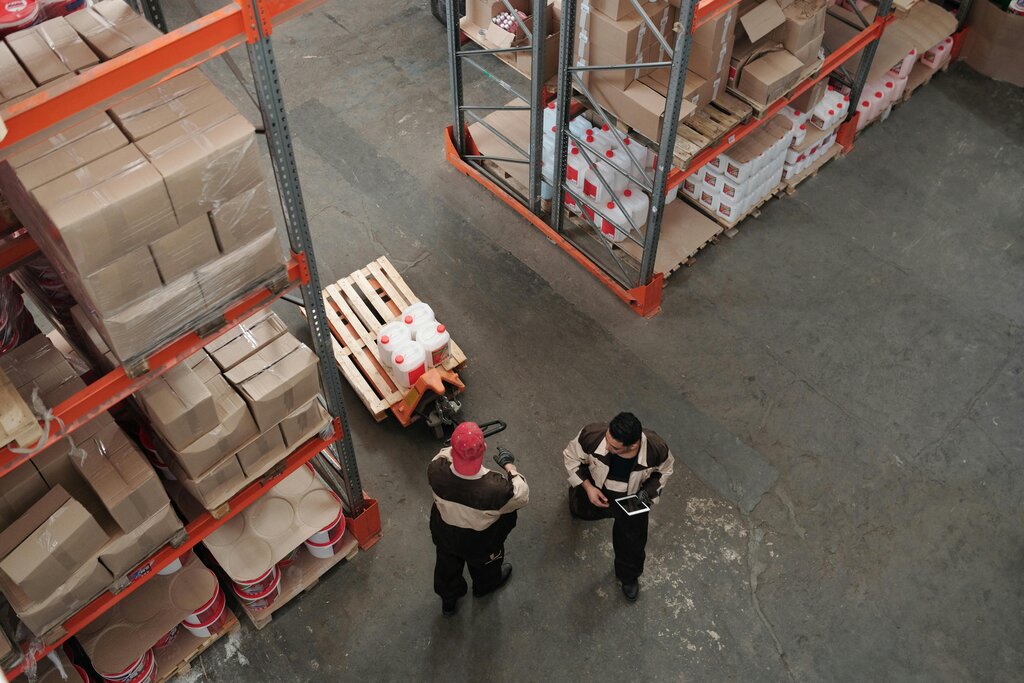
Effective inventory management ensures you meet customer demand while minimizing waste and storage costs. It’s a direct line to a healthier bottom line.
Finding the Right Balance
Businesses have developed different strategies to strike the perfect inventory balance. Two of the most fundamental methods are Just-In-Time (JIT) and Economic Order Quantity (EOQ).
The Just-In-Time (JIT) approach is about minimalism. The idea is to receive goods from suppliers only as they are needed in the production process or to fulfill a customer order. This drastically reduces the costs of holding inventory, since there's very little sitting around in a stockroom. Car manufacturers famously use this method, with parts like tires or transmissions arriving at the factory right before they're installed on the assembly line. The main risk? A delay from a single supplier can halt the entire production process.
The Economic Order Quantity (EOQ) model takes a more mathematical approach. It helps a company figure out the ideal quantity of inventory to order at a time to minimize total costs. It balances two competing expenses:
- Ordering Costs: The costs of placing an order, like shipping fees and administrative work. Ordering more items at once reduces how often you have to order.
- Holding Costs: The costs of storing inventory, like warehouse rent, insurance, and the risk of spoilage. Ordering smaller batches reduces these costs.
The EOQ formula finds the sweet spot where the combined costs are lowest.
Here’s what the variables mean:
- is the ideal order quantity.
- is the annual demand for the product.
- is the cost per order (ordering cost).
- is the annual cost to hold one unit of inventory (holding cost).
By plugging in these values, a business can get a data-backed suggestion for how much to order each time.
The Challenge of Perishables
Managing inventory gets trickier when the goods have a shelf life. For businesses like grocery stores, restaurants, and pharmacies, the clock is always ticking.
The most obvious challenge is spoilage. Any perishable item that isn't sold before its expiration date becomes a total loss. This directly eats into profits. To combat this, businesses often use a simple but crucial principle: First-In, First-Out (FIFO). This means the oldest stock (the first in) is sold first, ensuring products are used before they spoil. Think of how a grocer stocks milk; they place the newest cartons at the back of the shelf so customers grab the older ones first.
The FIFO method (First In, First Out) is a simple yet effective way to manage inventory with a limited shelf life.
Another major hurdle is demand variability. The demand for perishable goods can be highly unpredictable. A sunny weekend might cause a surge in sales for burger buns and ice cream, while a cold, rainy day could boost demand for soup ingredients. This fluctuation makes it difficult to forecast accurately, increasing the risk of either stocking out or having too much perishable inventory go to waste. Managers must constantly analyze sales data and even weather forecasts to make the best possible ordering decisions.
What is the primary goal of effective inventory management?
The Economic Order Quantity (EOQ) model is designed to find the ideal order size by balancing which two competing costs?
Mastering these fundamental concepts is the first step toward building an efficient and profitable supply chain. It's a constant process of balancing costs, predicting needs, and adapting to change.