Inventing New Philosophy
Introduction to Philosophy
What is Philosophy?
At its heart, philosophy is about asking big questions. It’s a way of thinking about the world, the universe, and our place in it. The word itself comes from Greek and means 'love of wisdom'. Philosophers are people who are driven to understand the fundamental truths about themselves, the world in which they live, and their relationships to the world and to each other.
It isn't about having all the answers. Instead, it’s about the journey of asking, questioning, and thinking critically. Philosophy challenges you to examine your own beliefs and assumptions. Why do you believe what you believe? Are your reasons solid? This process of inquiry helps us clarify what we think and why.
philosophy
noun
The study of the fundamental nature of knowledge, reality, and existence, especially when considered as an academic discipline.
It’s not just an abstract academic subject. We all engage in philosophy whether we realise it or not. When you wonder about what happens after death, question a political belief, or think about what makes a life meaningful, you are thinking like a philosopher.
Where Did It All Begin?
Western philosophy traces its roots back to ancient Greece, over 2,500 years ago. Before this, people often explained the world through myths and stories about gods and goddesses. A storm might be the anger of a sky god, for example.
The first philosophers took a different approach. They tried to find rational, logical explanations for the world around them. Thinkers like Thales, often called the first philosopher, asked what the world was made of. He proposed that everything was ultimately made of water. While the answer was incorrect, the way he asked the question was revolutionary. He used reason, not mythology, to explore a fundamental question about reality.
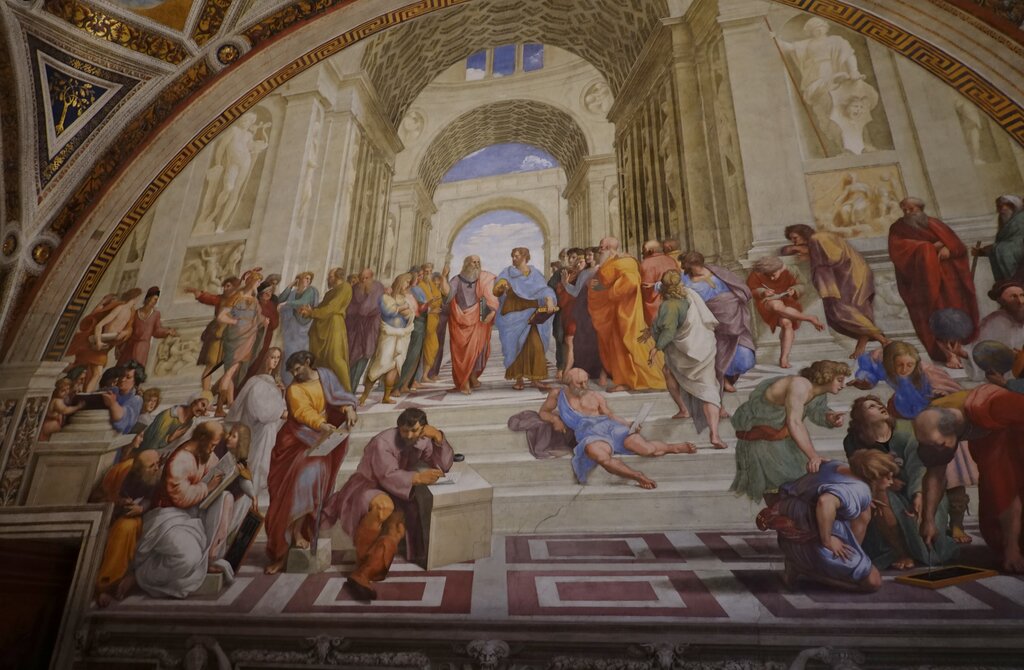
This new way of thinking laid the groundwork for centuries of intellectual exploration. Figures like Socrates, Plato, and Aristotle developed methods of inquiry and explored questions that are still debated today. They moved beyond questions about the physical world to explore ethics, politics, and the nature of the human soul.
The Main Branches
Philosophy can seem vast, but it's often broken down into five main branches. Each branch focuses on a different set of fundamental questions.
The five main branches are:
- Metaphysics
- Epistemology
- Ethics
- Logic
- Aesthetics
Let’s look at what each one explores.
metaphysics
noun
The branch of philosophy that deals with the first principles of things, including abstract concepts such as being, knowing, substance, cause, identity, time, and space.
Metaphysics tackles the question: What is real? It explores the nature of existence and reality. It's not about the supernatural, but about the fundamental structure of the universe. Metaphysical questions include: Does God exist? Do we have free will? What is time? It pushes us to think beyond our immediate sensory experience.
epistemology
noun
The theory of knowledge, especially with regard to its methods, validity, and scope. Epistemology is the investigation of what distinguishes justified belief from opinion.
Epistemology is the study of knowledge. It asks: How do we know what we know? This branch examines what knowledge is and how we acquire it. It digs into the difference between believing something and knowing it. For example, how can you be certain that the world you experience is real and not an elaborate dream? Epistemology explores the sources and limits of our knowledge.
ethics
noun
The branch of knowledge that deals with moral principles.
Ethics, or moral philosophy, addresses questions of morality. It asks: How should we live? This branch is concerned with concepts of right and wrong, good and bad. It explores what makes an action moral, where our moral duties lie, and what constitutes a good life. Everyday dilemmas, like whether it's ever okay to lie, are at the core of ethics.
logic
noun
Reasoning conducted or assessed according to strict principles of validity.
Logic is the study of correct reasoning. It asks: What makes an argument valid? Logic is the philosopher's toolkit. It provides the methods and principles for distinguishing good reasoning from bad. It doesn't focus on what we argue about, but how we construct our arguments. Learning logic helps you spot fallacies and build stronger, more persuasive cases for your own views.
aesthetics
noun
A set of principles concerned with the nature and appreciation of beauty, especially in art.
Aesthetics is the branch of philosophy that deals with beauty, art, and taste. It asks: What is beauty? This area explores what makes something beautiful, whether beauty is subjective or objective, and the purpose of art. When you're moved by a piece of music or a painting and wonder why, you're thinking about aesthetics.
These branches provide a framework for navigating the vast landscape of philosophical inquiry. It's time to check what you've learned.
Ready to test your understanding?
The word 'philosophy' has its roots in Greek. What does it literally mean?
What fundamental shift in thinking did the first ancient Greek philosophers, like Thales, introduce?
By breaking down life's biggest questions into these areas, philosophy gives us the tools to think more clearly about the world and our place within it.