Intuitive Coding with Vibe
Introduction to Vibe Coding
A New Way to Code
Imagine telling your computer what you want to build, and it writes the code for you. That's the core idea behind a new approach called vibe coding. Instead of manually writing every line of code, a developer describes their goal in plain English to an artificial intelligence.
Vibe coding is a way of building software where you express intent in natural language, let an AI (usually a large language model) generate runnable code, and iterate on the live behavior rather than painstakingly authoring every line yourself.
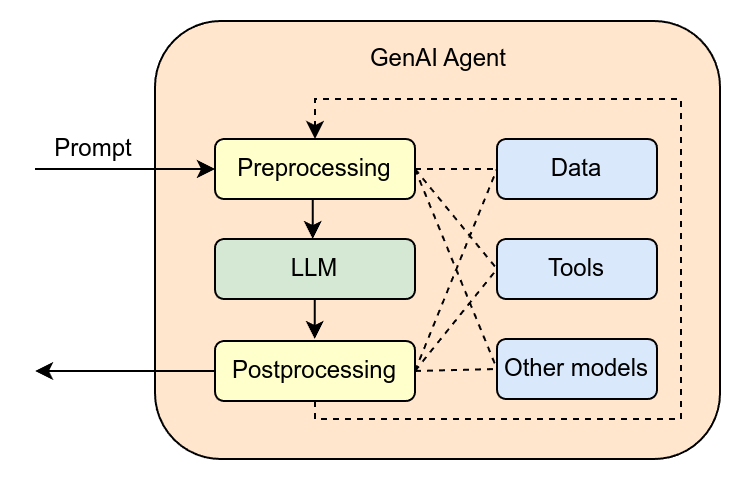
This method relies on powerful AI systems known as Large Language Models, or LLMs. These are the same kinds of models that power advanced chatbots. They've been trained on vast amounts of text and code, allowing them to understand a request—the "vibe"—and translate it into functional source code.
The term was first introduced by AI researcher Andrej Karpathy in early 2025 and quickly gained traction. It represents a fundamental shift in how we interact with machines to create software.
How It's Different
Traditional programming is a meticulous process. A developer must know the specific syntax of a programming language and write precise, step-by-step instructions for the computer to follow. It requires deep knowledge of logic, algorithms, and the language's rules.
Vibe coding is more like a conversation. The developer acts as a director, providing high-level guidance. The LLM acts as the programmer, handling the low-level details of writing the actual code. The developer's job then becomes testing the AI's output, identifying problems, and refining the initial prompt until the desired result is achieved. It’s an iterative loop of prompting, generating, and testing.
| Feature | Traditional Coding | Vibe Coding |
|---|---|---|
| Developer's Role | Writer and architect | Director and editor |
| Process | Write code line by line | Describe outcome, then refine |
| Primary Skill | Syntax and logic | Prompting and evaluation |
| Starting Point | An empty file | A natural language prompt |
The Good and The Bad
Like any new technology, vibe coding has both benefits and drawbacks.
On the plus side, it can dramatically speed up development. Prototypes that once took days can now be generated in minutes. It also makes coding more accessible to people who aren't expert programmers. If you can clearly describe an idea, you can start bringing it to life.
However, there are limitations. The code generated by an LLM isn't always perfect. It can contain subtle bugs or security vulnerabilities that a human developer might not spot immediately. There's also a risk of becoming too dependent on the AI and losing a deeper understanding of how the code actually works. The developer's focus shifts from understanding the how to validating the what.
With vibe coding, the most valuable skill isn't just knowing how to code—it's knowing how to ask the right questions and critically evaluate the answers.
Ready to review the key ideas we've covered?
Now, let's test your understanding with a few questions.
What is the core idea behind 'vibe coding'?
According to the text, the developer's role in vibe coding shifts from writing precise instructions to...
Vibe coding is a new and evolving field. It won't replace traditional programming entirely, but it offers a powerful new tool for building software faster and more intuitively.