Introduction to Woodworking
Understanding Wood
The Nature of Wood
Wood is a natural material, and no two pieces are exactly alike. Its unique character comes from the life of the tree it was once part of. Factors like the species, climate, and soil conditions all leave their mark. Understanding these fundamentals is the first step in woodworking. It helps you choose the right material for your project and anticipate how it will behave.
Anatomy of a Tree
To understand wood, you first have to understand the tree. A tree trunk isn't just a solid column; it's made of distinct layers, each with a specific job.
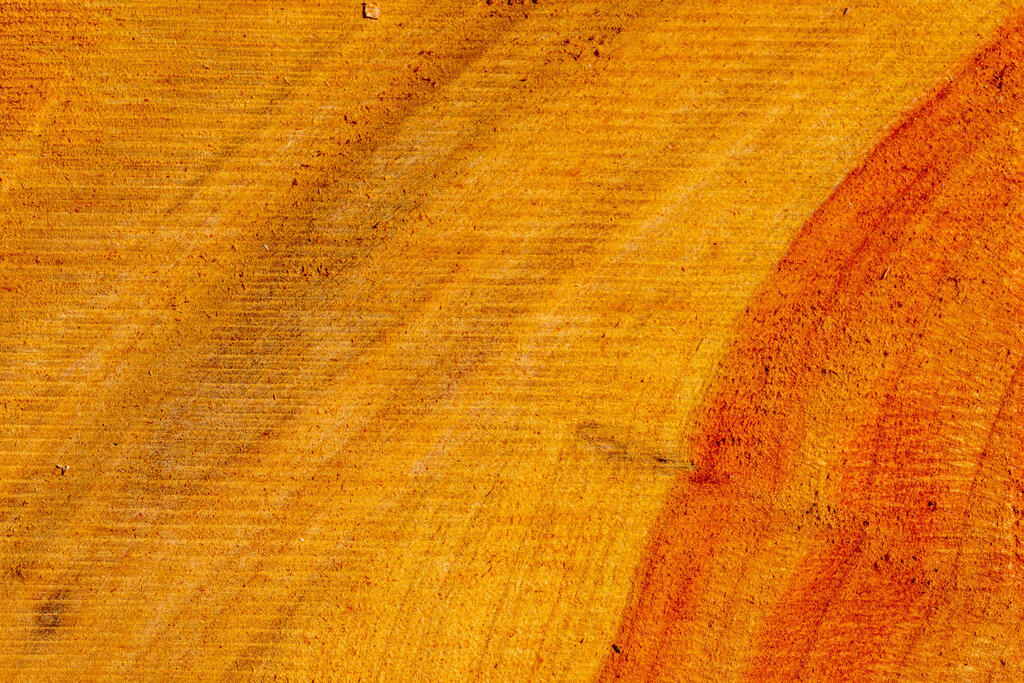
The most important parts for a woodworker are the heartwood and sapwood. Heartwood is the dense, dead wood at the center of the tree that gives it strength. Sapwood is the living layer that transports water and nutrients. Generally, heartwood is darker and more resistant to rot and insects than sapwood.
Grain and Figure
A board's unique pattern of lines and textures is called its grain, or figure. This pattern is created by the tree's annual growth rings. The appearance of the grain depends entirely on how the log is sawn into boards.
There are three main ways to cut a log:
-
Flat-sawn (or plain-sawn): This is the most common and efficient method. The log is cut into parallel planks. It produces wide boards with a classic wavy, cathedral-like grain pattern. However, these boards are more prone to cupping (warping across the width).
-
Quarter-sawn: The log is first cut into quarters, and then each quarter is sawn into boards. This method produces boards with a straight, parallel grain pattern. Quarter-sawn wood is more dimensionally stable than flat-sawn wood and is less likely to warp.
-
Rift-sawn: This is the least common and most wasteful method, making it the most expensive. Boards are cut radially from the center of the log. It produces a very straight, linear grain pattern with exceptional stability.
The way a board is cut not only affects its appearance but also its stability and how it will behave over time.
Hardwoods and Softwoods
Wood is broadly classified into two categories: hardwood and softwood. The names can be misleading. It's not about how hard or soft the wood actually is, but about the type of tree it comes from.
Hardwoods come from deciduous trees, which are trees that lose their leaves in the fall, like oak, maple, and walnut.
Softwoods come from coniferous trees, which are evergreens with needles and cones, like pine, cedar, and fir.
| Feature | Hardwoods | Softwoods |
|---|---|---|
| Tree Type | Deciduous (leaf-dropping) | Coniferous (evergreen) |
| Grain | Generally denser, tighter grain | Generally less dense, looser grain |
| Cost | Typically more expensive | Typically less expensive |
| Examples | Oak, Maple, Cherry, Walnut | Pine, Cedar, Fir, Spruce |
| Common Uses | Fine furniture, flooring, cabinetry | Construction framing, paper, outdoor decks |
While most hardwoods are indeed harder than most softwoods, there are exceptions. Balsa wood, for example, is one of the softest woods in the world, but it's technically a hardwood.
Wood and Water
Wood is a hygroscopic material, which means it acts like a sponge, absorbing and releasing moisture from the air to match its surrounding environment. This is one of the most important concepts to grasp in woodworking.
hygroscopic
adjective
Tending to absorb moisture from the air.
When wood absorbs moisture, it expands. When it releases moisture, it shrinks. This is called wood movement, and it happens primarily across the grain of the wood, not along its length. A board will get wider or narrower with humidity changes, but its length will barely change at all.
This movement is the reason why woodworkers use special joinery techniques and leave gaps in things like tabletops and flooring. They are designing for the wood's inevitable expansion and contraction. Failing to account for wood movement can cause joints to fail, boards to crack, and entire projects to fall apart over time.
The moisture content of wood is always trying to reach a balance with the surrounding air. This balance point is called the Equilibrium Moisture Content (EMC).
Freshly cut wood, or "green" wood, has a very high moisture content. Before it can be used for most projects, it needs to be dried, either by air-drying over a long period or by being kiln-dried. This process brings the moisture content down to a level that is more stable for indoor environments, usually between 6-10%.
Now that you have a handle on the basics of wood as a material, test your knowledge.
What is the primary function of the heartwood in a living tree?
A woodworker is building a solid wood tabletop and must account for wood movement. In which direction will the wood primarily expand and contract?
Understanding these core principles—the structure of wood, the difference between hardwoods and softwoods, and the constant movement due to moisture—is essential for any woodworking project. It informs every choice you'll make, from selecting a board to finishing your piece.