Introduction to Website Development
Introduction to Web Development
Two Sides of a Website
Every website or web application has two distinct sides, much like a restaurant. There's the dining room, where customers sit, look at the menu, and eat their food. This is the part everyone sees and interacts with. Then there's the kitchen, a complex operation hidden from view, where chefs prepare the food, manage inventory, and wash dishes. Without the kitchen, the dining room couldn't function.
Web development is split in a similar way. We call these two sides the front-end and the back-end.
Front-end: This is the visual part of a website that users interact with directly. It's the layout, the colors, the buttons, and the text. It's everything you see in your browser.
Back-end: This is the server, database, and application logic that work behind the scenes. It powers the front-end, managing data and making the site functional.
A web developer might specialize in one area or work across both. A developer who works on both the front-end and back-end is known as a full-stack developer. Let's look at what goes into building each side.
Building the Front-End
The front-end is built using three core technologies that every browser understands. Think of them as the building blocks for creating a webpage.
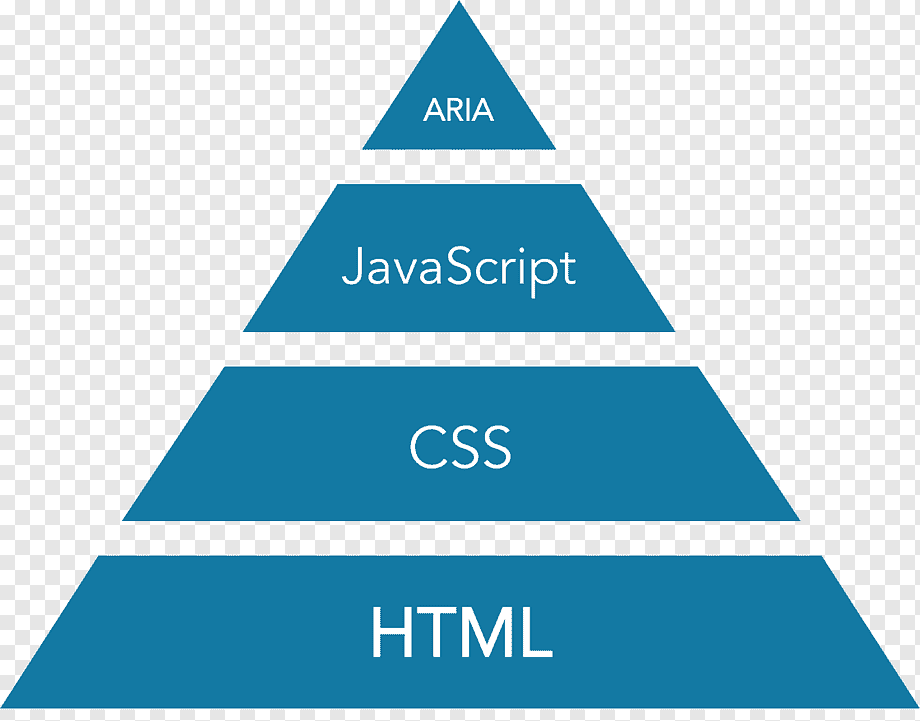
HTML (HyperText Markup Language) provides the basic structure and content of a page. It's like the skeleton of a person or the frame of a house. It defines the headings, paragraphs, images, and links.
CSS (Cascading Style Sheets) is used to style the HTML content. It controls the colors, fonts, layout, and overall visual presentation. If HTML is the frame of a house, CSS is the paint, wallpaper, and furniture that make it look good.
JavaScript adds interactivity and dynamic behavior to the website. When you click a button, see a pop-up, or watch an animation, that's JavaScript at work. It turns a static house into a functional home where you can open doors and turn on lights.
Make sure you're fluent in HTML, CSS, and JavaScript - the building blocks of web development.
Powering the Back-End
The back-end is the part of the website you don't see. It's the engine that makes everything run. Its main job is to store and organize data and ensure the front-end has what it needs to function. The back-end consists of a few key components.
| Component | Role |
|---|---|
| Server | A computer that runs the back-end software, listens for requests from the browser, and sends back the appropriate information. |
| Server-Side Language | Code that runs on the server to handle logic, process data, and interact with the database. Examples include Python, PHP, Ruby, and Node.js. |
| Database | An organized collection of data. This is where information like user accounts, blog posts, or product details are stored and managed. |
When you log in to a social media site, the back-end verifies your credentials, fetches your profile information and posts from the database, and sends it all to your browser so the front-end can display it.
How They Work Together
The front-end and back-end are in constant communication. The front-end (the client) sends requests to the back-end (the server), and the server sends back responses. This client-server model is the foundation of how the web works.
Let's walk through a simple example: submitting a contact form.
This continuous conversation between the front-end and back-end is what makes modern web applications powerful and interactive.
Using the provided analogy of a house, if HTML is the frame, what is CSS?
What is the primary role of the back-end in a web application?
Understanding the roles of the front-end and back-end is the first major step in learning web development. While they use different technologies, they are two halves of the same whole, working together to create the web experiences we use every day.