Introduction to Vives Coding
Introduction to Vibe Coding
What Is Vibe Coding?
Imagine trying to build an app. In the past, you'd need to write precise, line-by-line instructions in a language like Python or JavaScript. It's a bit like giving a robot a detailed blueprint for every single screw and board.
Vibe coding flips this on its head. Instead of writing strict commands, you have a conversation with an AI. You describe what you want to create in plain English, focusing on the overall goal and feel—the "vibe." The AI acts as your partner, translating your ideas into functional code.
The core idea is to shift from giving deterministic instructions to expressing intent. You guide the AI, and it handles the complex syntax.
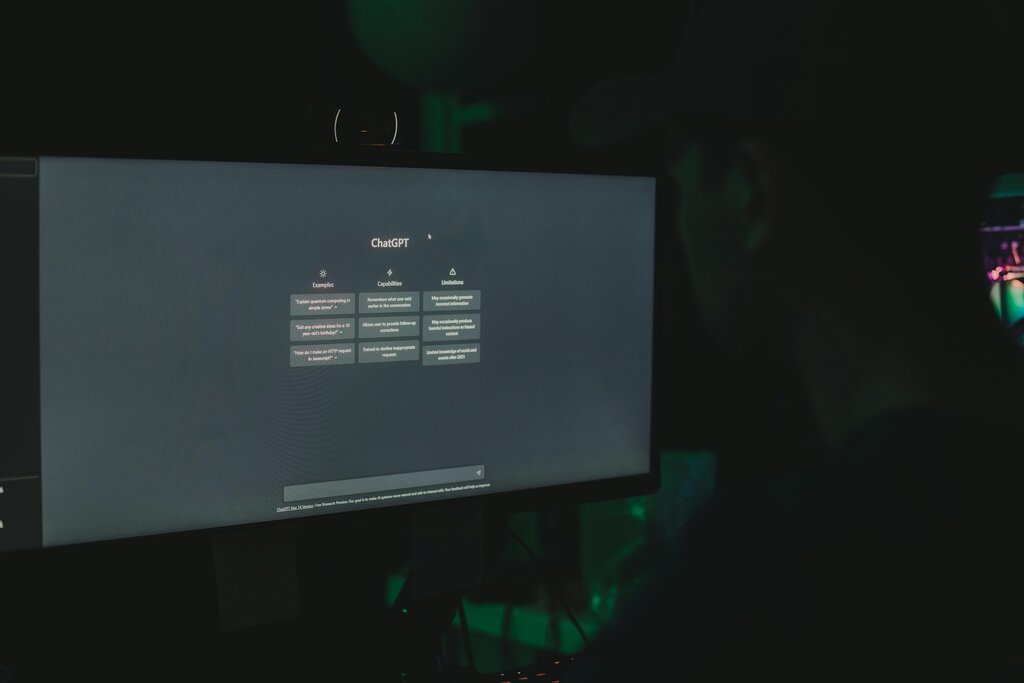
This process is a back-and-forth dialogue. The AI generates code, you test it, and then you provide feedback to refine it. You might say, "Make the login button more playful and round," or "Add a feature that suggests movies based on a user's mood." The developer's role becomes less about being a meticulous architect and more about being a creative director.
A New Programming Paradigm
The term "vibe coding" gained traction after it was popularized by AI researcher Andrej Karpathy. He used it to describe this new, more intuitive way of working with AI to build software. It captured a fundamental change in the developer's experience, moving from a rigid, logic-heavy process to a fluid, collaborative one.
Vibe coding is a new programming style where developers collaborate with agentic AI to boost creativity, efficiency and adaptability.
Traditional programming is mostly imperative. You tell the computer exactly how to do something, step by step. Vibe coding is more declarative. You describe what you want as the end result, and the AI figures out the how. It's the difference between writing a recipe and just telling a chef you want "a spicy, savory pasta dish."
| Feature | Traditional Coding | Vibe Coding |
|---|---|---|
| Developer's Role | Writes explicit code | Describes intent, guides AI |
| Communication | Formal syntax (e.g., Python) | Natural language (e.g., English) |
| Process | Linear, step-by-step | Iterative, conversational |
| Focus | Low-level implementation | High-level goals and user experience |
Benefits and Challenges
The most significant benefit of vibe coding is accessibility. It lowers the barrier to entry, allowing people without formal programming training to build software. It can also dramatically speed up development, especially for prototyping new ideas. Developers can focus more on the creative aspects of their work instead of getting bogged down in boilerplate code.
However, it's not without its challenges. Because the AI is making inferences, it can sometimes misunderstand your intent or generate inefficient, insecure, or buggy code. The developer still needs enough technical knowledge to spot these issues and guide the AI toward a correct and robust solution. Relying too heavily on the "vibe" without understanding the underlying principles can lead to unpredictable results.
Ready to test your understanding of these core concepts?
What is the core principle behind "vibe coding"?
Vibe coding is considered a more "declarative" approach, while traditional programming is primarily "imperative." What is the key difference?
Vibe coding represents a major shift in software development, turning it into a collaborative dance between human creativity and artificial intelligence.