Introduction to Trigonometric Functions
Right Triangle Basics
What Makes a Triangle 'Right'?
A triangle has three sides and three angles. A right triangle is a special kind of triangle that has one angle measuring exactly 90 degrees. This is called a right angle, and it's often marked with a small square in the corner.
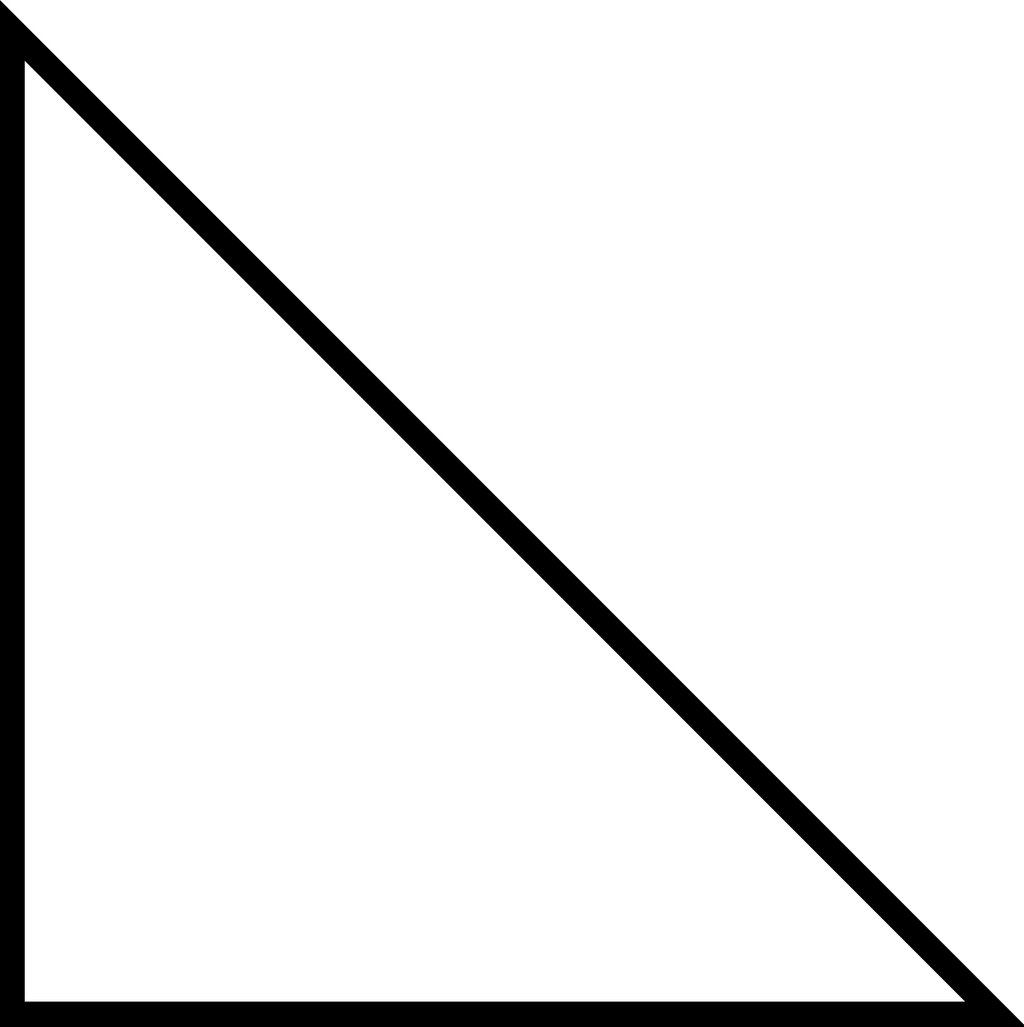
The three angles inside any triangle always add up to 180 degrees. Since one angle in a right triangle is always 90 degrees, the other two angles must add up to 90 degrees. This means the other two angles are always acute, which means they are each less than 90 degrees.
Naming the Sides
The sides of a right triangle have special names. These names are important because they describe the relationship between the sides and the angles.
Hypotenuse
noun
The longest side of a right triangle. It is always the side directly opposite the 90-degree angle.
The other two sides are called the legs of the triangle. But when we want to talk about them in relation to one of the acute angles, we give them more specific names: opposite and adjacent.
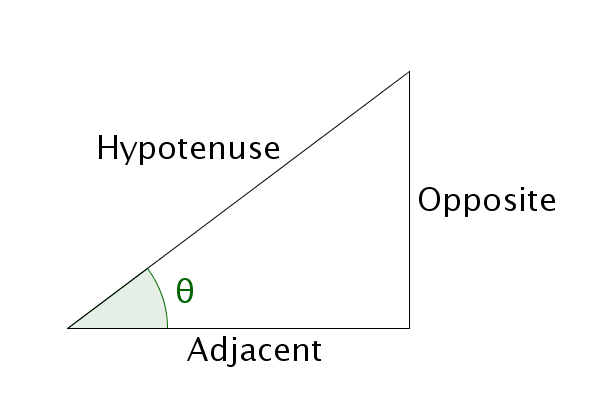
Here’s how to tell them apart:
- The opposite side is the leg across from the angle you're focused on.
- The adjacent side is the leg next to the angle you're focused on (that isn't the hypotenuse).
If you switch your focus to the other acute angle, the labels for the opposite and adjacent sides will also switch.
The Pythagorean Theorem
There's a famous and incredibly useful relationship between the lengths of the three sides of a right triangle. It's called the Pythagorean theorem, and it states that the square of the hypotenuse is equal to the sum of the squares of the other two sides (the legs).
The 2,000-year-old theorem established that the sum of the squares of a right triangle’s two shorter sides equals the square of the hypotenuse – the third, longest side opposite the shape’s right angle.
If we call the lengths of the legs 'a' and 'b' and the length of the hypotenuse 'c', the formula is simple and elegant.
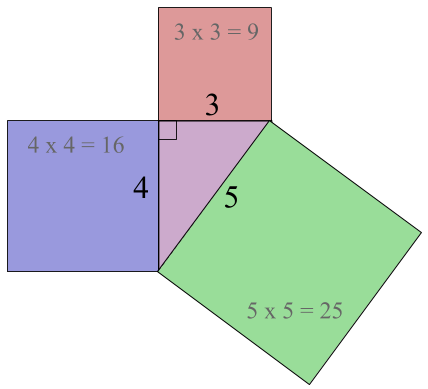
Let's use the theorem to find a missing side. Imagine a right triangle has legs with lengths of 5 and 12. What is the length of the hypotenuse?
We know and . We need to find .
The hypotenuse is 13. The theorem also works if you know the hypotenuse and one leg. If the hypotenuse is 10 and one leg is 6, we can find the other leg.
We know and . We need to find .
The missing leg has a length of 8. This powerful formula is a cornerstone of geometry and trigonometry.
Time to check your understanding.
What is the defining characteristic of a right triangle?
In a right triangle, one angle is 90 degrees. What is the sum of the other two angles?
With these basics down, you're ready to explore how the sides and angles of right triangles relate in even deeper ways.