Introduction to Transportation
Transportation Systems Overview
What Is a Transportation System?
At its core, a transportation system is a network designed to move people and goods from one place to another. Think of it as the circulatory system of our society. It's not just about the vehicles we use, but also the paths they travel and the points where journeys begin and end. The main purpose is to overcome distance, connecting us to resources, opportunities, and each other.
Every effective transportation system is built on three fundamental components.
- Vehicles: The means of conveyance, like cars, trains, airplanes, and ships.
- Networks: The infrastructure that vehicles use, such as roads, railways, air corridors, and sea lanes.
- Terminals: The hubs where journeys start, end, or transfer, including airports, seaports, and stations.
These three elements work together. A plane (vehicle) is useless without an airport (terminal) and established flight paths (network). A cargo ship needs a port and shipping lanes to deliver its goods. When all three parts are coordinated, the system functions efficiently.
Modes of Movement
Transportation isn't one-size-fits-all. Different methods, or modes, are suited for different tasks. The four primary modes are road, rail, air, and maritime.
| Mode | Best For | Key Characteristics |
|---|---|---|
| Road | Short to medium distances, last-mile delivery | High flexibility, door-to-door service, extensive network coverage. |
| Rail | Medium to long distances, heavy or bulk goods | High capacity, energy-efficient, reliable schedules, limited by track locations. |
| Air | Long distances, time-sensitive cargo, passenger travel | Fastest mode, connects distant locations, but expensive and weather-dependent. |
| Maritime | International trade, very large/heavy cargo | Lowest cost per ton, massive capacity, slow speed, requires port infrastructure. |
Often, these modes are combined. A product might travel from a factory in Asia to Europe on a container ship (maritime), then be loaded onto a train (rail), and finally delivered to a store by a truck (road). This integration creates a complete logistics network.
A Quick History
For most of human history, transportation was limited by the power of muscles, both human and animal. The invention of the wheel was a major breakthrough, but true transformation began with the Industrial Revolution.
The steam engine powered the first locomotives and steamships in the 19th century, shrinking the world by making long-distance travel and trade faster and more reliable than ever before. This era established massive rail networks that became the backbone of industrial economies.
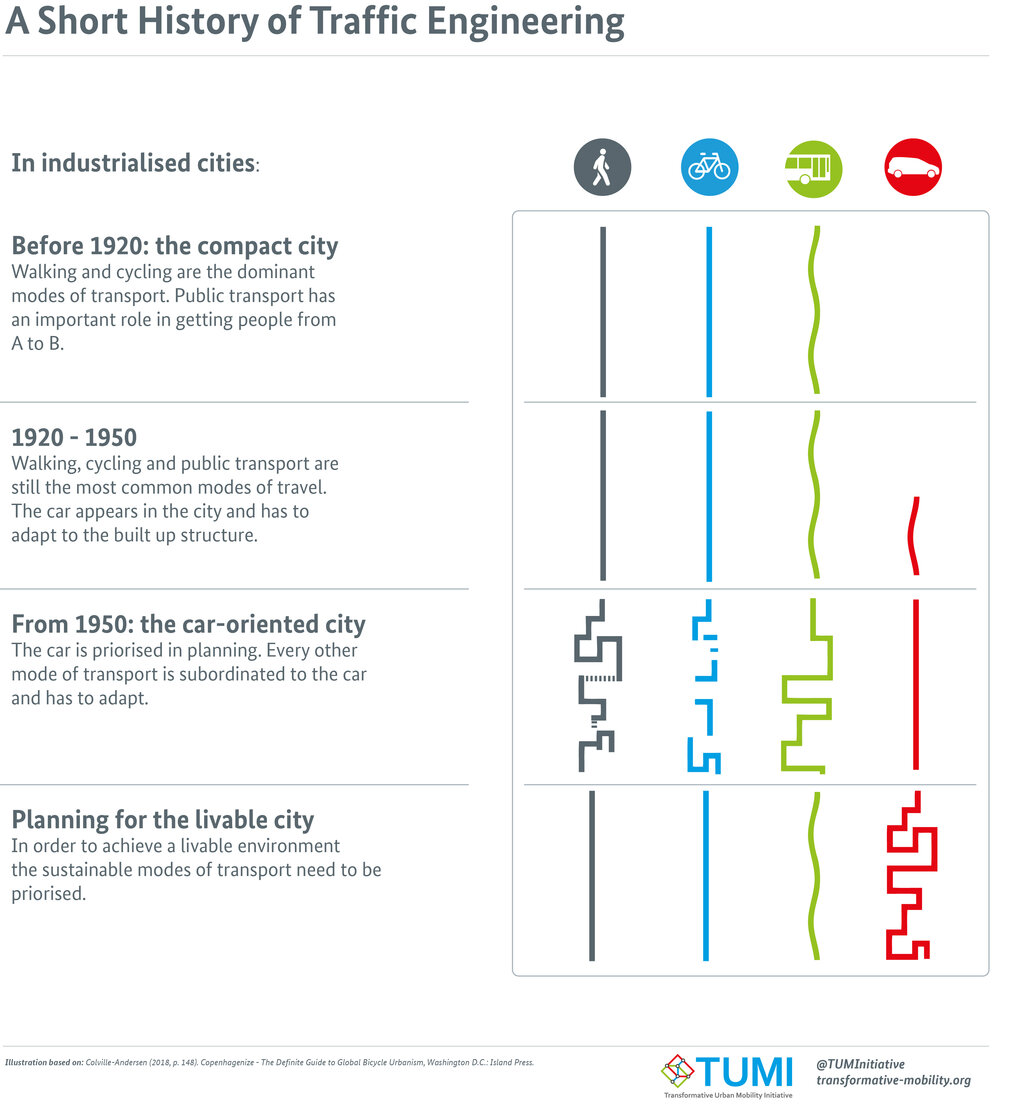
The 20th century brought two more game-changers: the automobile and the airplane. Cars offered unparalleled personal freedom and flexibility, reshaping cities and lifestyles. Air travel conquered the greatest distances, making international business and tourism accessible to the masses.
Why Transportation Matters
Effective transportation is the bedrock of a modern economy. It allows raw materials to reach factories and finished products to reach consumers. Without it, global trade would grind to a halt. Regions can specialize in what they produce best, knowing they can trade with others for what they need.
The timely transportation of goods to customers is an essential component of economic activities.
Beyond economics, transportation is vital for social connectivity. It connects people to jobs, education, healthcare, and family. It allows us to experience new places and cultures, broadening our perspectives. A well-planned system promotes equity by ensuring everyone has access to essential services and opportunities, regardless of where they live.
Now, let's test your understanding of these core concepts.
What is the primary purpose of a transportation system?
A cargo ship, the shipping lanes it follows, and the port it docks at represent which three fundamental components of a transportation system, respectively?
Understanding these fundamentals provides a solid base for exploring the more complex challenges and innovations in the world of transportation.