Introduction to Trading
Introduction to Trading
What Is Trading?
At its core, trading is the simple act of buying and selling. People do it every day, from swapping collectibles to running a business. In the financial world, it means buying and selling things like stocks or currencies with the goal of making a profit from changes in their price.
The basic strategy is straightforward: buy something when you think its price will go up (buy low), and sell it when you think the price will go down (sell high).
Think of it like a global marketplace. Instead of trading apples for oranges, you're trading financial instruments. These instruments represent a claim on some form of value, like ownership in a company or a loan to a government.
The Building Blocks
Before you can trade, you need to know what's being traded. These items are called financial instruments or assets. Let's look at the most common ones.
Stock
noun
A type of security that signifies ownership in a corporation and represents a claim on part of the corporation's assets and earnings.
When you buy a stock, you're buying a small piece of a company, like Apple or Ford. This piece is called a share. If the company performs well and makes a profit, the value of your share may increase. If it does poorly, the value may fall.
Bond
noun
A loan made by an investor to a borrower, which can be a corporation or a government.
Buying a bond is like lending someone money. The borrower agrees to pay you back the full amount on a specific date, and in the meantime, they pay you interest. Bonds are often considered less risky than stocks because the payments are more predictable.
Commodity
noun
A basic good used in commerce that is interchangeable with other goods of the same type.
Commodities are the raw materials that fuel our world. Think of gold, oil, wheat, and coffee. Traders speculate on their prices, which are influenced by global supply, demand, weather, and politics.
Currency
noun
A system of money in general use in a particular country.
This involves trading one country's money for another's. For example, you might trade U.S. dollars for Japanese yen. The goal is to profit from the changing values between the two currencies.
Where Trading Happens
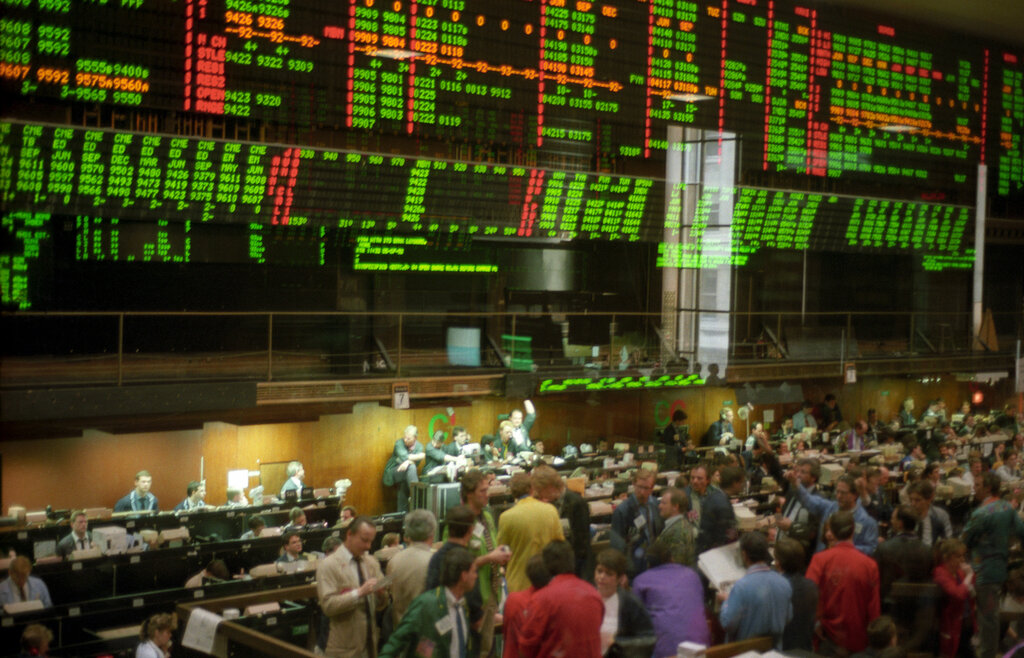
Trading doesn't just happen in a vacuum. It takes place in organized systems called markets. Each market has its own focus and rules.
| Market Type | What's Traded | Key Feature |
|---|---|---|
| Stock Market | Shares of public companies (stocks) | Centralized exchanges like the NYSE |
| Bond Market | Debt from governments and corporations | Typically less volatile than stocks |
| Forex Market | National currencies | The largest, most liquid market in the world |
| Commodities Market | Raw materials like oil, gold, and crops | Prices are driven by real-world supply and demand |
The Players and the Process
Markets are made up of different participants, each playing a specific role. You have individual traders (often called retail traders), large institutions like pension funds and banks, and brokers who act as middlemen.
So how does a trade actually work? It's a simple process of matching buyers and sellers.
When you want to buy a stock, you place an order with your broker. The broker then sends your order to an exchange, which finds a seller willing to part with their shares at a price you both agree on. Once the match is made, the transaction is complete. The exchange of money and shares happens electronically in an instant.
This foundational process is the same whether you're trading stocks, bonds, or anything else. You're simply participating in a massive, interconnected system of value exchange that powers the global economy.