Introduction to Trading
Introduction to Financial Markets
Where Money Moves
Think of a farmers market. Growers bring produce to sell, and shoppers come to buy. It's a central place for exchanging goods. Financial markets are similar, but instead of apples and carrots, people trade financial instruments like stocks and bonds. These markets are the global plumbing for money, connecting those who have it (savers and investors) with those who need it (companies and governments).
The core job of a financial market is to channel funds efficiently. A company with a great idea needs cash to build a factory. A government needs money to build a new bridge. By selling securities, they can raise this capital from millions of people who are looking to put their savings to work.
Market Structure
Financial markets have two main stages: the primary market and the secondary market.
The primary market is where financial securities are born. When a company decides to "go public," it holds an Initial Public Offering, or IPO. This is the very first time it sells shares of its stock to the public. The money from this sale goes directly to the company to fund its growth.
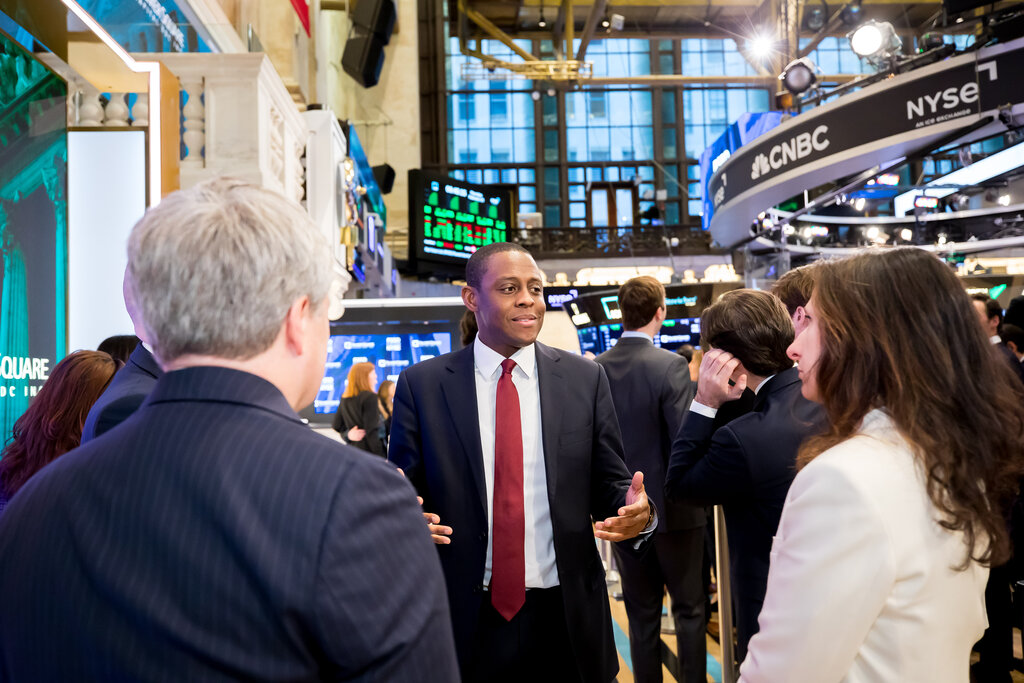
Once those shares have been sold in the primary market, they can be bought and sold by other investors. This happens in the secondary market. Think of famous stock exchanges like the New York Stock Exchange (NYSE) or Nasdaq. When you hear about the stock market on the news, they are almost always talking about the secondary market. Here, the money changes hands between investors, and the original company isn't directly involved in the transaction.
Markets can also be categorized by the lifespan of the instruments traded. Money markets deal with short-term borrowing and lending, usually for less than a year. Capital markets, on the other hand, are for long-term assets like stocks and bonds, which have no set maturity date or mature in more than a year.
The Key Players
Several groups of participants interact within these markets, each with a different role.
| Participant | Role |
|---|---|
| Issuers | Corporations or governments that need capital and sell securities. |
| Investors | Individuals or institutions that buy securities to earn a return. |
| Intermediaries | Banks, brokers, and exchanges that facilitate trades. |
| Regulators | Government agencies that create and enforce rules to ensure fairness. |
Issuers create the securities. Investors provide the capital by buying them. Intermediaries, like investment banks and stockbrokers, act as the matchmakers, connecting issuers with investors and facilitating the smooth exchange of assets. Finally, regulators, like the Securities and Exchange Commission (SEC) in the United States, set the rules of the game to protect investors and maintain market stability.
What Gets Traded
The items traded in financial markets are called financial instruments. While there are countless variations, most fall into a few basic categories.
Equity
noun
A security that signifies ownership in a corporation and represents a claim on part of the corporation's assets and earnings.
When you buy a stock, you're buying a small piece of a company. If the company does well, the value of your ownership stake can increase. If it does poorly, the value can fall.
Debt
noun
A security that represents a loan made by an investor to a borrower. The borrower is obligated to pay interest and repay the principal at a later date.
Unlike buying a stock, lending money through a bond doesn't give you ownership. Instead, you act as a lender. In return for your loan, the issuer pays you periodic interest, and at the end of the loan's term (its maturity), they return your original investment, called the principal. Bonds are generally considered less risky than stocks.
A third major category is derivatives. These are contracts whose value is derived from an underlying asset, like a stock or a commodity. Options and futures are common types of derivatives. They are more complex and are often used to manage risk or to speculate on future price movements.
Let's check your understanding of these foundational market concepts.
What is the core job of a financial market?
When a company offers shares to the public for the very first time, this transaction occurs in the ________ market.
Understanding this basic structure, the players involved, and the instruments they trade is the first step toward making sense of the financial world.