Introduction to Trading
Introduction to Financial Markets
What Are Financial Markets?
Think of a financial market as a giant, organized marketplace. But instead of selling fruits and vegetables, people buy and sell financial assets like stocks, bonds, and currencies. The fundamental purpose is to connect those who have extra money (savers and investors) with those who need it (governments and companies).
This connection is vital for a healthy economy. It allows companies to raise money to grow, hire people, and develop new products. It lets governments fund public projects like roads and schools. For investors, it offers a way to put their savings to work, potentially earning a return over time.
In essence, financial markets channel savings and investment between suppliers of capital and those who are in need of capital.
The Main Arenas
Financial markets aren't a single place; they're a collection of different markets, each with its own specialty. Here are the big four you should know.
Equities
noun
Also known as stocks or shares, equities represent ownership in a publicly-traded company. When you buy a stock, you're buying a small piece of that company.
The stock market is where equities are traded. It’s what most people picture when they hear about financial markets. The value of a stock can go up or down based on the company's performance and broader economic conditions.
Bonds
noun
A type of loan made by an investor to a borrower, which could be a corporation or a government. The borrower promises to repay the loan on a specific date, usually with interest payments along the way.
The bond market, or debt market, is where these IOUs are bought and sold. Bonds are generally considered less risky than stocks because they offer fixed interest payments.
Commodities markets are where raw materials are traded. This includes everything from energy sources like crude oil and natural gas, to precious metals like gold and silver, and agricultural products like wheat and coffee.
Finally, there's the foreign exchange market, often called Forex or FX. This is the global marketplace for exchanging national currencies. It's the largest financial market in the world, where trillions of dollars change hands every day. It's crucial for international trade and investment.
The Players in the Game
Several types of participants interact in these markets, each playing a different role.
Retail Investors: These are individuals, like you and me, who buy and sell securities for their personal accounts. They typically trade in smaller amounts than institutions.
Institutional Investors: These are large organizations that manage huge pools of money. Examples include pension funds, insurance companies, mutual funds, and hedge funds. Their large-scale trades can significantly influence market prices.
Market Makers: These are firms or individuals who provide liquidity to the market. They do this by simultaneously quoting both a buy and a sell price for a security, profiting from the difference (the spread). Their presence ensures there's always someone to trade with, making it easier for others to buy or sell.
Primary vs. Secondary Markets
Financial transactions happen in two main stages: the primary market and the secondary market.
The primary market is where securities are born. When a company wants to raise money by selling shares to the public for the first time, it does so through an Initial Public Offering (IPO). This is a primary market transaction. The money from the sale goes directly to the company.
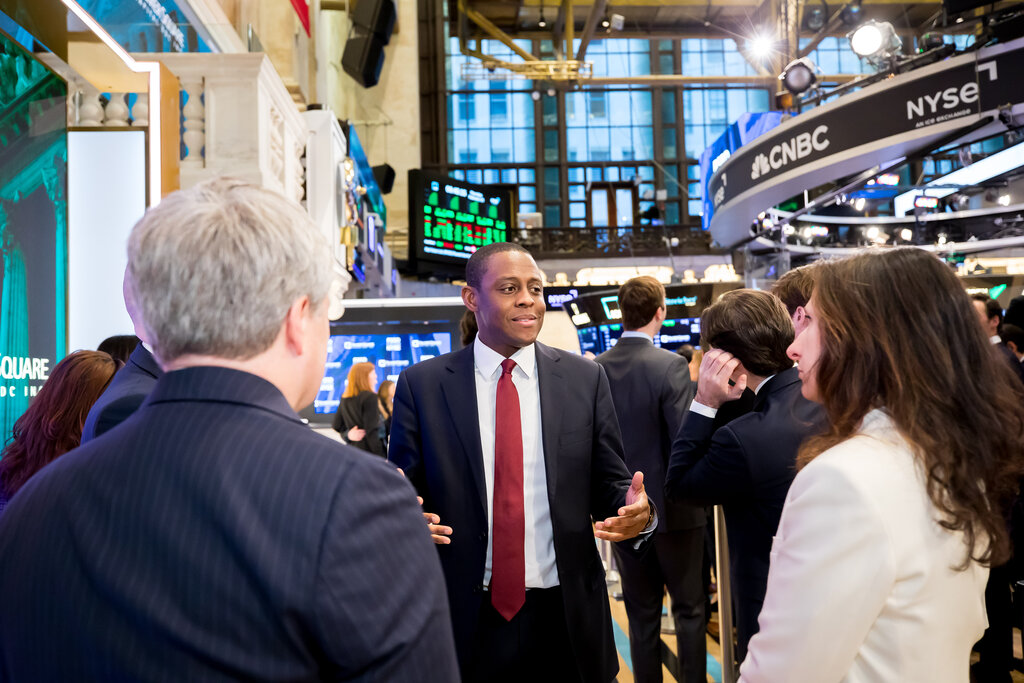
The secondary market is where those securities are traded later on. When you hear about trading on the New York Stock Exchange (NYSE) or Nasdaq, you're hearing about the secondary market. Here, investors buy and sell securities from each other. The company whose stock is being traded does not receive any money from these transactions.
Now that you understand the basic landscape, you can start to see how different parts of the financial world fit together.
What is the fundamental purpose of financial markets?
An investor buying shares of a publicly-traded company from another investor on the New York Stock Exchange (NYSE) is a transaction occurring in the _________.