Introduction to Trading
Introduction to Financial Markets
What Are Financial Markets?
Think of a bustling farmer's market. Growers bring their produce to sell, and shoppers arrive looking for fresh food. It's a central place for people who have something and people who want something to find each other and make a deal.
Financial markets work on a similar principle, but instead of apples and carrots, they trade money and assets. Their main job is to channel money from those who have extra (savers and investors) to those who need it (companies, governments, and individuals). This flow of capital is what fuels economic growth, helping companies expand, governments build infrastructure, and entrepreneurs launch new ideas.
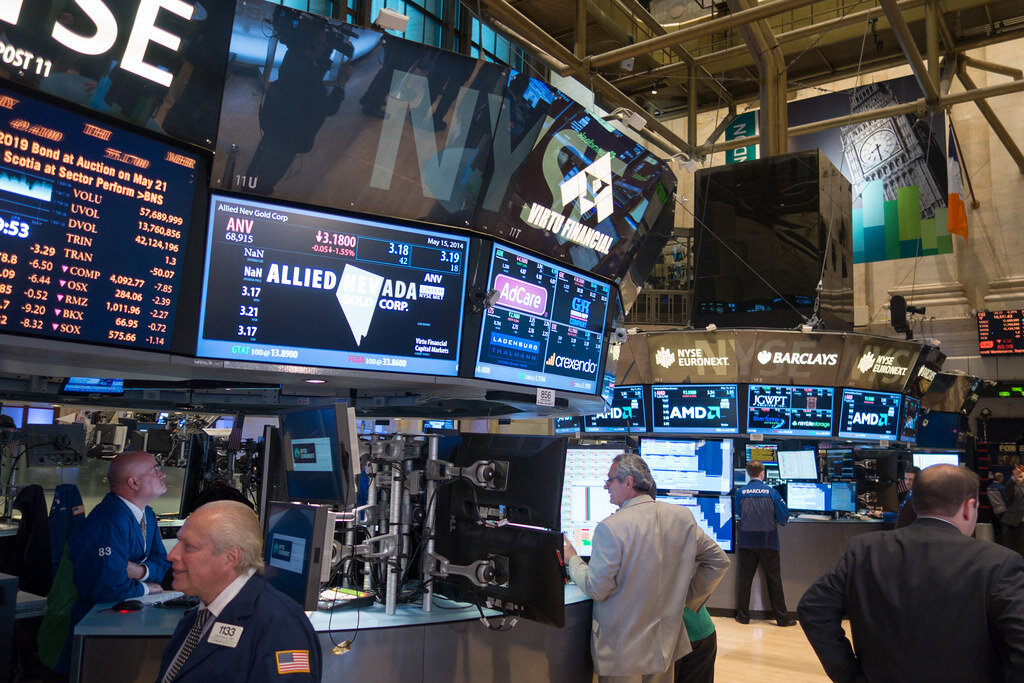
These markets come in two main flavors. First, you have organized exchanges, like the New York Stock Exchange (NYSE). These are physical or electronic marketplaces with strict rules where buyers and sellers trade standardized assets. Then there are over-the-counter (OTC) markets, which are less formal. In an OTC market, two parties negotiate a deal directly with each other, often through a dealer network, rather than on a centralized exchange. Many types of bonds and complex derivatives are traded this way.
The Players in the Game
A whole cast of characters keeps the financial markets running. At the center are the issuers and the investors.
- Issuers are the entities that need money. This could be a corporation looking to build a new factory, or a government needing to fund public services. To raise this capital, they issue financial securities, which are essentially promises of future value.
- Investors are the ones who buy these securities. They can be individuals saving for retirement or large institutions like pension funds and mutual funds. Their goal is to put their money to work to earn a return.
But how do these two groups find each other? That's where intermediaries come in.
Brokers and exchanges act as matchmakers. They create the platform where issuers and investors can connect efficiently and trade with confidence.
Broker
noun
An individual or firm that acts as an intermediary between an investor and a securities exchange. A broker facilitates trades on behalf of others and charges a commission for the service.
Another key player is the market maker. These are firms that stand ready to buy or sell a particular security at any time at publicly quoted prices. By doing so, they provide liquidity, making it easier for investors to get in and out of positions without having to wait for another investor to come along.
What's Being Traded?
The items bought and sold in financial markets are called financial instruments or securities. They come in many forms, but most fall into a few major categories.
Equity
noun
A security representing ownership interest in a corporation. In the form of common stock, it entitles the owner to a portion of the company's profits and a vote in corporate matters.
When you buy a company's stock, or equity, you are buying a small piece of that company. You become a shareholder. If the company does well, the value of your piece can grow. You might also receive a share of the profits in the form of dividends.
Bonds are essentially loans. When you buy a bond, you are lending money to an issuer, like a corporation or a government. In return, they promise to pay you periodic interest over a set term and return your original investment, the principal, at the end of that term. They are generally considered less risky than stocks.
Commodities are raw materials. This includes things like gold, oil, natural gas, and agricultural products like wheat and corn. Investors trade commodities to speculate on price changes or to diversify their portfolios.
Finally, there are derivatives. These are more complex instruments whose value is derived from an underlying asset, like a stock, bond, or commodity. Options and futures contracts are common types of derivatives. They are often used by sophisticated investors to manage risk or to speculate on future price movements.
Now that you've got a handle on the basic structure, participants, and products, let's test your knowledge.