Introduction to Trading
Introduction to Financial Markets
Where Money Moves
Financial markets are where buyers and sellers meet to trade financial assets like stocks and bonds. Think of it as a massive, global marketplace. These markets help companies and governments raise money, and they allow investors to put their savings to work.
There are two main stages to this marketplace: the primary market and the secondary market.
In the primary market, new securities are born. This is where a company first sells its shares to the public in an Initial Public Offering (IPO). The money from this sale goes directly to the company to fund its growth, like building a new factory or hiring more people.
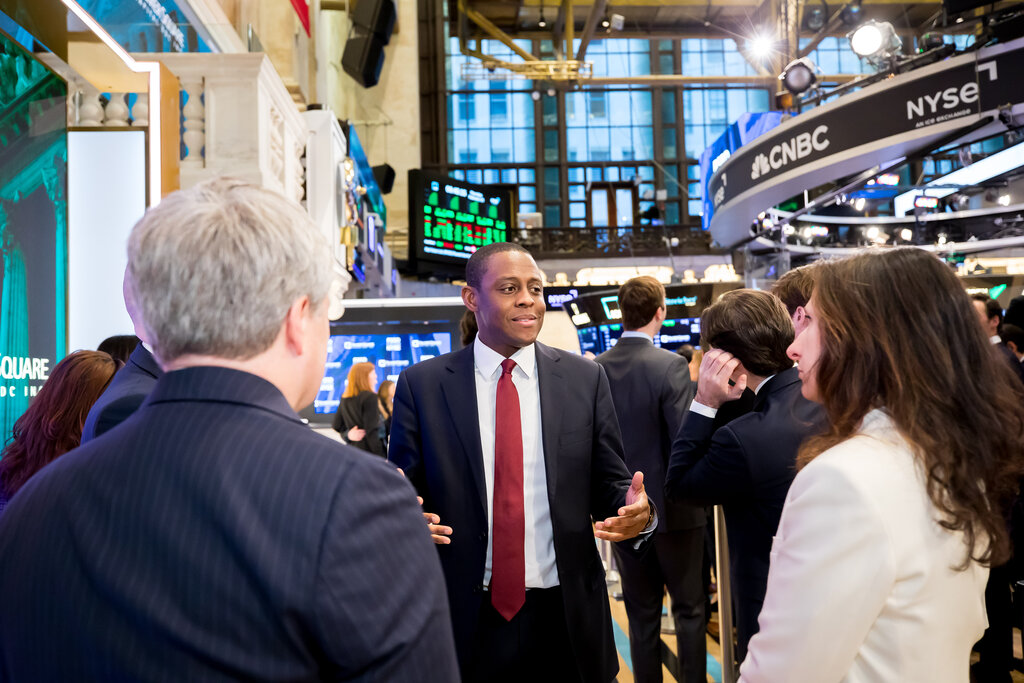
Once those securities exist, they are traded in the secondary market. This is what most people mean when they talk about the "stock market." Here, investors buy and sell securities from each other, not from the company itself. The New York Stock Exchange (NYSE) and NASDAQ are famous examples of secondary markets. This constant trading provides liquidity, meaning it’s easy to buy or sell an asset without drastically affecting its price.
The Cast of Characters
Financial markets are bustling with different players, each with a specific role.
| Participant | Role |
|---|---|
| Issuers | Companies or governments that need money. They create and sell securities. |
| Investors | Individuals or institutions (like pension funds) that buy securities. |
| Brokers | The go-betweens. They execute buy and sell orders for investors. |
| Exchanges | The organized marketplaces (e.g., NYSE) where trading takes place. |
| Regulators | The referees. They enforce rules to keep the markets fair (e.g., the SEC). |
An individual investor, often called a retail investor, typically uses a broker to buy shares of a company. The company is the issuer, and the trade might happen on a stock exchange. All of this activity is watched over by regulators to protect everyone involved.
What Gets Traded
A huge variety of assets, known as financial instruments, are traded in these markets. The most common ones are stocks, bonds, and derivatives.
Stock
noun
A type of security that signifies ownership in a corporation and represents a claim on part of the corporation's assets and earnings.
When you buy a stock (also called an equity), you're buying a small piece of a company. If the company does well, the value of your piece can go up. If it does poorly, the value can go down.
Bonds are essentially loans. When you buy a bond, you are lending money to an issuer, which could be a corporation or a government. In return, they promise to pay you back the loan amount on a specific date, with regular interest payments along the way.
Derivatives are more complex. They are contracts whose value is derived from an underlying asset, like a stock or a commodity. Options and futures are common types of derivatives. They are often used to speculate on future price movements or to hedge against risks.
Now that you have a handle on the basic structure, players, and products, let's test your knowledge.
When an investor purchases shares of a company from another investor, not directly from the company itself, in which market is this transaction taking place?
What does purchasing a stock grant an investor?
Understanding these fundamentals provides the foundation for exploring how trading actually works within these markets.