Introduction to Trading
Introduction to Financial Markets
What Are Financial Markets?
Think of a financial market as a giant marketplace, but instead of selling fruits and vegetables, people buy and sell financial assets. These can be shares of a company, loans to a government, or contracts based on the future value of something else. The core purpose is to connect people who have extra money (savers or investors) with those who need it (like companies wanting to grow or governments funding projects).
These markets help efficiently channel money to where it's most needed, a process called capital allocation. They also help us figure out what things are worth through the constant process of buying and selling, which is known as price discovery.
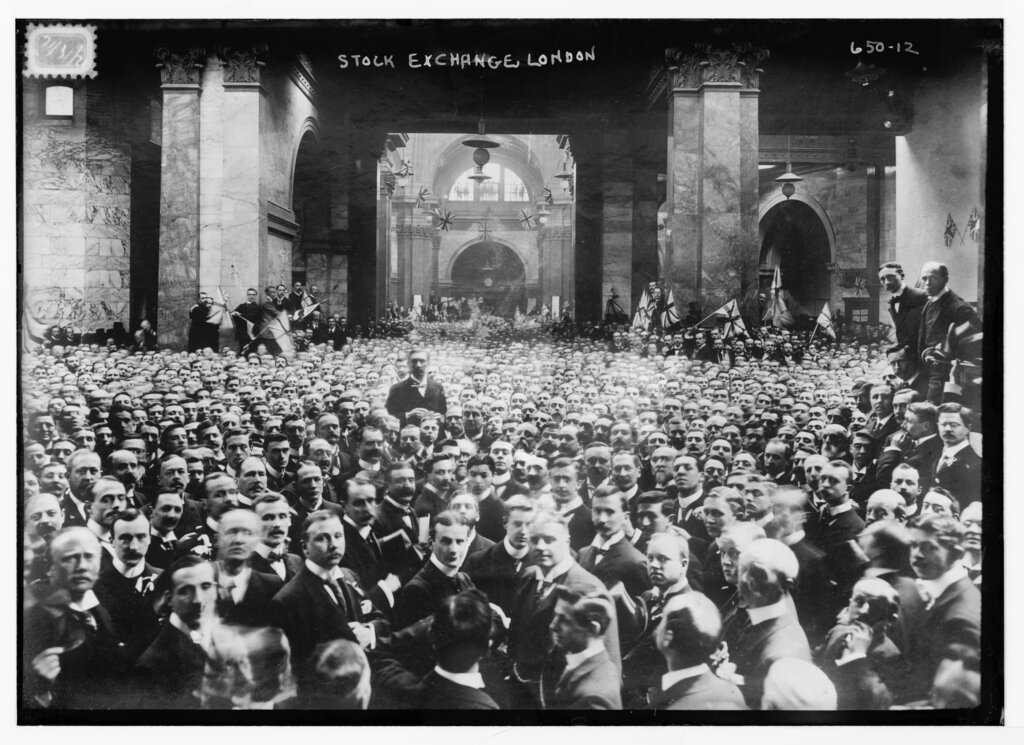
Types of Markets
Financial markets aren't a single entity. They are a collection of different markets, each with its own specialty. The three main types you'll encounter are equity, fixed income, and derivatives markets.
| Market Type | What's Traded | Represents... |
|---|---|---|
| Equity | Stocks (or shares) | A slice of ownership in a company. |
| Fixed Income | Bonds and other debt | A loan made to a company or government. |
| Derivatives | Options, futures, swaps | A contract whose value depends on another asset. |
The equity market, often just called the stock market, is where you can buy ownership in public companies. If you buy a share of Apple, you own a tiny piece of the company.
The fixed income market is essentially a market for debt. When you buy a government or corporate bond, you are lending them money. In return, they promise to pay you back with regular interest payments over a set period. It's called "fixed income" because these payment streams are often predictable.
Derivatives are a bit more abstract. They are financial contracts whose value is derived from an underlying asset, like a stock or a commodity. Traders use them to speculate on future price movements or to hedge against risks.
Key Participants
Several key players keep the markets running. While their roles can sometimes overlap, they generally fall into a few distinct categories.
Investors typically buy assets for the long term, hoping to build wealth over time through price appreciation or regular income like dividends or interest payments.
Traders focus on the short term. They buy and sell assets more frequently to profit from short-term price fluctuations.
Brokers are intermediaries who execute buy and sell orders on behalf of their clients (investors and traders).
Market makers are firms that stand ready to buy or sell a particular asset at any time. By doing so, they provide liquidity, making it easier for others to trade without waiting for another buyer or seller to appear.
Where Trading Happens
Trades don't just happen in a vacuum. They occur in specific structures. The two primary structures are exchanges and over-the-counter (OTC) markets.
exchange
noun
A centralized marketplace where financial assets are bought and sold in a regulated, transparent environment.
Exchanges, like the NYSE or Nasdaq, are centralized locations (physical or electronic) with standardized rules. All orders are routed to this central point, making prices transparent and public.
Over-the-counter (OTC) markets are different. They are decentralized, meaning there's no central location. Instead, a network of dealers and brokers trade directly with one another. Many types of bonds and derivatives are traded in OTC markets. This structure can be more flexible but is generally less transparent than an exchange.
Understanding these fundamental building blocks—what markets are for, what types exist, who participates, and where they operate—is the first step to making sense of the world of finance.