Introduction to the Violin
Violin Origins
Before the Violin
The violin didn't just appear out of thin air. Its roots stretch back through centuries of musical experimentation across different cultures. Before the instrument we know today, musicians played a variety of bowed string instruments, each contributing a piece to the violin's family tree.
In medieval Europe, instruments like the rebec and the lira da braccio were common. The rebec, a pear-shaped instrument with three strings, was held against the shoulder or chest. It had a sharp, nasal tone. The lira da braccio, popular during the Renaissance, was larger and had more strings, including drone strings off the fingerboard, creating a richer sound.
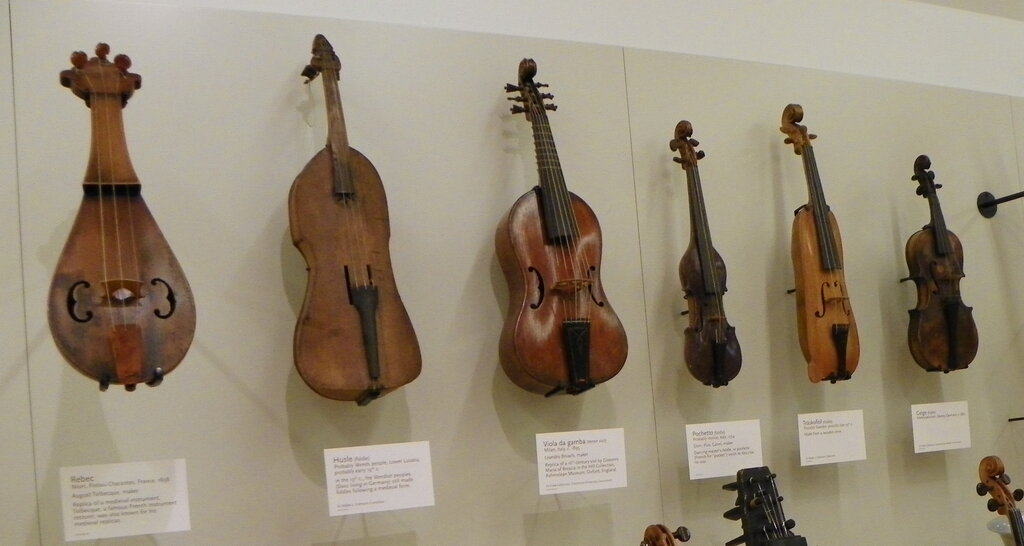
These European instruments were themselves influenced by earlier ones from the Byzantine Empire and the Arab world, like the rabab. This cross-pollination of ideas was crucial. Luthiers (instrument makers) constantly tinkered with designs, aiming for an instrument with greater range, volume, and expressive power.
The Birthplace of the Violin
The violin as we recognize it emerged in the early 16th century in Northern Italy, specifically in the city of Cremona. The cultural environment of the Italian Renaissance was the perfect incubator. Wealthy patrons and the Catholic Church were commissioning new art and music, pushing artists and craftsmen to innovate.
luthier
noun
A craftsperson who builds or repairs string instruments with a neck and a sound box.
In this vibrant setting, a luthier named Andrea Amati (c. 1505–1577) began producing instruments that set the standard for the entire violin family. He is widely credited with creating the first true violins, violas, and cellos. Amati's design was a masterclass in form and function.
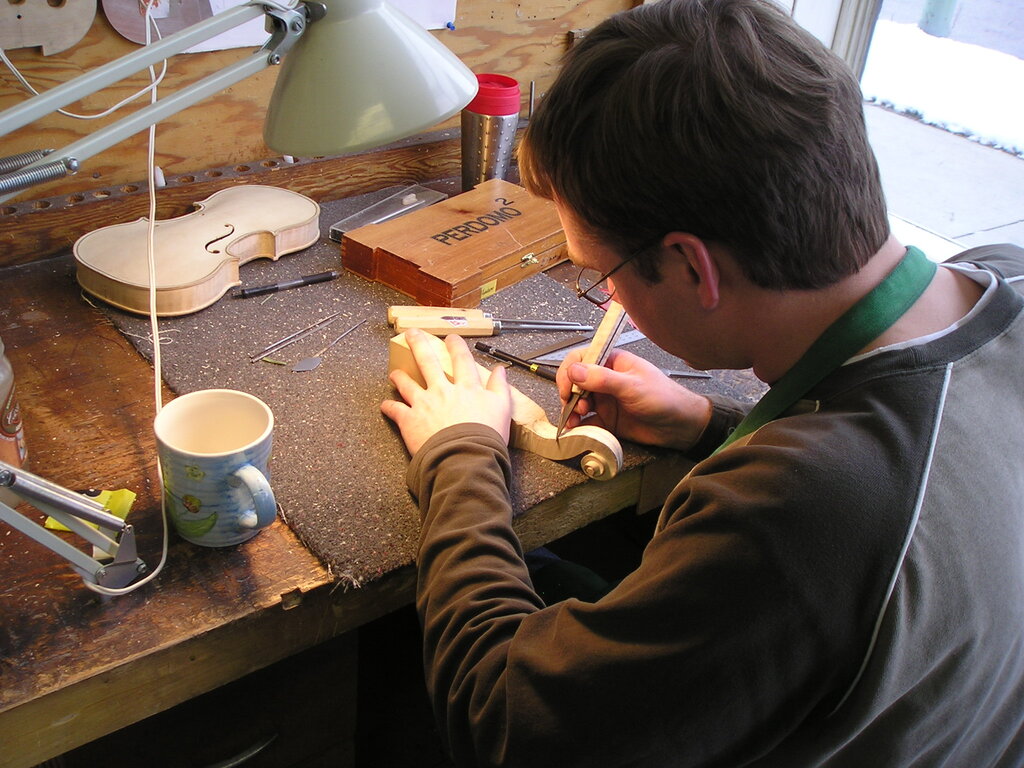
He established the instrument's now-iconic shape, with its curved body, defined waist, and scroll. More importantly, he settled on four strings, tuned in perfect fifths (G, D, A, E). This tuning gave the violin a brilliant, clear tone and a wide melodic range that was perfect for the increasingly complex music of the era.
Andrea Amati didn't just invent an instrument; he perfected a design that has remained largely unchanged for nearly 500 years.
A New Sound for a New Era
Amati's violins quickly gained popularity. The French court, under King Charles IX, was one of his most important clients, ordering a set of 38 instruments. This royal endorsement helped cement the violin's status as a premier instrument.
Initially, the violin was often used to accompany dancing or to double vocal lines in choral music. But composers soon realized its potential as a solo instrument. Its ability to sustain notes and play with a wide dynamic range made it incredibly expressive, often compared to the human voice. Composers like Claudio Monteverdi were among the first to give the violin prominent roles in their operas and instrumental pieces, showcasing its agility and emotional depth.
From Italy, the violin's popularity spread across Europe. Andrea Amati's workshop in Cremona became a legendary center for violin making, a tradition carried on by his sons and his grandson, Nicolò Amati, who in turn taught other masters like Antonio Stradivari. These luthiers built upon the foundational design, creating instruments that are still considered the finest ever made.
Time to check what you've learned about the violin's early history.
In which city did the violin as we recognize it first emerge in the early 16th century?
Which of the following is considered a direct European predecessor of the violin?
The violin's journey from a folk instrument to the star of the orchestra was a story of cultural exchange, artistic demand, and masterful craftsmanship.