Introduction to the Science of Psychology
Introduction to Psychology
What Is Psychology?
Psychology is the scientific study of the mind and behavior. It’s a field dedicated to understanding what makes us tick, from the intricate workings of our brains to the complex social dynamics of a crowd. But what do we mean by “mind” and “behavior”?
The mind refers to our inner world—our thoughts, feelings, memories, and dreams. These are the private experiences that shape who we are.
Behavior is everything we do that can be observed by others, like talking, walking, or laughing.
The key word here is scientific. Psychology isn't just about philosophizing or making educated guesses. It uses systematic observation and experimentation to understand the patterns behind our actions and thoughts. It seeks to answer fundamental questions: Why do we feel the way we do? How do we learn and remember? What drives us to connect with others?
A Quick Trip Through Time
Long before psychology was a formal discipline, ancient Greek philosophers like Plato and Aristotle grappled with questions about the nature of the mind, knowledge, and consciousness. They laid the intellectual groundwork, but their methods were based on reason and logic, not scientific experiment.
The game changed in 1879. In Leipzig, Germany, a physician and philosopher named Wilhelm Wundt established the first laboratory dedicated exclusively to psychological research. This event is widely considered the birth of psychology as a distinct scientific field.
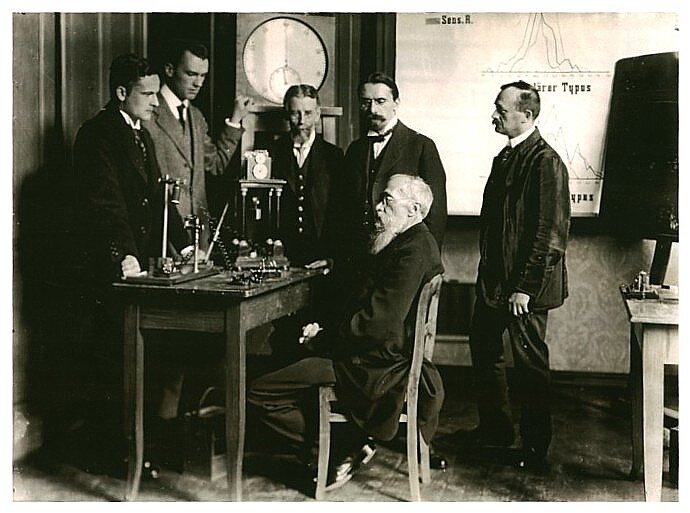
Wundt was a proponent of structuralism. He believed the goal of psychology was to break down conscious experience into its most basic elements, much like a chemist analyzes a compound. His primary tool was introspection, a process where trained observers carefully described their own mental experiences.
Across the Atlantic, American scholar William James offered a different view. Influenced by Charles Darwin's theory of evolution, James was more interested in why we think and feel the way we do. His approach, known as functionalism, focused on how mental processes help us adapt to our environment. Instead of asking what the mind is made of, he asked: What does it do?
As the 20th century began, other powerful ideas emerged. In Vienna, Sigmund Freud developed psychoanalysis, arguing that our behavior is driven by unconscious desires and conflicts, many of them rooted in childhood. His work brought the inner, hidden world of the mind to the forefront.
Modern Ways of Seeing
Today, no single viewpoint dominates psychology. Instead, psychologists draw from several major perspectives to understand the human experience. Each one offers a unique lens for examining behavior and mental processes.
| Perspective | Primary Focus |
|---|---|
| Psychodynamic | Unconscious drives, conflicts, and childhood experiences. |
| Behavioral | How observable behaviors are learned through rewards, punishments, and associations. |
| Humanistic | Human potential, personal growth, and the importance of free will. |
| Cognitive | How we process, store, and retrieve information—thinking, memory, and language. |
| Biological | The influence of the brain, genes, hormones, and the nervous system on behavior. |
Let's consider an example: why does a student study hard for an exam?
A behavioral psychologist might suggest the student learned that studying leads to good grades (a reward). A cognitive psychologist would focus on the student's thought processes: their goals, beliefs about their own ability, and strategies for remembering information. A humanistic psychologist might see it as a drive for self-actualization—the desire to reach one's full potential. Meanwhile, a biological psychologist could explore how brain activity related to memory and focus contributes to the behavior.
None of these perspectives is more "correct" than the others. They are complementary, and together they provide a richer, more complete understanding of why we are the way we are.
Ready to test your understanding?
What is the core characteristic that distinguishes modern psychology from earlier philosophical inquiries into the mind?
The establishment of the first psychology laboratory by Wilhelm Wundt in 1879 is considered a pivotal moment because it:
From its philosophical origins to the diverse scientific perspectives of today, psychology offers a powerful framework for exploring the complexities of the human mind.