Introduction to the Internet of Things
Introduction to IoT
What Is the Internet of Things?
The Internet of Things, or IoT, is a simple concept with a huge impact. It's the idea of taking all sorts of physical objects in the world and connecting them to the internet. This isn't just about computers and smartphones, but everything: coffee makers, cars, lamps, wearable devices, and even jet engines.
When something is connected to the internet, it can send information, receive information, or both. This ability to share data makes things “smart.” A smart device can report on its condition, listen to instructions from a user, or interact with other connected devices automatically.
Internet of Things
noun
A network of physical objects—"things"—embedded with sensors, software, and other technologies for the purpose of connecting and exchanging data with other devices and systems over the internet.
Think of it like a digital nervous system for the physical world. Your skin's nerve endings sense temperature and send that information to your brain. In the IoT, sensors on a device collect data (like temperature, location, or motion) and send it across a network for analysis or action.
From Vending Machine to Smart World
While the term “Internet of Things” might feel new, the idea has been around for decades. One of the first examples appeared in the early 1980s at Carnegie Mellon University. A Coca-Cola vending machine was connected to the ARPANET (an early version of the internet) so programmers could check if drinks were available and cold before walking over.
The term itself was coined by Kevin Ashton in 1999. He was working on supply chain optimization and saw the potential of using RFID tags to track goods. Since then, the idea has exploded, thanks to the spread of wireless internet, cheaper sensors, and powerful cloud computing.
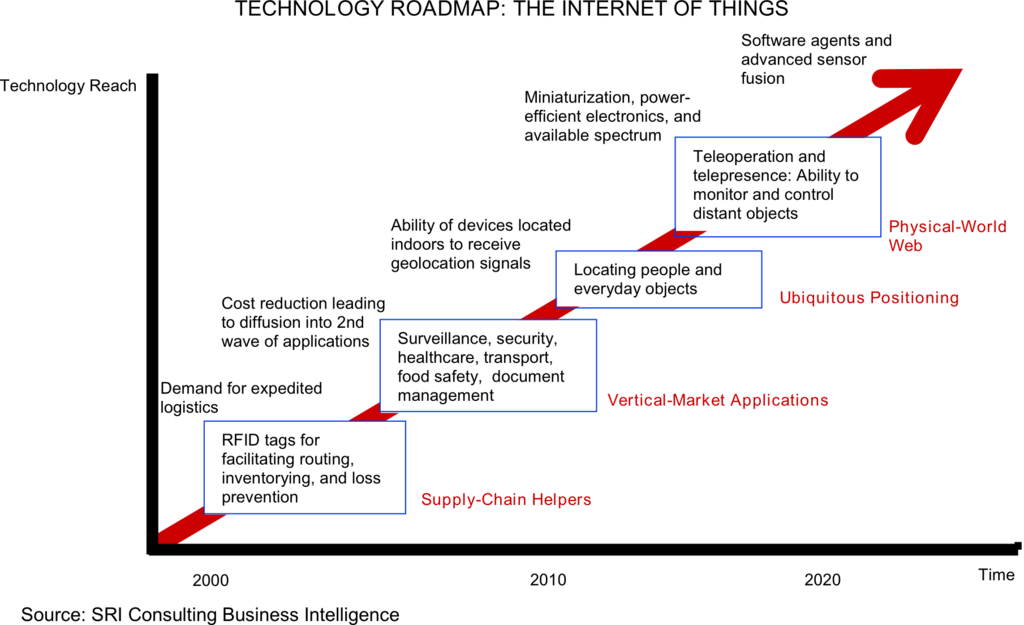
Today, IoT is no longer a futuristic concept. It's a reality that's reshaping industries and our daily lives. From smart homes that adjust the thermostat automatically to farmers using sensors to monitor crop health, IoT is making the world more efficient and responsive.
If you think IoT is just about Alexa turning on your lights, you're missing the revolution happening in warehouses, hospitals, farms, and cities worldwide.
The Building Blocks of IoT
Every IoT system, whether it’s a simple fitness tracker or a massive smart city grid, is built from the same fundamental components. Understanding these parts helps demystify how it all works.
An IoT system has three key layers: the devices that sense the world, the network that carries the data, and the platform that processes it.
1. Devices & Sensors
This is the physical “thing” in the Internet of Things. These devices are equipped with sensors that collect data from the surrounding environment. A sensor could measure temperature, motion, moisture, light, location, or even the chemical composition of the air. The device could be a simple temperature sensor or a complex industrial robot with dozens of sensors.
2. Connectivity
Once the data is collected, it needs to be sent somewhere. Devices connect to a network to transmit their data. This connection can be wired (like Ethernet) or wireless (like Wi-Fi, Bluetooth, cellular, or satellite). The choice of network depends on factors like power consumption, range, and the amount of data being sent.
3. Data Processing & Platform
The data travels over the network to a central place where it can be stored and processed. This is often called the “cloud” or an IoT platform. Here, software analyzes the data to turn it into useful information. For example, it might check if a temperature reading is within a safe range. This platform is also where actions can be triggered, like sending an alert to a user's phone or automatically adjusting a machine's settings.
These three components work together in a continuous cycle: collect data, send data, and act on data. This simple loop is what allows IoT to have such a powerful and wide-ranging impact.