Introduction to the Greek Language
Greek Alphabet
The Greek Alphabet
Welcome to the foundation of the Greek language. The Greek alphabet has 24 letters, and learning them is the first and most important step to reading, writing, and speaking Greek. It might look different from the Latin alphabet used for English, but you'll probably recognize a few letters from math and science classes.
Mastery of the alphabet is the foundation for reading, writing, and pronunciation.
Many Greek letters have consistent, predictable sounds, which makes learning to pronounce words much easier than in English. Let's get familiar with what they look and sound like.
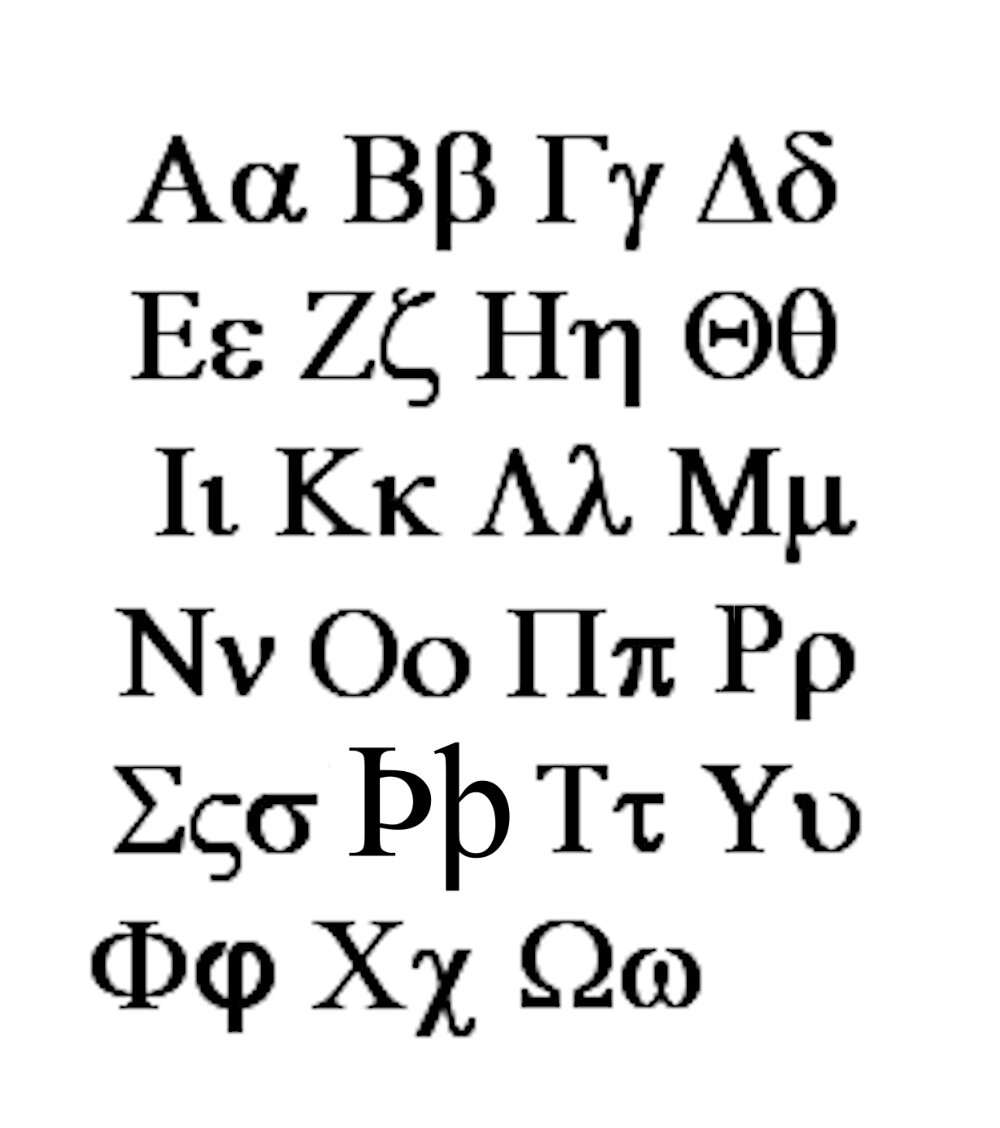
Letters and Their Sounds
We'll go through the alphabet in a few small groups. Pay close attention to the sound each letter makes. Notice that some different letters can make the same sound, like Η (ita), Ι (iota), and Υ (ypsilon), which all sound like the "ee" in "see".
| Uppercase | Lowercase | Name | Pronunciation (like the English...) |
|---|---|---|---|
| Α | α | Alpha (άλφα) | 'a' in father |
| Β | β | Beta (βήτα) | 'v' in vase |
| Γ | γ | Gamma (γάμμα) | 'gh' (a soft, throaty 'g'); 'y' in yes before 'e' or 'i' sounds |
| Δ | δ | Delta (δέλτα) | 'th' in the |
| Ε | ε | Epsilon (έψιλον) | 'e' in pet |
| Ζ | ζ | Zeta (ζήτα) | 'z' in zoo |
| Η | η | Eta (ήτα) | 'ee' in see |
| Θ | θ | Theta (θήτα) | 'th' in think |
Notice the letter Gamma (γ). Its sound changes depending on the vowel that follows it. This is a common feature in Greek. Also, the letter Delta (δ) is a soft 'th' sound, like in "the" or "this," not the hard 'th' in "think."
| Uppercase | Lowercase | Name | Pronunciation (like the English...) |
|---|---|---|---|
| Ι | ι | Iota (ιώτα) | 'ee' in see |
| Κ | κ | Kappa (κάππα) | 'k' in sky |
| Λ | λ | Lambda (λάμδα) | 'l' in love |
| Μ | μ | Mu (μι) | 'm' in mother |
| Ν | ν | Nu (νι) | 'n' in no |
| Ξ | ξ | Xi (ξι) | 'x' in box |
| Ο | ο | Omicron (όμικρον) | 'o' in pot |
| Π | π | Pi (πι) | 'p' in spin |
Did you see that Sigma has two lowercase forms? This is a unique feature. Use σ at the beginning or in the middle of a word. Use ς only when it is the very last letter of a word.
For example, the word for "earthquake" is σεισμός (seismós). It starts with σ, has another σ in the middle, and ends with ς.
| Uppercase | Lowercase | Name | Pronunciation (like the English...) |
|---|---|---|---|
| Ρ | ρ | Rho (ρω) | a slightly rolled 'r' |
| Σ | σ / ς | Sigma (σίγμα) | 's' in sun |
| Τ | τ | Tau (ταυ) | 't' in stop |
| Υ | υ | Ypsilon (ύψιλον) | 'ee' in see |
| Φ | φ | Phi (φι) | 'f' in fun |
| Χ | χ | Chi (χι) | 'h' in huge (like the German 'ch' in 'Bach') |
| Ψ | ψ | Psi (ψι) | 'ps' in lips |
| Ω | ω | Omega (ωμέγα) | 'o' in pot |
Just like Ο (omicron), the letter Ω (omega) makes an 'o' sound. The name omicron literally means "small o," while omega means "great o," but in modern Greek, their sounds are identical.
Common Letter Combinations
Sometimes, two letters come together to create a new sound, just like 'sh' or 'ch' in English. These are called digraphs. Knowing them is key to pronouncing words correctly.
| Combination | Sound (like the English...) |
|---|---|
| αι | 'e' in pet |
| ει | 'ee' in see |
| οι | 'ee' in see |
| ου | 'oo' in moon |
| αυ | 'av' or 'af' |
| ευ | 'ev' or 'ef' |
| γγ | 'ng' in sing |
| γκ | 'g' in go (at start of word); 'ng' in mingle (middle) |
| μπ | 'b' in ball (at start of word); 'mb' in amber (middle) |
| ντ | 'd' in dog (at start of word); 'nd' in candy (middle) |
For the combinations αυ and ευ, the sound depends on the letter that follows. They are pronounced 'av' and 'ev' before a vowel or a voiced consonant (like γ, δ, μ, λ). They are pronounced 'af' and 'ef' before a voiceless consonant (like κ, π, τ, σ).
With these letters and combinations, you have the tools to sound out most Greek words. The next step is practice.
Which of the following letters has two different lowercase forms depending on its position in a word?
The Greek letter Delta (δ) is typically pronounced like the 'th' in which English word?
Great work. Learning a new alphabet is a big step. Keep practicing reading and writing the letters, and you'll build a strong foundation for learning Greek.