Introduction to the German Language
German Alphabet and Pronunciation
The German Alphabet
Getting started with German is simpler than you might think. The German alphabet uses the same 26 letters as English, so you're already familiar with the basics. The key differences lie in the pronunciation and a few special characters.
Understanding the German alphabet is crucial for accurate pronunciation and comprehension.
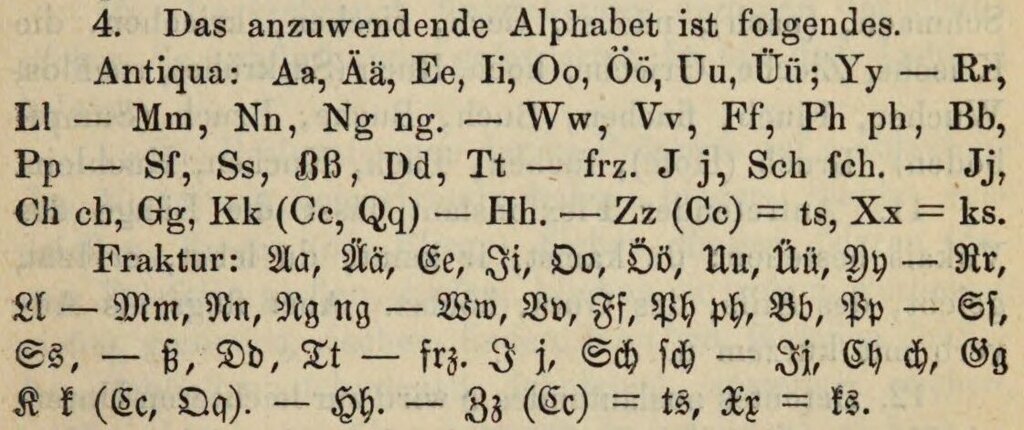
Beyond the standard A-Z, German has four unique characters you'll need to know: the three umlaut vowels (ä, ö, ü) and the Eszett (ß), which is also called the "scharfes S" or sharp S.
Vowels and Umlauts
German vowels are generally "pure," meaning they have a single, crisp sound. Unlike English, where a vowel like 'a' can sound different in 'cat', 'car', and 'cake', German vowel sounds are more consistent. Each vowel has a long and a short version.
| Vowel | Pronunciation Guide | Example Word |
|---|---|---|
| a | Short 'a' like in cat | alt (old) |
| a | Long 'a' like in father | Tag (day) |
| e | Short 'e' like in bed | echt (real) |
| e | Long 'e' like in hey | sehen (to see) |
| i | Short 'i' like in kit | bitte (please) |
| i | Long 'i' like the 'ee' in see | ihm (him) |
| o | Short 'o' like in hot | oft (often) |
| o | Long 'o' like in go | ohne (without) |
| u | Short 'u' like in put | plus (plus) |
| u | Long 'u' like the 'oo' in moon | gut (good) |
The umlauts are modified vowel sounds. The two dots tell you to change how you shape your mouth to make the sound.
An umlaut often signals a plural noun, like Apfel (apple) becoming Äpfel (apples), or a different verb form.
Let's break them down:
- Ä/ä: The sound is similar to the short 'e' in "bed." For example, Männer (men).
- Ö/ö: This one has no perfect English equivalent. Try saying "err" as in "learn" but with your lips rounded as if you're about to whistle. Try it with the word schön (beautiful).
- Ü/ü: This is another sound not found in English. Say a long "ee" sound (like in "see"), but keep that sound while rounding your lips tightly. A good practice word is für (for).
beautiful
Consonants and Combinations
Many German consonants sound just like they do in English, but a few are quite different. Mastering these is a big step toward sounding more natural.
| Letter | Pronunciation | German Example |
|---|---|---|
| j | Like the 'y' in yes | Ja (yes) |
| v | Like the 'f' in fan | Vater (father) |
| w | Like the 'v' in van | Wasser (water) |
| z | Like 'ts' in cats | Zeit (time) |
The ß (Eszett) simply represents a sharp 'ss' sound. It typically appears after a long vowel or a diphthong (a combination of two vowels). You'll never see it at the beginning of a word. For instance, in the word Straße (street), the 'a' is long, so it's followed by ß.
Note: In Switzerland and Liechtenstein, the letter ß is not used. They use 'ss' instead.
German also has several common letter combinations, or diphthongs, that create unique sounds.
| Combination | Sound | German Example |
|---|---|---|
| ei / ai | Like the 'eye' in eye | nein (no), Mai (May) |
| eu / äu | Like the 'oy' in toy | neu (new), Häuser (houses) |
| au | Like the 'ow' in cow | Haus (house) |
| ch | After a, o, u: a hard, throaty sound | Buch (book) |
| ch | After i, e, ä, ö, ü: a soft, hissing sound | ich (I) |
| sch | Like the 'sh' in shoe | Schule (school) |
The two ch sounds can be tricky. The first is a sound made in the back of your throat, similar to the sound in the Scottish word "loch." The second is a much softer sound made in the front of your mouth, almost like a quiet hiss.
Ready to test your knowledge on these foundational sounds?
Which of the following special characters is unique to the German alphabet?
How is the German umlaut 'ä' pronounced?
Getting these sounds right from the start will make a huge difference in your German journey. Keep practicing, and listen to native speakers as much as you can.