Introduction to the French Language
French Alphabet and Pronunciation
The French Alphabet
The French alphabet uses the same 26 letters as English, but their names and sounds are different. Learning how to pronounce the name of each letter is the first step toward reading and spelling correctly. Think of it like learning the notes before playing a song. Once you know the individual sounds, you can start putting them together.
| Letter | French Name | Pronunciation Guide |
|---|---|---|
| A | a | ah |
| B | bé | bay |
| C | cé | say |
| D | dé | day |
| E | e | euh (like 'uh' in 'the') |
| F | effe | eff |
| G | gé | zhay |
| H | ache | ash (the 'h' is silent) |
| I | i | ee |
| J | ji | zhee |
| K | ka | kah |
| L | elle | ell |
| M | emme | emm |
| N | enne | enn |
| O | o | oh |
| P | pé | pay |
| Q | qu | koo |
| R | erre | air-ruh (roll the 'r') |
| S | esse | ess |
| T | té | tay |
| U | u | (no English equivalent) |
| V | vé | vay |
| W | double vé | doo-bluh vay |
| X | ixe | eeks |
| Y | i grec | ee-grek ('Greek i') |
| Z | zède | zed |
The letter U has a unique sound. To make it, say "ee" but round your lips as if you were about to whistle. The letter H is always silent in French, but it can affect the pronunciation of words around it. We'll explore that later.
Vowels, Consonants, and Accents
Unlike English, French pronunciation is quite consistent. Once you learn the rules, you can reliably figure out how to say most words you see. Vowels are the heart of French pronunciation, and accents change how they sound.
Accents aren't just for decoration. They are a roadmap for pronunciation, telling you exactly how a vowel should sound.
There are five types of accents in French. They can change a letter's sound or distinguish between two words that are spelled the same. The cédille (ç) is a special character that only appears on the letter 'c'.
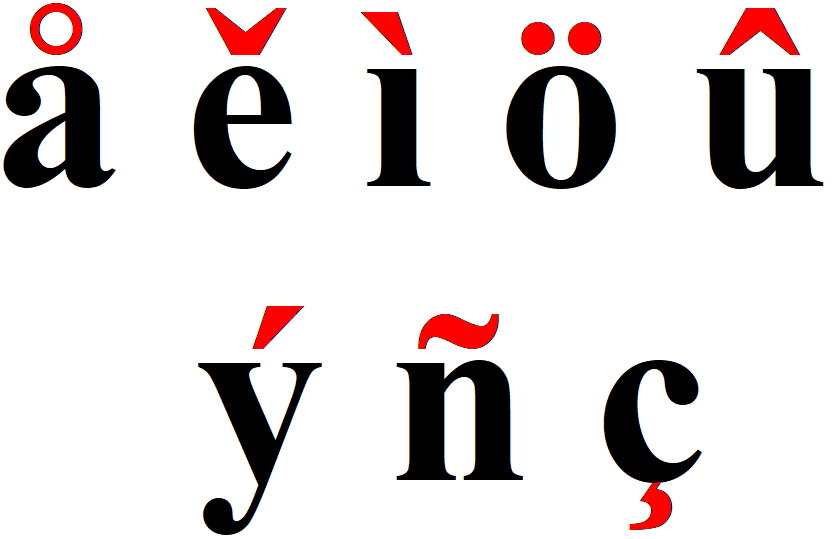
| Accent | Name | Example | Effect on Pronunciation |
|---|---|---|---|
| ´ | accent aigu | école | Makes an "ay" sound, as in "say". |
| ` | accent grave | mère | Makes an "eh" sound, as in "get". |
| ˆ | accent circonflexe | hôpital | Often makes the vowel sound longer. |
| ¨ | tréma | Noël | Pronounce two adjacent vowels separately. |
| ¸ | cédille | garçon | Changes a hard 'c' (like 'k') to a soft 'c' (like 's'). |
Consonants are generally more straightforward. Many sound similar to their English counterparts. However, be aware of a few key differences:
- C is soft (like 's') before 'e', 'i', or 'y' (cinéma) and hard (like 'k') before 'a', 'o', 'u', or a consonant (café).
- G is soft (like the 's' in 'pleasure') before 'e', 'i', or 'y' (manger) and hard (like 'g' in 'go') before 'a', 'o', 'u', or a consonant (gare).
- The French R is pronounced in the back of the throat, not with the tip of the tongue like in English.
- Final consonants are often silent, especially -d, -p, -s, -t, -x, and -z.
Nasal Sounds
One of the most characteristic features of French is its nasal sounds. These occur when a vowel is followed by an 'n' or 'm' in the same syllable, and the air passes through the nose and mouth simultaneously. The 'n' or 'm' itself is not pronounced.
To get a feel for nasal sounds, try saying a vowel and then humming it without closing your lips. That vibration in your nose is the goal.
There are four main nasal sounds to learn:
- an / en: Sounds like the 'on' in the English word "song". Example: enfant (child), temps (time).
- in / ain / ein: Has no direct English equivalent. It's a bright sound. Example: vin (wine), main (hand).
- on: Sounds like the 'own' in the English word "flown", but more nasal. Example: bon (good).
- un: Also has no direct English equivalent. To make this sound, say "eh" (as in get) with rounded lips and let the sound resonate in your nose. Example: un (one), parfum (perfume).
If the 'n' or 'm' is followed by a vowel or is doubled (nn/mm), the nasal sound disappears, and the letters are pronounced separately. Compare bon (nasal) with bonne (no nasal sound).
Ready to test your knowledge? Let's see how well you've grasped these foundational concepts.
In French pronunciation, what is the general rule for the letter 'H'?
How is the letter 'G' most likely pronounced in the word gare (station)?
Mastering these rules is your first major step toward sounding more like a native French speaker. Keep practicing, and listen carefully to how these sounds are used in conversation.